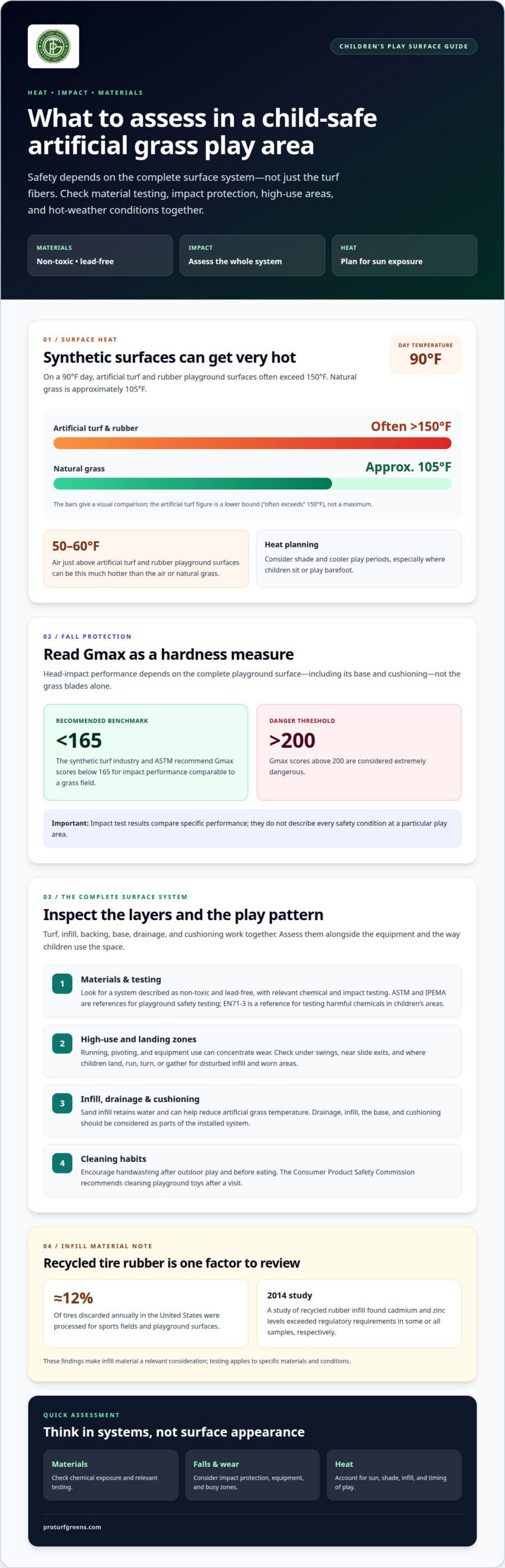
Child safe artificial grass can be a suitable play surface when the materials are non-toxic and lead-free and the full system provides appropriate impact protection. For impact performance comparable to a grass field, the synthetic turf industry and ASTM recommend Gmax scores below 165. Turf alone, however, doesn’t remove every safety concern.
It’s reasonable to ask what children may touch, how the surface performs beneath playground equipment, and whether it can become too hot or provide enough cushioning after a fall. These factors depend on the turf materials, infill, backing, base, underpad, and how the area is used.
This guide explains how to assess these factors, what impact testing can show, and why heat and fall protection deserve attention alongside material safety. You’ll get a clearer picture of what to consider when planning an artificial grass play area for children.
Key Takeaways
- Assess playground turf as a complete surface system, including its materials and impact protection, rather than judging safety by appearance alone.
- Consider how playground equipment and frequent use affect the surface, and how the installation is designed to handle those demands.
- Plan for hot, sunny conditions: synthetic surfaces can become very hot, so timing and practical heat precautions matter.
- Understand what Gmax impact testing measures and how cushioning beneath the turf can contribute to fall protection.
Is Artificial Grass Safe for Kids?
Artificial grass can work well in children’s play areas when material safety and fall protection are considered together. For child safe artificial grass, assess chemical testing and impact performance, not appearance alone.
Head-Impact Safety for Playgrounds
Head-impact performance depends on the complete playground surface, including its base and cushioning, rather than grass blades alone. A Gmax score measures surface hardness: scores above 200 are considered extremely dangerous, while the synthetic turf industry and ASTM recommend scores below 165 for safety comparable to a grass field. These measures help compare impact performance, but they don’t describe every aspect of a play area’s safety.
Child Safety and Turf Certifications
For children’s play areas, consider chemical exposure and impact performance together. Look for a system described as non-toxic and lead-free, with testing relevant to the installed playground turf. ASTM and IPEMA are references for playground safety testing. Because testing applies to a system, consider the surface layers and cushioning as well as the turf. A certification or test result describes specific performance, not every condition at a particular site.
Applicable Safety Standards
ASTM and IPEMA are named references for playground turf safety testing. Review what each test covers: head-impact performance addresses falls, while material testing concerns substances children may encounter. EN71-3 is also identified as a reference for testing products for harmful chemicals in children’s areas. These references address different concerns, so one test shouldn’t stand in for all safety assessments.
Materials and Certification Choices
Which artificial grass materials and certifications are safest for kids? Look for a non-toxic, lead-free system with relevant chemical and impact testing, including ASTM and IPEMA playground safety testing. Polyethylene and polypropylene are common turf fibers; they don’t attract mites, ticks, or other insects. For child safe artificial grass, evaluate the fibers, backing, infill, and cushioning together. How do artificial grass and natural grass compare for child safety, allergens, and maintenance? Artificial turf doesn’t require pesticides or fertilizers for lawn maintenance, while natural grass has different upkeep needs. Either surface requires attention to the risks specific to its play area.
Can artificial grass be used under playground equipment?
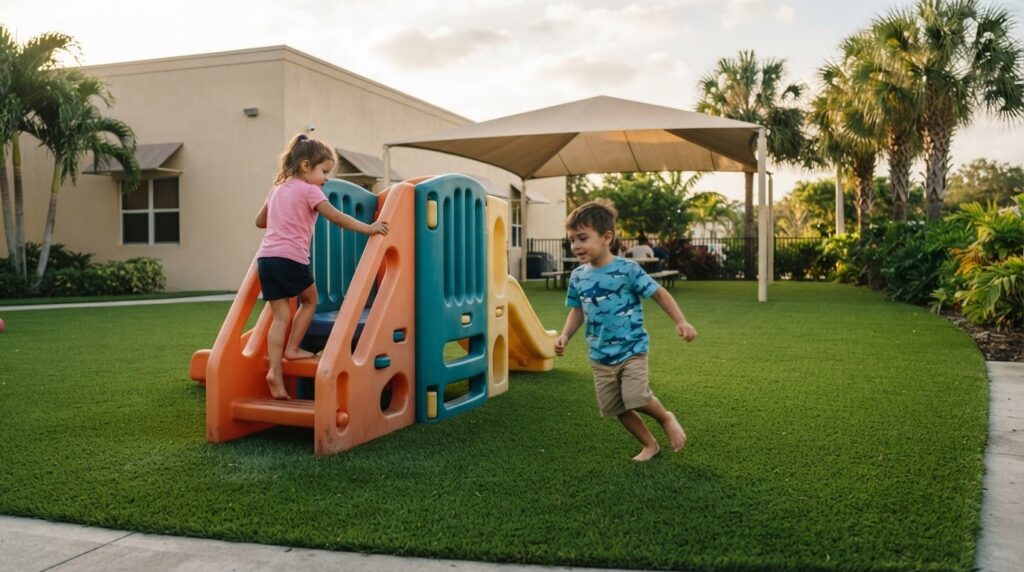
Artificial grass can go beneath playground equipment when the surface system suits the equipment and children’s activities. For backyard and school play areas, consider wear, fall protection, infill, drainage, and cleaning routines.
Durability in Play Areas
Running, pivoting, and equipment use can concentrate wear in the same spots. Assess the turf, infill, base, drainage, and impact protection as one system. Under swings and near slide exits, frequent foot traffic can disturb infill or expose worn areas. Include these high-use spots when evaluating a tested installation; an attractive surface alone doesn’t show how it will hold up to regular play.
Residential and Commercial Playgrounds
A backyard play set and a school playground see different patterns of use, but both need a surface planned around equipment placement and foot traffic. Map where children land, run, turn, and gather. Repeated use can concentrate wear in commercial play areas, so account for busy zones in the design. In either setting, synthetic turf is one part of the play area, not a substitute for suitable fall protection.
Recycled tire rubber is used in some playground surfacing. Approximately 12% of tires discarded annually in the United States were processed for sports fields and playground surfaces. A 2014 study of recycled rubber infill found cadmium and zinc levels exceeded regulatory requirements in some or all samples, respectively. These findings make infill material a relevant consideration when planning a children’s play area.
Build hygiene into the routine, too. Encourage children to wash their hands after outdoor play and before eating. The Consumer Product Safety Commission recommends cleaning playground toys after a visit. For a play area designed around these demands, explore playground turf planning.
Heat and burn risks on synthetic surfaces
Sun exposure can make playground surfaces uncomfortable and create burn risks. Temperature, shade, infill, and the timing of play all affect how children experience an outdoor surface.
Artificial Grass Temperatures
On warm or sunny days, air just above artificial turf and rubber playground surfaces can be 50 to 60 degrees hotter than the air or natural grass. Artificial turf and rubber surfaces often exceed 150°F on a 90-degree day, while natural grass is approximately 105°F. These figures show why surface temperature deserves attention, not just the weather forecast. Plan play spaces with shade and cooler periods in mind, especially where children sit or play barefoot.
Infill and Surface Temperature
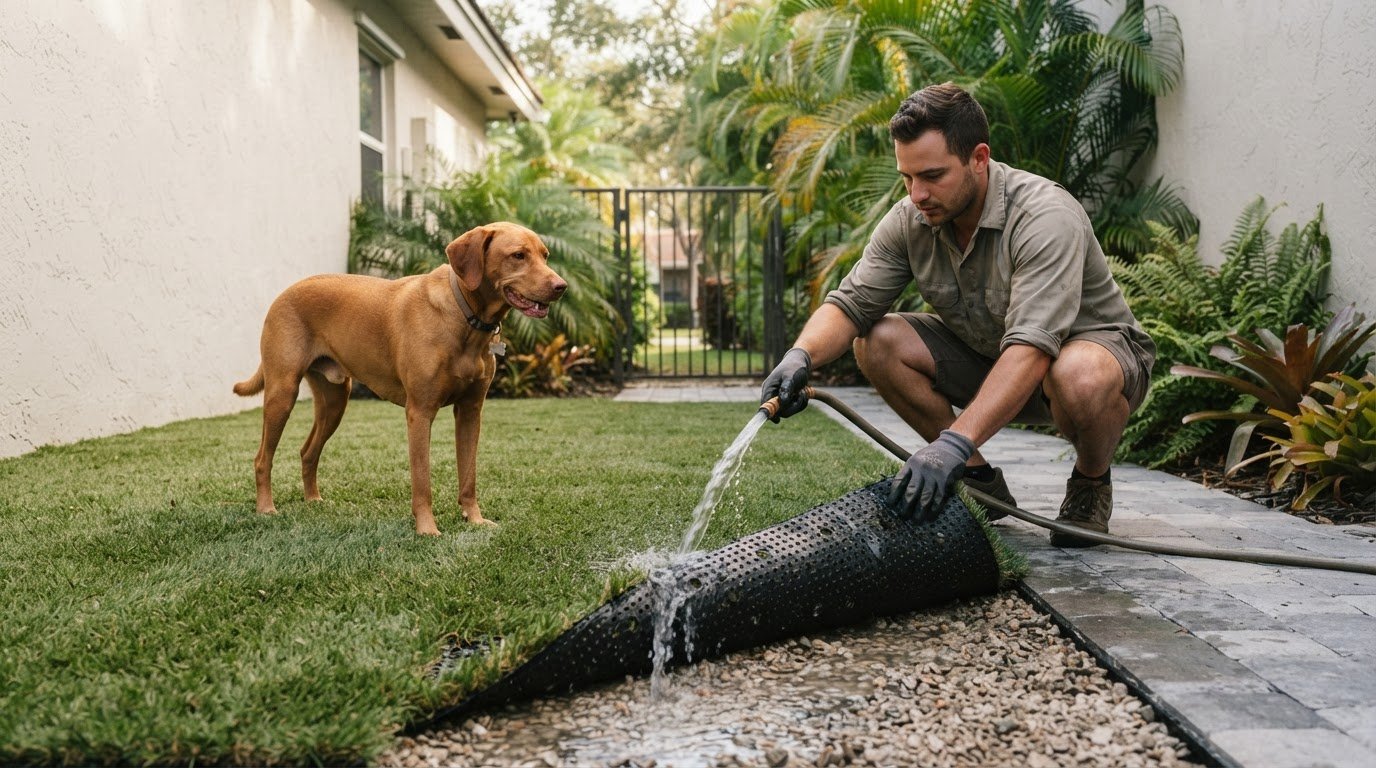
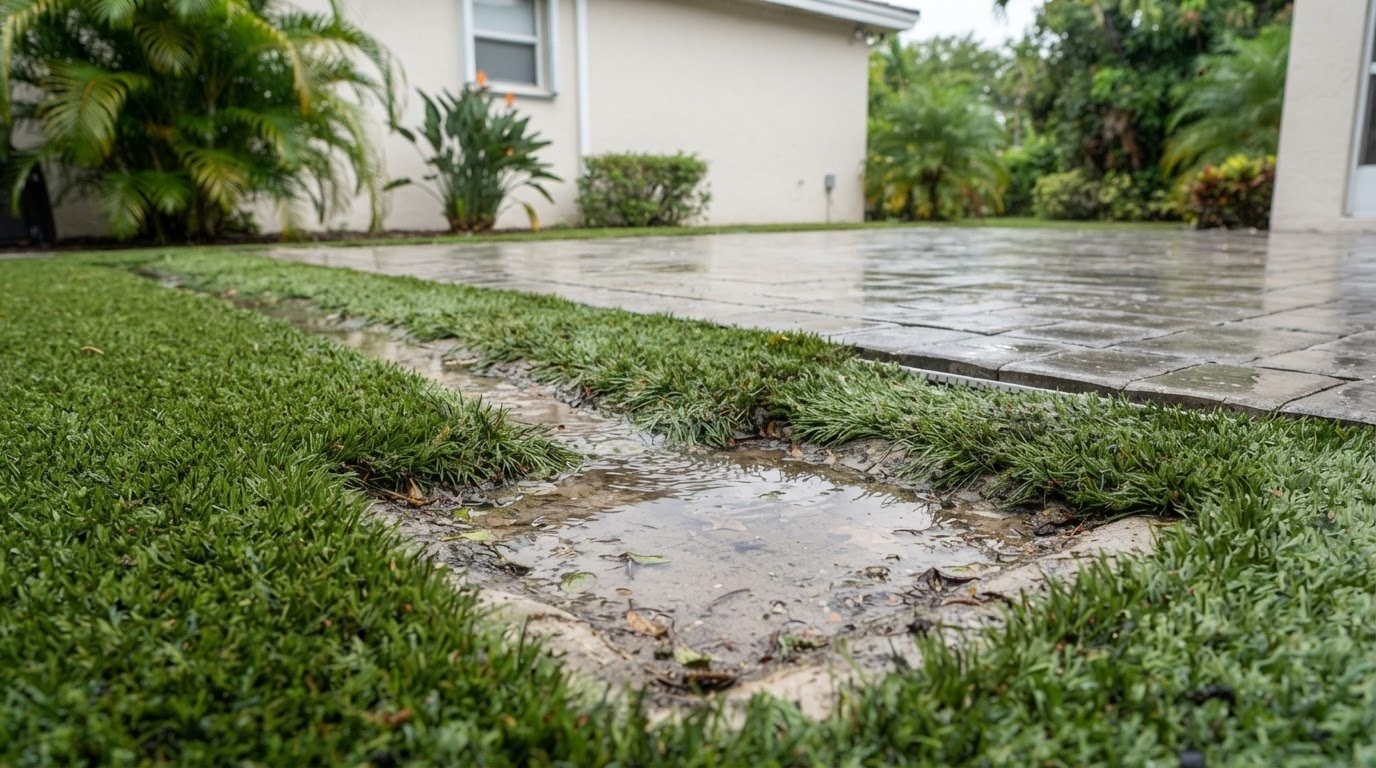
Infill can affect how warm synthetic turf gets. Sand infill retains water and helps reduce artificial grass temperature, making it one consideration in a heat-conscious design. Drainage matters too: the surface needs to shed water while allowing the infill and turf system to work as intended. The right choice depends on the complete installation, including sun exposure and how children use the area.
For a play surface with less abrasion, consider how children move across it, including sliding, crawling, and falling. Turf fibers, seams, and the base all contribute to the surface children contact. Assess high-contact spots, such as slide exits and areas beside swings, along with their sun exposure. Shade is a separate design measure, not a replacement for materials suited to outdoor play.
Poured-in-place surfacing is another option for playgrounds, but the material alone doesn’t determine how cool or comfortable it feels. When planning turf or poured-in-place areas, compare intended use, sun exposure, drainage, and surface contact. Each installation should suit its setting and expected use. On hot days, move play to shaded areas and avoid prolonged contact with surfaces that feel very hot.
Fall protection and impact testing
A child-focused turf installation combines a stable, draining base with suitable cushioning and infill. A foam underpad beneath artificial grass can add shock absorption, but the installed surface’s impact performance matters too.
A safer setup combines a prepared base, an underpad selected for the play area, and infill suited to the system. Each layer has a different role, so turf alone can’t establish fall protection.
Hardness testing helps assess how a surface responds to impact. Gmax scores are used to evaluate this performance, and turf companies recommend annual testing at 10 locations on each artificial turf field. Testing several points can reveal differences across a play area, including well-used zones, instead of relying on a single reading.
Foam underpads are one component of fall protection, not a substitute for a properly prepared base or impact testing. A well-drained foundation supports the layers above it, while cushioning beneath the turf can help absorb impact. Plan the setup around the equipment, expected use, and complete surface design. For example, include the landing zone beneath climbing equipment in the overall plan.
Parents can prioritize base preparation, underpad placement, and impact performance across the play area. Material safety and fall protection are separate considerations, so the installation plan should address both. If your outdoor project also includes a driveway, explore artificial turf driveway options.
Pro Turf Greens: Artificial Turf Driveways
Pro Turf Greens designs and installs Playgrounds & Recreational Turf for play areas where surface choice, equipment layout, and impact protection matter. If you’re planning a backyard play space or a playground for a school or commercial venue, consider this service in light of the safety factors above.
A successful project begins with the intended use of the area. Equipment placement, high-traffic zones, drainage, and the desired surface system shape the design. Pro Turf Greens also offers Artificial Turf Driveways, but driveway turf serves a different purpose from a children’s play surface.
Contact Pro Turf Greens to discuss your playground turf project and its design needs.
Plan a Play Space That Fits Your Family
For families considering child-safe artificial grass, start by planning the play area around how children will use it. Consider where equipment will go, how much room children need to move, and which features matter most to your household. A carefully planned project can bring these priorities together in a finished outdoor space.
Pro Turf Greens offers Playgrounds & Recreational Turf for play areas, along with Backyard Putting Greens and Tee Lines & Driving Ranges for other ways to use your yard. Each serves a different purpose, so your project can focus on the activity you want the space to support.
Share your goals and the intended use of your outdoor area to begin a conversation about the right direction. Contact Pro Turf Greens to discuss your project and explore a thoughtful approach to your space.
Frequently Asked Questions
Are There Safety Standards for Artificial Grass?
Yes. ASTM and IPEMA are references used in playground turf safety testing, but the relevant test depends on the concern being assessed. Impact performance and chemical content, for example, are separate questions. In a Fort Lauderdale play area, consider the intended use and the complete installed surface rather than treating one standard or test as proof of every safety feature.
Can artificial grass cause rug burns?
Yes. Friction against turf can irritate or abrade skin, particularly if a child slides or falls while playing. Reduce repeated sliding by planning activities and equipment placement thoughtfully, and watch areas where children commonly land. If a child develops skin irritation, pause play on that area and gently clean the affected skin.
Does Artificial Grass Contain Toxic Chemicals?
Artificial grass isn’t automatically free of chemical concerns; materials and infill can differ. For a children’s play area, look for product-specific documentation addressing lead and chemical testing, rather than relying on the general label “artificial grass.” EN71-3 is one reference used for testing products for harmful chemicals in children’s areas. Consider fibers, backing, and infill as separate components.
How do I clean artificial grass if my child spills food or drinks?
Remove solid food promptly, then rinse the spot with water from a hose. For sticky drinks, rinse thoroughly to keep residue from collecting among the fibers or infill. Pick up loose pieces before rinsing, then let the area drain. This simple routine helps keep a family play space ready for the next outdoor activity.
What makes artificial grass safe for children?
Safety depends on suitable materials and a surface system designed for the way children play. Consider chemical testing, the installed surface’s impact performance, cushioning, drainage, and sun exposure. A play area beneath climbing equipment, for example, needs a different focus on fall protection than an open lawn used for running. No single feature answers every safety question.
Are crumb rubber infill and PFAS in artificial turf harmful to children?
Crumb rubber raises questions about chemical safety, while PFAS should be considered separately; neither label alone establishes a child’s exposure or level of risk. Focus on material-specific test information for the actual turf system and infill, including which substances were assessed. This helps distinguish a potential hazard from evidence about exposure in a particular play area.