A 10,000-square-foot natural lawn uses an estimated 299,040 gallons of water per year, compared with 89,712 gallons for synthetic turf, about 70% less in this comparison. That makes artificial turf for water conservation in Florida a potential way to reduce outdoor household water use, though turf may still need occasional rinsing or spraying to cool it.
Homeowners in drought-impacted areas often look for ways to use less water outdoors. Potential savings depend on the lawn area and its current watering needs, so a comparison is a reference, not a household-specific forecast. This article explains how artificial turf can affect water use, why that matters in Florida, and what tradeoffs to weigh when planning a landscape change.
Key Takeaways
- Compare the water needs of your current lawn with the area you’re considering converting to understand where savings may come from.
- Consider how reduced lawn irrigation could matter during drought, when outdoor water use adds pressure to household demand.
- Account for occasional rinsing and cooling when thinking about turf’s water needs and ongoing care.
- Explore how artificial turf driveways or other turf features could fit into your landscape goals and water-conscious plans.
How Much Water Can You Save With Artificial Turf?
Replacing irrigated grass with artificial turf can reduce lawn watering, especially across a large yard. The difference depends on lawn size, local conditions, and whether the turf needs rinsing or cooling. For homeowners considering artificial turf water conservation in Florida, start by comparing the lawn’s current irrigation needs with the water use that would remain.
Water Savings From Replacing Natural Grass
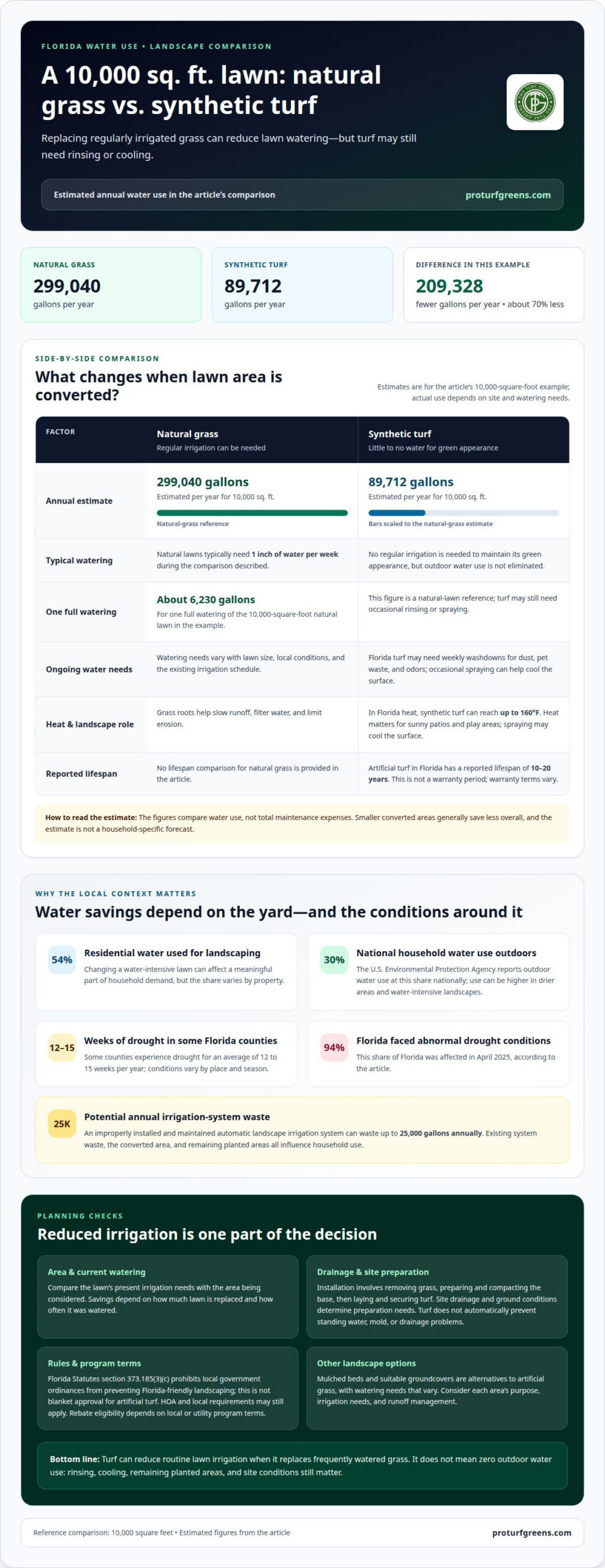
A 10,000-square-foot comparison estimates 299,040 gallons per year for natural grass and 89,712 gallons per year for synthetic grass. That is 70% less water in this example, a difference of 209,328 gallons annually. The comparison shows why replacing a regularly irrigated area can matter during dry weather, when natural lawns typically need 1 inch of water per week. Smaller conversions save less overall, so the area replaced is central to potential savings. Artificial turf water conservation in Florida is most relevant where it replaces lawn that otherwise receives frequent irrigation.
Artificial Turf Irrigation Needs
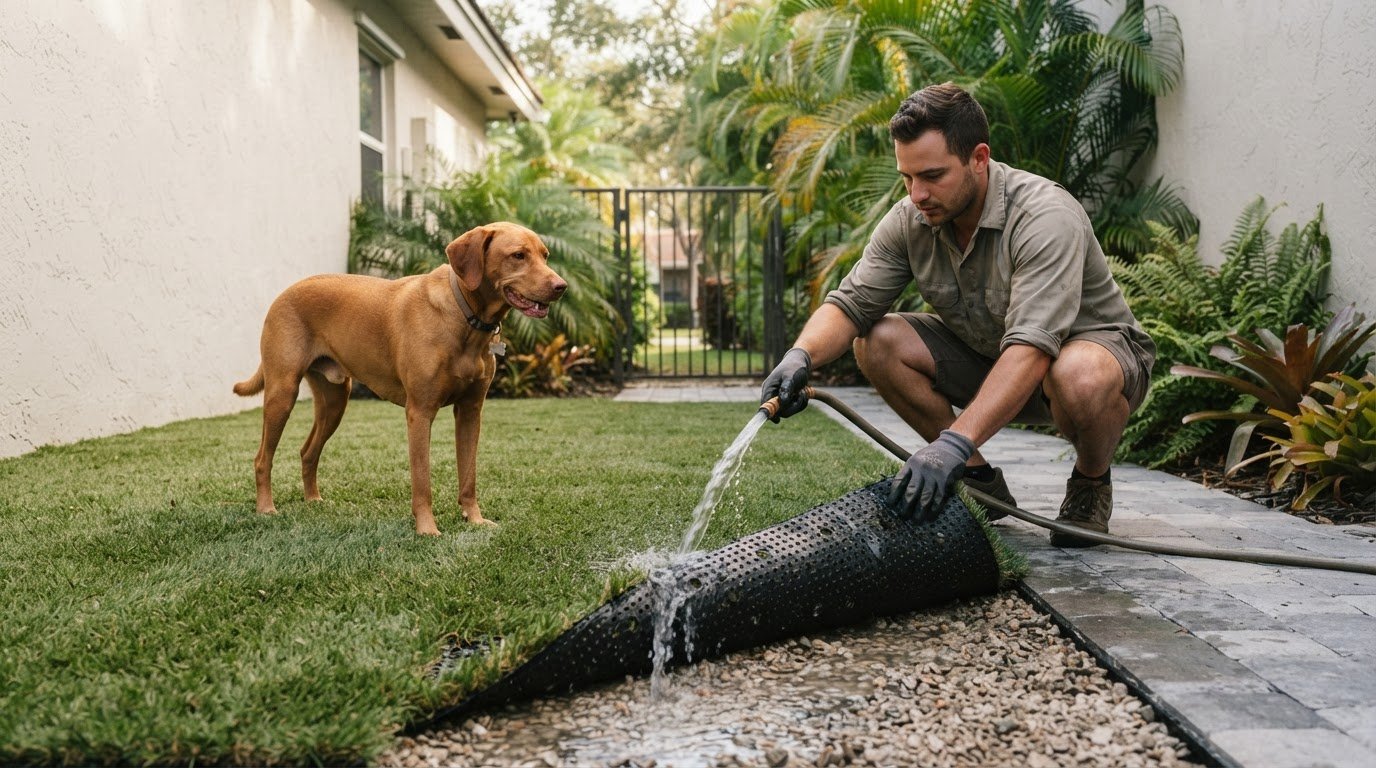
Artificial grass needs little to no water to maintain its green appearance, including in dry climates, but it isn’t entirely water-free. Florida turf may need weekly washdowns to remove dust, pet waste, and odors; occasional spraying can help cool the surface. A 10,000-square-foot natural lawn uses about 6,230 gallons for one full watering in the example. Those different needs clarify why turf can reduce irrigation without eliminating outdoor water use.
These figures compare water costs, not total maintenance expenses.
Florida Statutes section 373.185(3)(c) prohibits local government ordinances from preventing Florida-friendly landscaping. This doesn’t establish blanket approval for artificial turf; HOA and local requirements may still affect installation.
Rebate eligibility depends on the terms of each local or utility program. Artificial turf replacement qualifies only where those terms allow it.
Artificial turf in Florida has a reported lifespan of 10-20 years. That estimate isn’t a warranty period, and warranty terms vary.
Installation typically involves removing existing grass, preparing and compacting the base, then laying and securing the turf. Site drainage and ground conditions determine the preparation required.
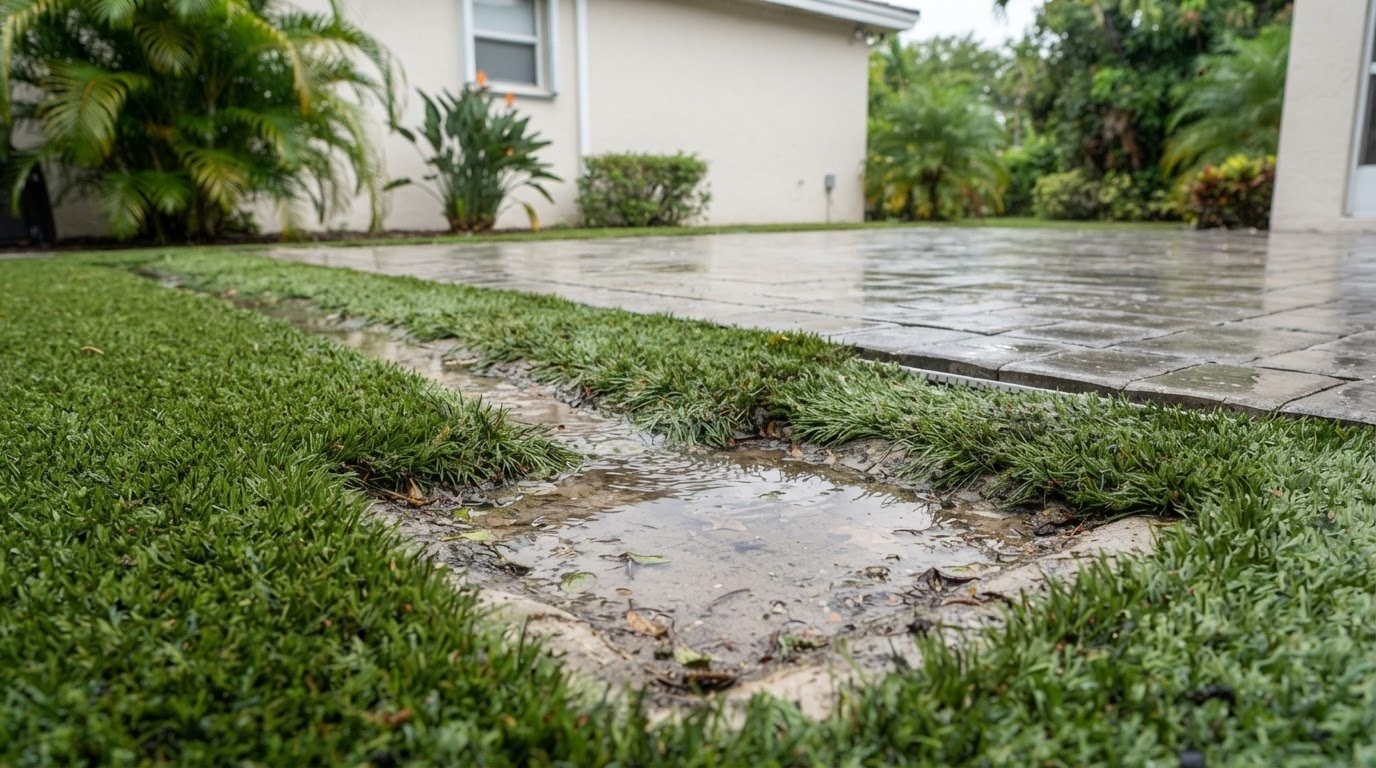
Artificial turf does not automatically prevent mosquitoes, mold, or drainage problems. Moisture and standing water can still be concerns, which is why site drainage and base preparation matter.
Mulched beds and suitable groundcovers are alternatives to artificial grass, though their watering needs vary. When planning a landscape, consider each area’s purpose and irrigation needs.
Water conservation in drought-impacted areas
Reducing landscape irrigation can help households use less water during dry periods. The environmental impact depends on local conditions, ground cover, and how much water the yard would otherwise need.
Heat and Drought Performance
Synthetic turf keeps its green appearance without regular irrigation, but Florida heat changes the tradeoff. Artificial grass can reach temperatures of up to 160°F, making surface heat relevant for patios, play areas, and other sunny spaces. Occasional spraying may cool the turf, so drought planning should consider both reduced irrigation and the water used for cooling. Natural grass also has a distinct environmental role: its roots help slow runoff, filter water, and limit erosion.
Florida Drought Conditions
Florida’s drought conditions vary by location and season. Some counties experience drought for an average of 12 to 15 weeks per year, while 94% of Florida faced abnormal drought conditions in April 2025. These conditions can affect outdoor watering needs and make household conservation more relevant. The U.S. Environmental Protection Agency says outdoor water use accounts for 30 percent of household use nationally, with higher use possible in drier areas and water-intensive landscapes.
During drought, replacing frequently watered lawn areas with artificial turf can reduce irrigation demand and leave more water for other household needs. The amount saved depends on the area converted and its former watering schedule. Turf may still need rinsing or cooling, so the environmental impact is not the same as using no water.
Florida Statutes section 166.048 recognizes Florida-friendly landscaping’s contribution to water conservation, protection, and restoration. Section 373.185(1)(b) describes it as landscaping that conserves water, protects the environment, adapts to local conditions, and tolerates drought. These principles can inform landscape decisions, including groundcover choices and runoff management. Consider how synthetic turf options fit your yard’s water priorities and site conditions.
Potential household water savings
Household savings depend on how much water landscaping currently uses and how often it is irrigated. Landscaping maintenance accounts for 54 percent of residential water use, so changing a water-intensive lawn can affect a meaningful part of household demand. The proportion varies by property: a small lawn with limited irrigation offers a different opportunity from a large yard watered regularly. Sustainable landscaping considers those site-specific needs rather than treating every yard alike.
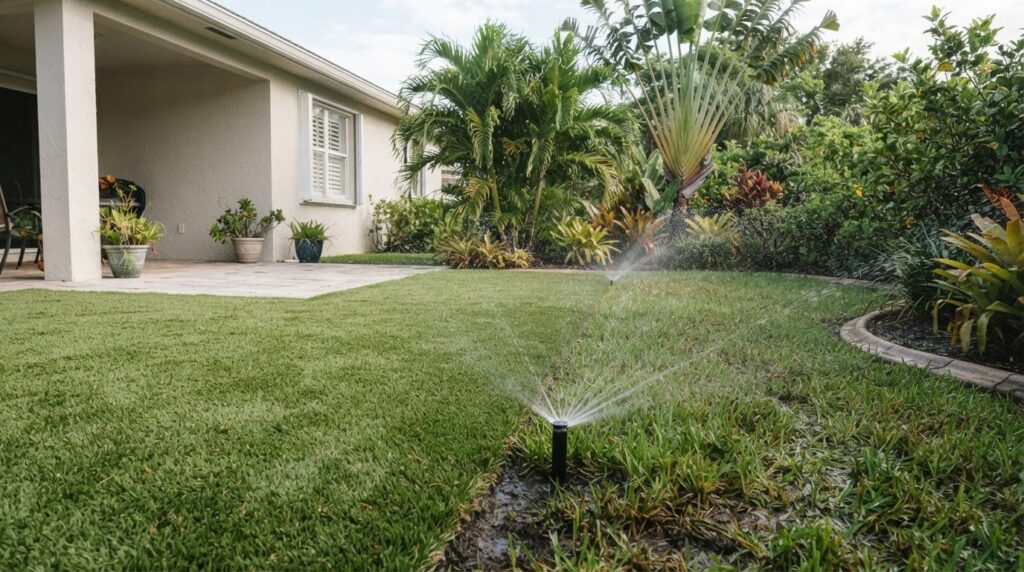
Irrigation efficiency also affects the starting point. An improperly installed and maintained automatic landscape irrigation system can waste up to 25,000 gallons annually. Replacing lawn area may reduce routine watering, but existing system waste, the size of the converted area, and the remaining planted areas all influence total household water usage. A household that keeps irrigated planting beds will still use water outdoors.
Water savings and bill savings are related, but they are not identical. Using less water outdoors may reduce the water-related portion of a bill, while the final change depends on local rates, billing structure, and the household’s remaining use. A warehouse landscape and a residential yard may both use irrigation, but a homeowner’s bill reflects that specific account and property, not a generic estimate.
Outdoor water use also doesn’t all reach the soil. An estimate in the topic data says 50% of water used outdoors is lost to wind, evaporation, and runoff. Reducing irrigation can limit water applied to a lawn, but it doesn’t by itself resolve runoff from other surfaces or improve natural water filtration. Natural turf roots help slow runoff and filter water, an environmental benefit to weigh alongside conservation.
For a practical household estimate, consider the irrigated lawn area being replaced, its watering schedule, and the outdoor water use that will remain. These factors connect a landscape change to water use more directly than a broad savings claim.
Artificial turf and household water conservation
Household conservation means managing outdoor demand, not eliminating every use of water. Replacing irrigated natural grass with artificial turf changes one part of a home’s landscape water use; it does not reduce indoor use or the water needed for plants that remain. Artificial turf’s contribution to water conservation in Florida depends on how the converted area fits into the wider yard.
A partial conversion can preserve planted beds while changing the surface of a lawn area. For example, homeowners might keep garden spaces and convert an area used mainly for open activity. The remaining plants still need appropriate care, while the converted area has different irrigation needs. This approach helps match each part of the landscape to its purpose.
Water conservation is only one consideration. Natural grass roots help filter water, slow runoff, and limit erosion. Artificial turf does not provide these root functions or the wildlife support associated with natural grass. Grass clippings left on a lawn also return nutrients to the soil. Weighing these differences gives Florida homeowners a fuller view of artificial turf water conservation in Florida, beyond irrigation alone.
Maintenance choices also shape water use after grass is replaced. Artificial turf does not need fertilization to maintain its appearance, but it may still need rinsing or cooling. The overall effect depends on the area converted, its previous watering pattern, and the care required for the rest of the yard. Account for each factor rather than treating the turf surface as the whole landscape.
To make a practical comparison, identify which areas receive irrigation, which planted spaces will remain, and how turf will be maintained. That helps clarify where artificial turf for water conservation in Florida fits your household’s priorities. If synthetic turf is part of your plan, explore your turf project options.
Pro Turf Greens: Artificial Turf Driveways
Pro Turf Greens designs and installs artificial turf driveways for homeowners seeking a different finish for their property. A driveway project is distinct from replacing irrigated grass, so it should not be counted as lawn-water savings. It can, however, be part of a broader landscape plan that considers where natural grass remains and where turf suits the intended use.
For a water-conscious yard, begin with the areas that currently need irrigation, then consider each surface according to its purpose. Pro Turf Greens can design an artificial turf driveway around your property’s layout and goals. If reducing lawn watering is the priority, consider how the driveway fits alongside the irrigated landscape rather than assuming the driveway itself saves water.
Contact Pro Turf Greens to discuss an artificial turf driveway for your property.
Plan a Landscape That Fits Your Priorities
Choosing artificial turf for water conservation in Florida starts with a broader landscape decision: which areas should stay planted, and which should serve another purpose? A thoughtful plan can balance water use with drainage, shade, play, and how you want to enjoy your property. The next step is not necessarily replacing the whole lawn, but shaping each area for its intended use.
Pro Turf Greens offers Backyard Putting Greens, Playgrounds & Recreational Turf, and Tee Lines & Driving Ranges for different outdoor activities. These options let homeowners consider turf beyond the traditional lawn while keeping the property’s purpose central to the design.
To discuss a landscape project and explore which turf application may suit your goals, contact Pro Turf Greens. A clear vision can be the starting point for a more considered outdoor space.
Frequently Asked Questions
How much water does artificial turf save compared with natural grass in Florida?
In a 10,000-square-foot comparison, synthetic grass uses an estimated 89,712 gallons annually, versus 299,040 gallons for natural grass. That is a difference of 209,328 gallons in the example, not a guaranteed household result. Your potential savings depend on the lawn area replaced and its previous watering pattern. Occasional rinsing or cooling still uses water, so account for those needs too.
How does artificial turf perform in Florida heat, heavy rain, and humidity?
Artificial turf stays green without routine irrigation, but Florida’s heat can make its surface much hotter than natural grass. Synthetic turf can reach up to 160°F. Rain and humidity make drainage and moisture management important design considerations: compacted soil can increase runoff, and turf doesn’t provide the water-filtering effects of natural grass roots. Site preparation and drainage planning matter in rainy conditions.
What are the environmental risks of artificial turf in Florida, including runoff and microplastics?
Runoff is an important consideration because installing artificial grass involves soil compaction, which can increase runoff. Natural grass roots help slow runoff, filter water, and reduce erosion. Microplastics are also a material concern for synthetic surfaces, particularly as materials wear and reach the end of their useful life. Consider particle containment, drainage, and disposal alongside the reduced need for lawn irrigation.
Which Florida regions have water restrictions or drought rules that affect lawn replacement?
Florida’s drought conditions vary by area, but the cited state law does not provide a regional schedule of watering restrictions. Florida Statutes section 373.185(3)(c) prohibits local government ordinances from preventing Florida-friendly landscaping. Section 373.185(1)(b) defines that landscaping by water conservation, environmental protection, local adaptation, and drought tolerance. These provisions don’t by themselves establish that every artificial turf installation qualifies as Florida-friendly landscaping.
How much does artificial turf cost to maintain compared with a natural lawn in Florida?
These figures compare water costs, not total maintenance expenses.