Could your natural grass tee line be the hidden drain on your facility’s annual revenue? Between the relentless heat and the sudden, heavy downpours that turn traditional sod into a muddy liability, maintaining a professional hitting surface in our region is a constant struggle. When you analyze the driving range turf cost South Florida operators encounter, it becomes obvious that the price of frequent downtime often outweighs the initial expense of a professional upgrade. You’ve likely seen how quickly standard grass fails under high-traffic pressure, leading to frustrated golfers and rising maintenance overhead.
We believe that a professional-grade driving range should be a source of pride and consistent profit rather than a maintenance headache. This 2026 guide offers a detailed look at the investment required for high-density synthetic systems that are specifically engineered for the South Florida climate. You’ll learn how material density and specialized sub-base engineering dictate the true cost-per-year of your installation. We’ll preview the performance factors that ensure your turf lasts eight years or more, providing the realistic tee-holding capability and ball feedback that discerning players expect from a premier facility.
Key Takeaways
- Learn why eliminating the “rest and recovery” cycles of natural grass provides an immediate boost to your facility’s annual revenue and availability.
- Understand how material density and fiber weight directly influence the total driving range turf cost South Florida operators should budget for in 2026.
- Discover the critical differences between nylon and polypropylene systems to ensure your hitting surface maintains its shape under intense UV exposure.
- Identify the essential site preparation steps, including custom-engineered drainage systems, that protect your investment from South Florida’s heavy seasonal rainfall.
- Explore how a local specialist’s knowledge of regional soil conditions creates a more durable and realistic hitting experience for your golfers.
Understanding the Investment: Why South Florida Facilities are Switching to Synthetic
Synthetic driving range turf is a high-density nylon or polypropylene system designed for repetitive impact. In South Florida, the transition from traditional natural sod to these advanced materials is driven by more than just aesthetics; it is a strategic financial decision. When evaluating the driving range turf cost South Florida facility managers must account for, the conversation often begins with the sheer difficulty of maintaining pristine natural grass in our unique environment. Our region’s sandy soil and intense weather patterns create a volatile setting for high-traffic golf areas.
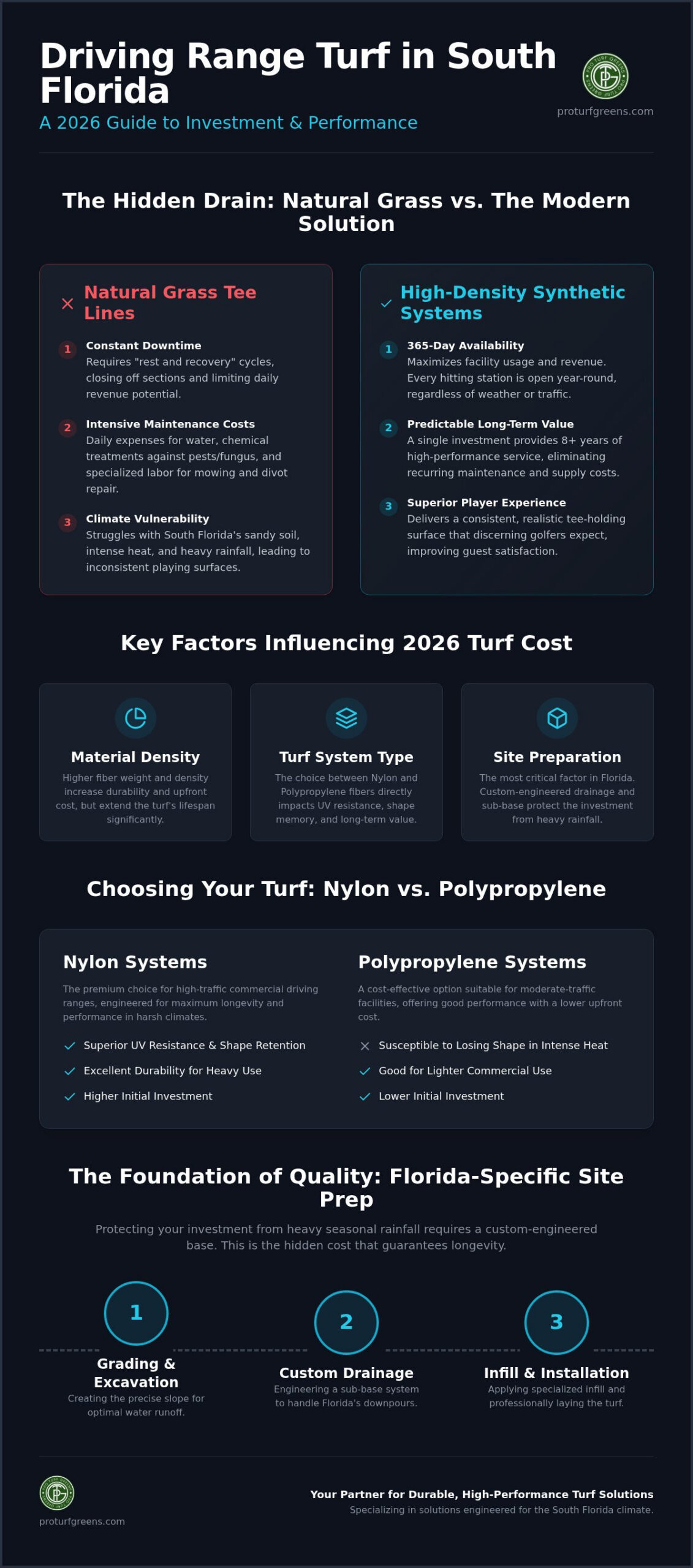
Natural grass tee lines face a relentless uphill battle. Florida’s sandy soil does not hold nutrients well, which necessitates constant, expensive fertilization programs. Additionally, natural grass requires intensive “rest and recovery” cycles where sections of the line are closed off to allow the turf to heal from divots. This creates a patchwork of usable and unusable space, often frustrating golfers and limiting your facility’s daily earning potential. By switching to a synthetic solution, you ensure that every hitting station is available 365 days a year, regardless of recent rainfall or usage volume.
Diversifying your facility’s recreational offerings is another effective strategy for maximizing property value; for instance, resort and campground managers can learn more about Aqua Play Parks to discover how custom-engineered water attractions can further boost commercial ROI.
Natural Grass vs. Synthetic: The Maintenance Gap
Maintaining a high-standard natural grass range involves significant recurring expenses that often go overlooked in initial budgeting. These costs include:
- Water and Irrigation: Thousands of gallons are required weekly to combat the drying effects of the Florida sun.
- Chemical Treatments: Our local humidity invites fungal diseases and pests that can wipe out a natural tee line in days without expensive preventative applications.
- Specialized Labor: You need skilled staff for daily mowing, leveling, and the tedious task of hand-filling hundreds of divots every evening.
Synthetic surfaces eliminate these daily chores. There is no need for seed, soil, or specialized mowers, which allows your maintenance crew to focus on higher-value facility improvements rather than basic survival of the grass.
For property owners who want to ensure their entire facility or estate is managed with this same level of strategic efficiency, Morgan Property Solutions Inc. offers expert real estate and property management services.
Commercial ROI and Facility Longevity
A professional synthetic installation is built to endure the specific challenges of our climate. These systems typically provide a lifespan of 5 to 8 years even under heavy commercial use, making the long-term driving range turf cost South Florida businesses face much more predictable. This longevity ensures that your capital investment is amortized over nearly a decade of high-performance service.
Beyond the balance sheet, the consistency of the hitting surface improves member retention and guest satisfaction. Golfers appreciate a reliable lie and a surface that holds a tee properly every time they visit. From an environmental perspective, switching to synthetic significantly reduces the runoff of chemicals and fertilizers into the delicate Everglades watershed. This choice aligns your business with local conservation efforts while providing a superior, year-round product for your players. Facility managers overseeing multi-use properties should also be aware that the same synthetic turf expertise applies to other high-traffic areas; understanding playground turf safety standards Florida regulations is essential for any property that includes recreational spaces for children alongside athletic facilities.
As you scale your commercial operations and manage high-value facility investments, it is equally important to protect your legal interests. To safeguard your contracts and navigate local regulations, you can explore Business Litigation Services tailored to the South Florida business community.
Key Factors Influencing Driving Range Turf Cost in 2026
Calculating the driving range turf cost South Florida facility owners should expect requires a deep dive into the specific engineering of the project. While square footage is the primary driver, the relationship between size and price isn’t always linear. Larger commercial ranges often benefit from economies of scale. When we mobilize heavy equipment and specialized crews for a massive tee line, the fixed logistical costs are distributed across a wider surface area. This often results in a more favorable price per square foot compared to smaller, boutique installations that require similar mobilization efforts for less coverage.
The choice between a continuous tee line and individual hitting stations also plays a significant role in the final investment. A continuous line offers a seamless, professional aesthetic and allows for more flexible station spacing during peak hours. Conversely, individual stations may require more intricate framing and specialized edging, which increases labor time. Regardless of the layout, the stability of the surface depends on specialized infill. This isn’t standard sand; it’s a precision-graded material designed to provide realistic “give” upon impact. This engineering protects the golfer’s joints while keeping the turf fibers upright under heavy use. For South Florida golfers who want to ensure their bodies are as well-maintained as their hitting surfaces, the Chiropractic Natural Care Center offers expert care to address the physical demands of the sport.
Material Quality and Face Weight
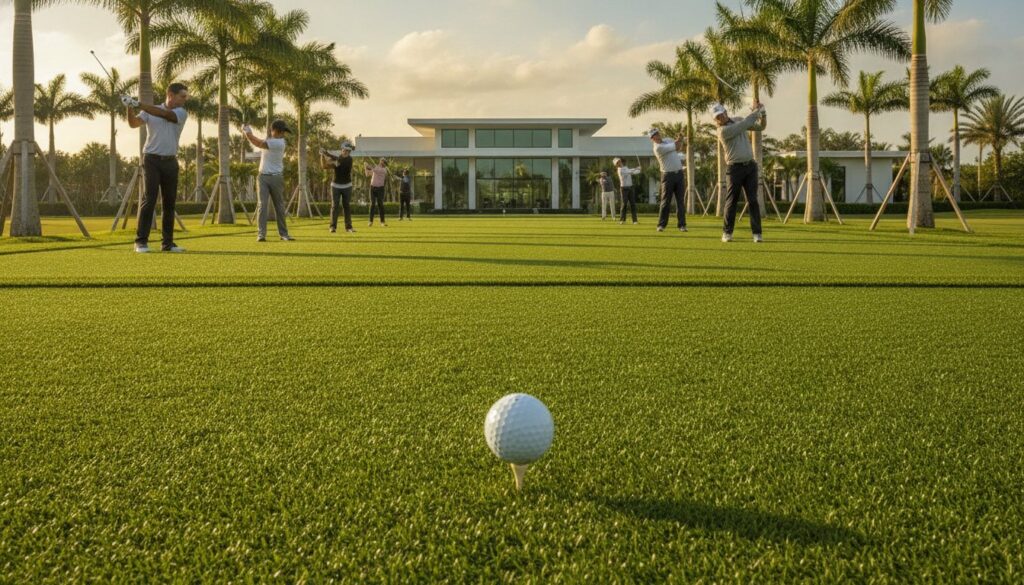
In the synthetic world, quality is measured by density. Professional-grade nylon systems, often featuring a 110 oz. face weight, command a higher price than lower-density polypropylene alternatives. This face weight refers to the ounces of fiber per square yard. A higher weight means a denser, more resilient surface that won’t mat down after a few months of use. For a premium experience, many facilities opt for “tee-holding” turf. This specialized material allows golfers to push a standard wooden tee directly into the fibers, which provides a much more realistic practice session than old-fashioned rubber inserts.
Design Complexity and Customization
Beyond the hitting surface itself, customization options influence the overall project scope. Adding “First Cut” borders or multi-colored target greens in the landing area creates a high-end, resort-style atmosphere that can justify higher bucket prices. We often see facilities integrate custom branding or logos directly into the turf for a polished, corporate look. Modern ranges are also increasingly incorporating technology, such as launch monitor sensors or power tee systems. These additions require precise cutouts and specialized sub-surface wiring, which should be planned during the initial design phase. If you’re unsure which features fit your budget, a professional consultation can help clarify the most impactful upgrades for your specific site.
Comparing Turf Systems: Performance vs. Long-Term Value
Selecting the right material is a critical step in managing the long-term driving range turf cost South Florida operators face. While initial price tags vary, the real value lies in how the fibers respond to thousands of club impacts under the punishing tropical sun. You aren’t just buying a surface; you’re investing in a system that needs to maintain its structural integrity for years. Understanding the chemical properties of different fibers helps you avoid the common pitfall of choosing a material that looks great on day one but degrades by year three.
The feedback a golfer receives upon impact is what keeps them coming back. If a mat is too hard, it causes joint fatigue; if it’s too soft, it feels unrealistic. High-quality systems mimic the resistance of natural sod, allowing for a pure strike that doesn’t punish the player’s wrists. This level of realism is why many elite facilities prioritize high performance sports turf for their primary hitting areas. These systems are engineered to absorb energy correctly while providing the durability required for a high-traffic commercial environment.
Nylon 6-6: The Gold Standard for Range Performance
Nylon 6-6 is widely considered the premier choice for professional tee lines because of its exceptional fiber memory. This material naturally springs back into place after being compressed by a club head or a golfer’s stance. In the intense heat of Miami or Palm Beach, nylon’s high melting point is a significant advantage. It won’t soften or develop the unsightly mat-glaze that occurs when friction from club heads melts cheaper plastics. This resilience ensures that your driving range turf cost South Florida investment pays off through a significantly longer replacement cycle.
Polypropylene and Hybrid Systems
Polypropylene is a softer fiber that is often more budget-friendly. While it’s an excellent choice for landscape applications or lower-traffic practice areas, it lacks the raw strength of nylon for a primary tee line. Some facilities choose hybrid systems that blend both materials. These hybrids aim to capture the soft, natural feel of polypropylene while using nylon to provide structural support. When comparing these systems, always look for advanced UV stabilization. Without specific chemical UV inhibitors, even the best fibers will become brittle and fade in the Florida sun, leading to premature failure and unexpected replacement costs. The same UV resilience and safety-focused engineering that protects athletic turf also applies to family-friendly spaces; reviewing the latest Florida playground turf safety standards for 2026 can help multi-use facility operators select certified materials that meet both performance and compliance requirements across their entire property.
South Florida Site Prep: The Hidden Costs of Quality
While the vibrant green surface captures the attention, the foundation dictates the lifespan. Proper site preparation is a significant variable in the driving range turf cost South Florida facilities must plan for. This phase begins with the meticulous removal of existing sod and the precise leveling of the terrain. Creating a perfectly flat tee line on Florida’s shifting, sandy soil requires professional-grade excavation equipment and a deep understanding of local topography. If the base isn’t perfectly level, the turf will eventually follow the contours of the ground, leading to an inconsistent experience for your golfers.
Logistics also play a role in budgeting. In densely populated areas like Coral Gables or Downtown Fort Lauderdale, site access can be a complex puzzle. Navigating narrow streets with heavy machinery or coordinating deliveries in restricted commercial zones adds labor hours to the project. Homeowners and facility managers in the area who want to understand the full scope of working with a qualified driving range turf installer Fort Lauderdale specialists recommend can find detailed guidance on site requirements, material selection, and local compliance standards. We prioritize clear communication and strategic planning to ensure these logistical hurdles don’t disrupt the timeline. It’s better to account for these factors early than to face delays during the installation phase.
Engineered Sub-Base Requirements
A stable hitting surface relies on a multi-layered sub-base of crushed stone and compacted aggregate. This foundation prevents the unsightly surface ripples that can occur when a base isn’t properly engineered for heavy foot traffic. Because our region has an exceptionally high water table, we use specific base materials that won’t shift or erode during seasonal saturation. For a deeper look at how base stability protects your investment, explore our guide on durable turf for high traffic. A well-built base is the only way to ensure your range remains functional for its entire intended lifespan.
Drainage Systems for Tropical Climates
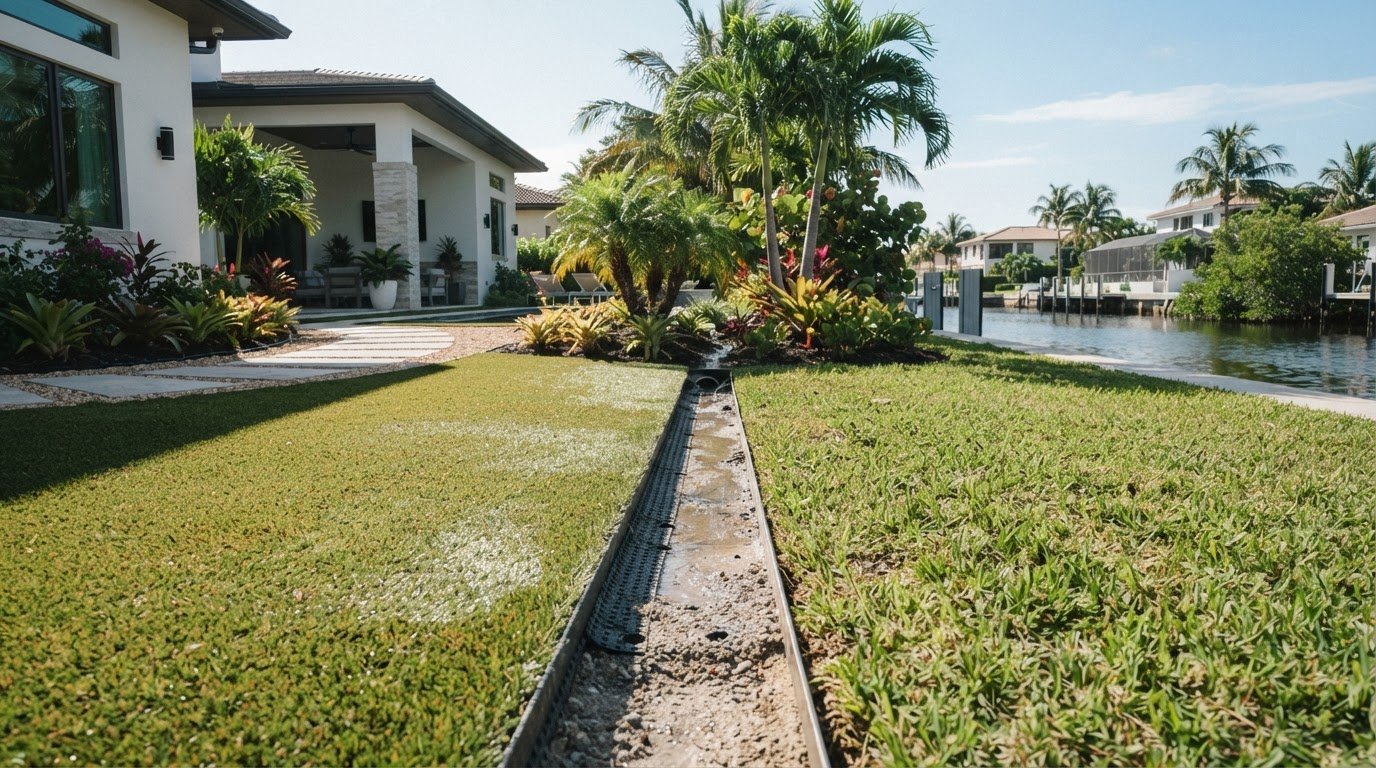
Standard landscape drainage simply isn’t sufficient for a commercial range during a tropical storm. We design hurricane-ready systems that utilize both perforated pipe networks and high-flow turf backing. This dual-action approach ensures zero standing water, even after a heavy South Florida downpour. Neglecting this step is a costly mistake; trapped moisture can destabilize the sub-base and lead to premature fiber degradation. Ensuring your facility stays operational immediately after a storm is the ultimate goal of professional drainage engineering. To get an accurate assessment of your specific site’s requirements, you can schedule a professional evaluation at proturfgreens.com today.
Custom Driving Range Solutions with Pro Turf Greens
Choosing a specialist who lives and works in your community makes a significant difference in the final result. At Pro Turf Greens, we’ve refined our approach to meet the exact demands of our local environment. We don’t believe in one-size-fits-all solutions because the driving range turf cost South Florida facilities encounter is heavily influenced by site-specific variables. Whether you’re looking to renovate a 50-station commercial tee line or install a private practice area at a luxury estate, our team brings the same meticulous attention to detail to every square foot. We act as your dedicated partner, guiding you through the selection of materials that balance aesthetic excellence with raw durability.
Our expertise allows us to navigate the intersection of modern material innovation and functional design. We take pride in being a reliable local authority that understands how our intense UV levels and unique soil conditions affect synthetic fibers over time. By partnering with us, you’re investing in a surface that isn’t just beautiful; it’s engineered to perform at a professional level for years to come. This commitment to quality ensures that the driving range turf cost South Florida businesses invest today translates into lower maintenance overhead and higher player satisfaction for the next decade. Before committing to any installation, many of our clients find it valuable to schedule an artificial turf consultation in Miami to walk through site-specific material recommendations, drainage planning, and custom design options with our local specialists.
Beyond the hitting surface, maintaining a high-performance facility involves protecting your structural assets from the same intense weather conditions; you can explore Residential and Commercial Roof Replacement to find veteran-owned roofing expertise for your property.
The Pro Turf Greens Design Process
Our engagement begins with a comprehensive site assessment across Palm Beach, Miami, or Fort Lauderdale. We analyze your current drainage patterns and projected traffic volume to recommend the ideal material configuration. Selecting the right face weight is essential for ensuring your range can handle thousands of daily impacts without losing its realistic feel. For clients looking to create a complete practice facility, we often integrate these hitting areas with a professional backyard putting green installation to provide a full-spectrum short game experience. This holistic planning ensures that every element of your project works in harmony.
Professional Installation and Support
The longevity of your investment depends largely on the skill of the installation crew. Our teams are specifically trained in golf-specific turf tensioning, a technical process that prevents shifting and ensures a perfectly flat hitting surface. We don’t just leave you with a new range; we provide the knowledge needed to extend its life through simple, effective care. Following a few professional tips can keep your surface in peak condition:
- Regularly clear organic debris to prevent drainage clogs.
- Rotate hitting stations during peak seasons to distribute wear evenly.
- Use a specialized turf brush to keep high-density fibers upright and resilient.
Every project is unique, and getting an accurate budget requires a professional eye. We invite you to schedule a consultation to receive a precise, site-specific quote tailored to your facility’s goals. Call 561-221-1010 for a custom project estimate and take the first step toward a more durable, profitable hitting surface.
Invest in a High-Performance Future for Your Range
Transforming your facility with a synthetic hitting surface is a strategic move that pays dividends in both player satisfaction and operational efficiency. The true driving range turf cost South Florida managers encounter is defined by the longevity of the materials and the precision of the underlying engineering. By prioritizing high-density nylon systems and custom-engineered drainage capable of handling 100+ mph flow rates, you ensure your facility remains open and profitable regardless of the weather. These systems eliminate the costly “rest and recovery” cycles required by natural grass, allowing for consistent year-round revenue.
Our team brings local expertise since 2026 to every project, providing specialized, PGA-caliber turf systems that stand up to the intense tropical sun. We understand that a successful installation requires a meticulous balance of performance and resilience. Whether you’re upgrading a commercial tee line or a private practice area, the right foundation makes all the difference in achieving a realistic feel and long-term durability. For facilities looking to showcase their new PGA-caliber surfaces during special events or tournaments, it is also wise to explore Project-Based Video Production and Livestreaming Fees to ensure your venue is presented with broadcast-quality professionalism.
Ready to take the next step toward a maintenance-free, professional-grade surface? Schedule Your Free South Florida Turf Consultation today. We look forward to helping you create a world-class practice environment that your golfers will love for years to come.
Frequently Asked Questions
How much does driving range turf cost per square foot in South Florida?
Total project costs depend on several variables, including the total square footage, the complexity of site preparation, and the specific material density selected. Larger commercial ranges often see a more favorable price per square foot due to economies of scale during mobilization. To understand the specific driving range turf cost South Florida facility managers should anticipate, a professional site assessment is necessary to provide an accurate and detailed estimate.
How long does synthetic driving range turf last in the Florida sun?
A professional synthetic installation typically lasts between 5 to 8 years even under the stress of heavy commercial use. Our materials feature advanced UV-resistant stabilizers specifically designed to withstand the intense tropical sun without becoming brittle or fading. Proper maintenance, such as regular station rotation and debris clearing, ensures the fibers maintain their structural integrity and aesthetic appeal for nearly a decade.
Can you use real tees in synthetic driving range turf?
You can use standard wooden tees in our high-density synthetic systems designed for professional tee lines. This specialized “tee-holding” turf allows golfers to set their ball at any height, providing a much more realistic practice experience than traditional rubber inserts. This feature is a hallmark of premium facilities, as it offers the authentic feedback and versatility that discerning players expect during their sessions.
Does synthetic turf get too hot for golfers in Miami or Fort Lauderdale?
Modern synthetic materials are engineered with specialized fibers and precision-graded infill to help manage surface temperatures effectively. While all outdoor surfaces in South Florida absorb heat, the high-density pile allows for air circulation that prevents excessive thermal retention. Players generally find these surfaces comfortable and reliable, especially when compared to the humidity and mud issues that often plague poorly maintained natural grass ranges.
What kind of maintenance does a synthetic tee line require?
Synthetic tee lines require far less maintenance than natural sod, but they do benefit from a consistent care routine. Facility staff should regularly clear organic debris to prevent drainage issues and use a specialized turf brush to keep fibers upright. Periodically rotating the hitting stations helps distribute wear evenly across the surface, which is a critical step in managing the long-term driving range turf cost South Florida businesses face.
How does synthetic turf handle heavy Florida rain and potential flooding?
Our systems utilize custom-engineered drainage foundations designed to handle the high flow rates common during tropical downpours. By combining perforated turf backing with a structured aggregate sub-base, water passes through the system rapidly rather than pooling on the surface. This advanced engineering ensures your facility remains operational and safe for golfers almost immediately after a heavy storm, maximizing your annual uptime and revenue.
Is it possible to install a driving range in a residential backyard in South Florida?
We frequently design and install professional-grade tee lines for luxury residential clients throughout Palm Beach and Miami. These private hitting stations are custom-tailored to fit your specific landscape, providing a high-end practice environment without the need for a full-scale commercial footprint. Whether you want a single station or a multi-use recreational area, we apply the same commercial-grade materials to ensure a durable, pro-level result. Homeowners who want to understand the full scope of what this entails can review our detailed breakdown of the cost to install backyard tee line systems for a comprehensive look at sub-base requirements, material selection, and project budgeting specific to the South Florida climate.
What is the ROI on replacing a natural grass tee line with synthetic turf?
The return on investment is driven by a significant reduction in maintenance overhead and a dramatic increase in facility availability. By eliminating the need for daily mowing, expensive fertilizers, and “rest and recovery” cycles, you lower your annual operating costs. Furthermore, the consistent quality of the hitting surface attracts more guests and improves member retention, leading to a more stable and predictable bottom line for your facility.