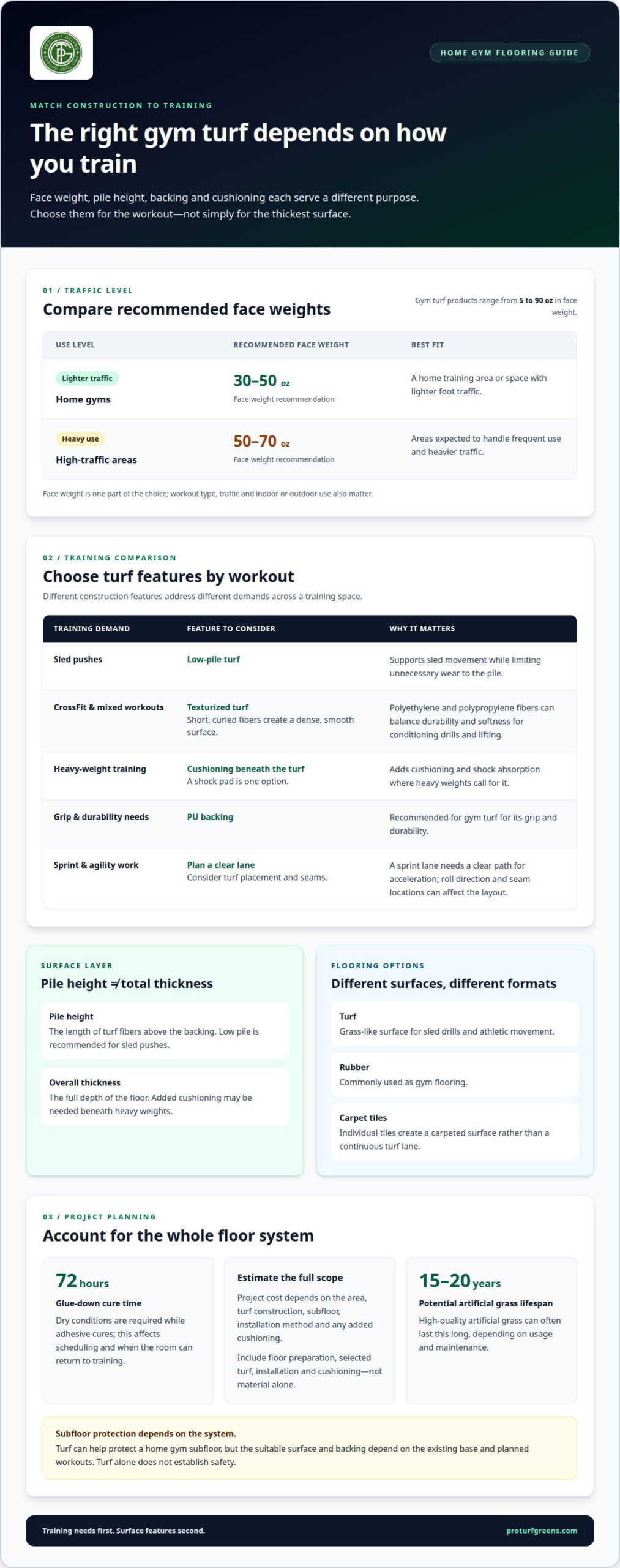
The thickest turf isn’t automatically the best choice for a home gym. Low-pile turf suits sled work, while a face weight of 30-50 oz is recommended for home gyms or lighter foot traffic and 50-70 oz for heavy-use, high-traffic areas. Choosing artificial turf for home gym floors also means considering how the surface and its backing can help protect the subfloor.
Durability matters when workouts involve repeated sprints, sled drills, or equipment. The right surface, however, depends on how you train, how often the area is used, and whether heavy weights call for cushioning beneath the turf.
This guide compares turf options for CrossFit, speed and agility work, sled pushes, and sprint workouts. It explains how fiber style, face weight, backing, and shock pads affect comfort and subfloor protection, helping you identify features that suit your training space.
Key Takeaways
- Match turf fiber style and construction to your training mix, from functional fitness to speed and agility work.
- Consider how the surface performs under repeated sled passes and sprint drills, not just how it feels underfoot.
- Look at backing and cushioning together to understand how the floor system can help protect the subfloor.
- Assess installation cost in relation to the space, turf selection, and project requirements rather than comparing material alone.
Turf options for home gyms, CrossFit, and speed training
Gym turf products range from 5 to 90 oz in face weight, with different constructions for different training demands. The right choice depends on traffic, exercise type, and whether the area is indoor or outdoor.
CrossFit and Weight Training
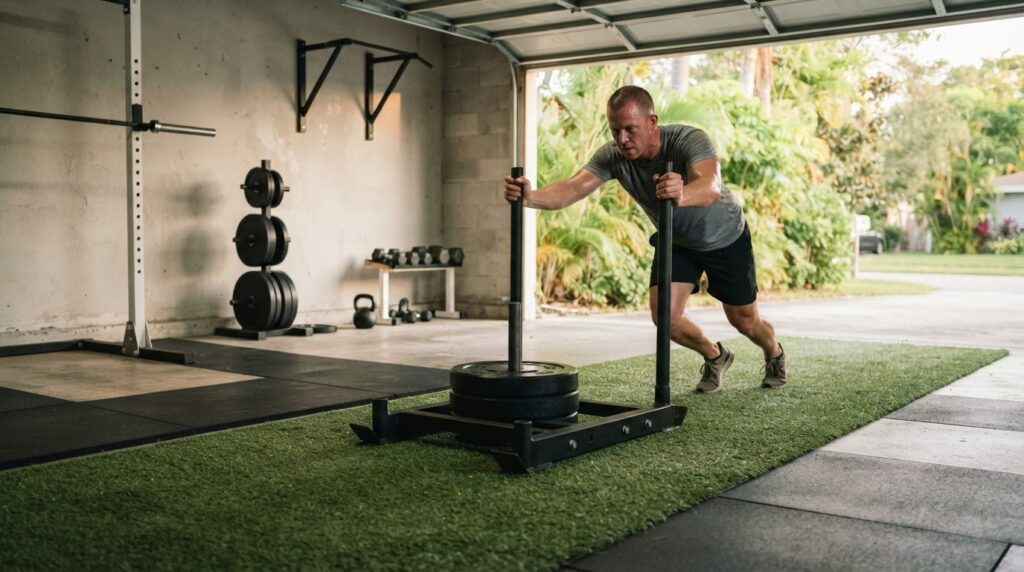
Gym turf is a synthetic surface for CrossFit, functional fitness, speed drills, and selected weight-training areas. For home gyms or lighter foot traffic, 30-50 oz face weight is recommended; heavy-use, high-traffic spaces suit 50-70 oz. Low-pile turf can support sled pushes, while a flat surface offers a training area for body-weight exercises.
Texturized turf has short, curled fibers that create a dense, smooth surface. Polyethylene and polypropylene fibers can offer a balance of durability and softness, making them suitable for mixed workouts such as conditioning drills and lifting. Color choices can also visually separate a training zone from the rest of the room.
Choosing Backing and Infill for Home Gym Turf
Backing is the layer beneath the fibers. PU backing is recommended for gym turf because of its grip and durability. When planning artificial turf for home gym floors, professionals consider the existing subfloor and intended workouts to select an appropriate floor system. Infill choices also depend on the project rather than a single option for every gym.
Turf and adhesive materials can affect indoor air quality, while ventilation influences air circulation. Odor and VOC concerns depend on the materials and room conditions. If children or pets use the space, consider cleanliness, surface materials, and planned activities. Turf alone does not establish safety.
Turf Cost and Installation
Project cost depends on the area, turf construction, subfloor, installation method, and any added cushioning. A compact lifting zone and a longer sprint lane need different coverage. The performance of artificial turf for home gym floors also depends on matching the surface to the activities planned.
Glue-down installation requires dry conditions for 72 hours while adhesive cures. That curing period affects scheduling and when the room can return to training. A project estimate reflects the full scope, including floor preparation, selected turf, installation, and any cushioning, rather than material alone.
Turf suitability for sled drills, sprint workouts, and fitness centers
Low-pile synthetic turf is recommended for sled pushes because it supports sled movement while limiting unnecessary wear to the pile. Professionals select pile height and thickness according to the workout, expected use, and need for cushioning.
Gym Turf Uses and Suitability
Gym turf is a synthetic surface used for sled pushes, CrossFit, functional fitness, speed and agility drills, and weight-training areas. In fitness centers, one floor may need to support several activities. A sprint lane needs a clear path for acceleration, while a separate turf zone can provide space for sled drills. A well-planned layout lets each area serve its intended use.
Turf can also provide a flat, cushioned surface for body-weight exercises. Its sound-absorbing qualities may be useful in weightlifting areas. Outdoor training brings other considerations: sun and weather exposure make UV resistance and weatherproofing relevant features.
Roll Width and Workout Uses
Roll width measures across a turf roll and affects how the surface fits a training area. For a product such as RageTurf Rally, the roll format informs the layout: a continuous strip can suit a sled lane, while seams may affect where athletes sprint or change direction.
A narrow room and a broad fitness-center floor call for different placement plans. Aligning the roll direction with the main workout path can help create a consistent surface along the lane. Workout function, available floor area, and seam locations matter more than choosing a roll by name alone.
Choosing Pile Height and Turf Thickness
Pile height is the length of the turf fibers above the backing, while thickness describes the floor’s overall depth. For sled pushes, low-pile turf is recommended to let the sled travel across the surface without damaging it. Strength training may call for added cushioning beneath heavy weights, such as a shock pad.
These features serve different purposes: pile height affects sled movement, while a pad can add cushioning and shock absorption. Match them to the workout to distinguish a sprint lane from a lifting zone, rather than assuming one turf construction suits every activity.
Artificial turf durability and subfloor protection
Artificial turf can help protect a home gym’s subfloor from damage caused by regular training. Durability depends on use and maintenance, so the floor system matters as much as the visible surface.
Comparing Turf, Rubber, and Carpet Tiles
Turf, rubber gym flooring, and carpet tiles suit different workout priorities. Turf provides a grass-like surface for sled drills and athletic movement; rubber is commonly used as gym flooring. Carpet tiles create a carpeted surface, with individual tiles rather than a continuous turf lane. For repeated sled passes, choose a surface designed for movement across the floor.
For subfloor protection, consider the activity above the surface. Turf can help protect the floor, and high-quality artificial grass can often last 15-20 years, depending on usage and maintenance. That lifespan is not a substitute for matching the surface to the workout: an indoor space with sled work has different demands from a room used for stretching. The comparison should focus on how each floor suits the training plan.
Professional Turf Installation Over Concrete or Plywood
Professional indoor installation fits artificial turf to the existing substrate, whether concrete or plywood. The installer assesses and prepares the surface for the chosen installation method, then positions the turf to suit the room’s layout. This assessment matters because the base supports the turf and bears the force of training.
During installation, professionals align the material, manage seams, and secure the turf to create a consistent training area. A sled lane needs a clear, continuous path, while a smaller lifting zone may use a separate turf section. PU backing is recommended for its grip and durability. The finished surface can help shield the subfloor, but heavy weights may still call for cushioning beneath the turf to absorb shock.
How much does home gym turf cost per square foot, including installation?
The installed price for home gym turf depends on the project and is provided after a quote request. Key cost factors include the area, turf construction, subfloor condition, installation method, and any added cushioning. A sprint lane needs different coverage from a compact zone beside strength equipment.
Square footage is only one part of an estimate. A large, open room may allow a straightforward layout, while an irregular floor can require more fitting around corners and equipment. The substrate matters too: concrete and plywood may need different preparation before the turf is secured. Seams, edges, and transitions also affect the work needed to create a consistent surface.
Material selection affects the project scope. An area designed for frequent sled passes may need a different turf construction from a space mainly used for stretching. If heavy weights are part of the workout, a shock pad can add materials and labor. Make these choices based on how the room will be used, not just the lowest material cost.
Installation method affects scheduling and labor. Glue-down turf requires dry conditions for 72 hours while the adhesive cures, which can shape when the room is ready for training. A professional estimate should account for the selected turf, floor preparation, fitting, seams, adhesive, and any cushioning, so the scope is clear before work begins.
To get a useful project estimate, define the training area and the activities it needs to support. A dedicated sled lane and a mixed-use workout room have different layout requirements. A quote can then reflect actual coverage and installation needs rather than just the material. This makes per-square-foot figures easier to interpret because they relate to a defined project, not turf alone.
Pro Turf Greens: Artificial Turf Driveways
Pro Turf Greens installs artificial turf driveways for homeowners planning turf beyond an indoor training space. A driveway serves a different purpose from gym flooring, so select its surface for the outdoor area and its use. For dedicated recreation, Backyard Putting Greens, Playgrounds & Recreational Turf, and Tee Lines & Driving Ranges serve distinct activities.
These projects can create a more cohesive outdoor environment while keeping each area suited to its purpose. To discuss an artificial turf driveway or recreational turf project, contact Pro Turf Greens.
Shape a Space Around Your Next Training Goal
Start by picturing how your training space should work as your routine changes. Consider movement flow, areas that need to remain clear, and how the surface can support a comfortable, focused workout. A well-planned layout makes artificial turf for home gym floors part of a broader decision about how to use your property.
For outdoor plans, Pro Turf Greens offers Backyard Putting Greens, Playgrounds & Recreational Turf, and Tee Lines & Driving Ranges. Each option serves a distinct recreational purpose, so the right fit depends on your space and planned activities.
For guidance on planning a turf project around your property, contact Pro Turf Greens. Bring your ideas for the space and the activities it should support, and take the next step toward a considered design.
Frequently Asked Questions
What do professionals consider when choosing gym turf flooring?
Professionals consider the training mix, expected foot traffic, subfloor, and room layout. A space for sprint drills needs a clear running path, while a lifting zone may need extra cushioning beneath weights. Indoor conditions also differ from outdoor exposure. For homeowners in Fort Lauderdale, Miami, Palm Beach, Boca Raton, Delray Beach, Jupiter, Palm Beach Gardens, Weston, and Coral Gables, location and intended use help shape the design.
Is artificial grass good for the gym?
Yes, artificial grass can suit workouts such as sled pushes, body-weight exercises, speed drills, and functional fitness. Its usefulness depends on the activity: turf designed for sled movement may not provide the cushioning needed beneath heavy weights. A home gym combining sprint practice and lifting may need distinct training zones. Choose a surface that supports each exercise rather than treating one material as ideal for every workout.
What type of artificial turf do professionals recommend for a home gym floor?
For sled-focused workouts, professionals recommend low-pile turf, which lets a sled move across the surface without wearing down taller fibers as quickly. Face weight can help distinguish lighter-use areas from higher-traffic zones. A dedicated conditioning lane and a frequently used training floor may call for different weights. Base the choice on the training plan, not appearance alone.
When do professionals recommend underlayment or shock-absorbing padding under gym turf?
Professionals may recommend shock pads beneath turf where athletes use heavy weights, since pads add cushioning and shock absorption. The need depends on how the gym is used and the existing floor. A zone for repeated weight drops has different demands from an area for mobility work. Padding is one part of the floor system, not a substitute for suitable turf construction.
How do you clean and maintain indoor artificial turf?
Indoor turf can be vacuumed like carpet to remove loose debris, then cleaned as needed with a carpet-cleaning solution suitable for disinfecting and deodorizing. Occasional brushing helps maintain the surface. A training area used for floor exercises may need debris cleared before workouts and cleaning afterward. Regular care keeps fibers presentable without mowing, watering, fertilizing, or reseeding.
How much space is needed for a home gym turf lane, and what dimensions are common?
The space needed depends on the exercise and available room; no single dimension suits every home gym. A sled lane needs enough uninterrupted floor for the planned push and return, while a sprint area needs a clear path for acceleration. Map the lane around doors, equipment, and other workout zones to define usable turf coverage without crowding the rest of the room.