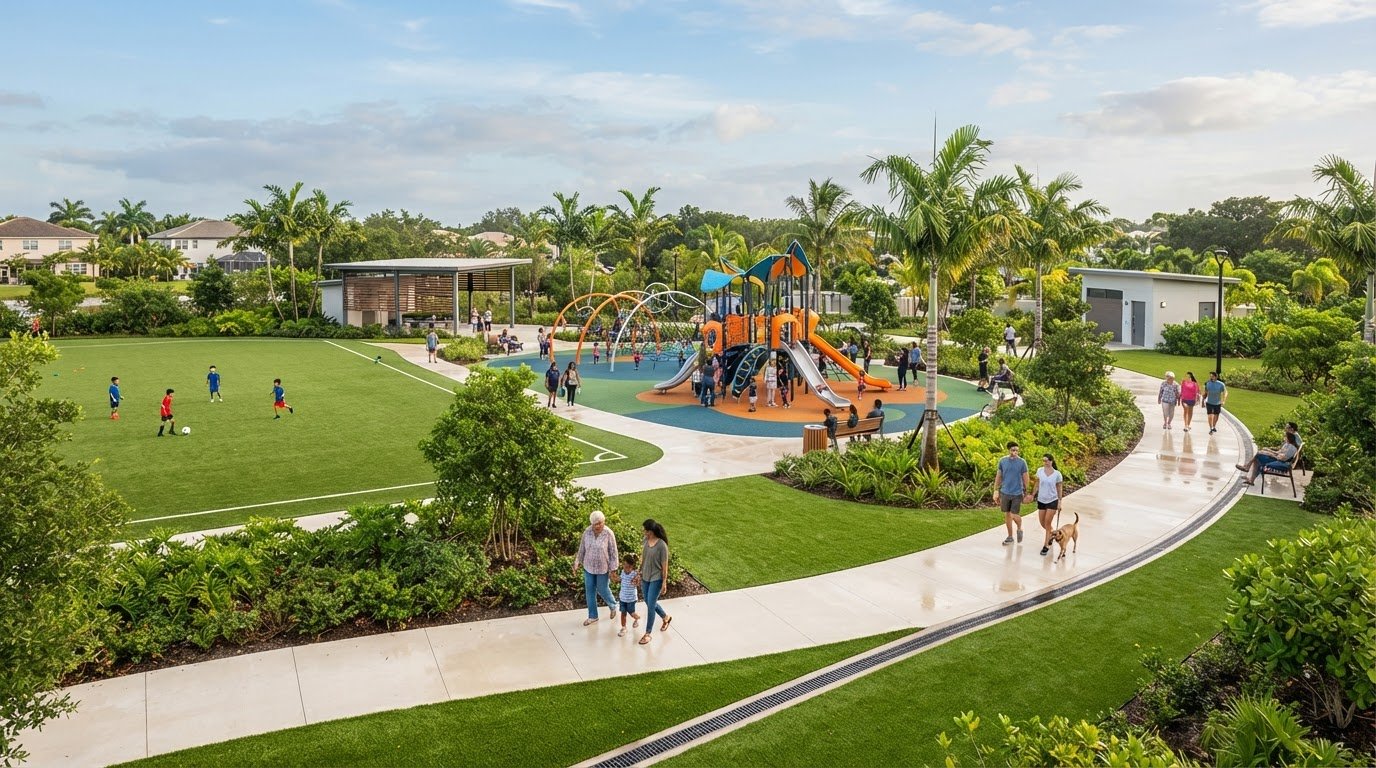

What if the most significant obstacle to your athletic program’s success isn’t the competition, but the ground beneath your players’ feet? For many administrators in South Florida, the cycle of heavy rain and mud leads to constant field closures that disrupt practice schedules and demoralize student-athletes. Investing in synthetic turf for school sports fields is no longer just a landscaping choice. It’s a strategic move toward a high-performance, year-round facility that serves the entire community.
We understand that you want a surface that balances student safety with fiscal responsibility. It’s frustrating to watch maintenance budgets disappear into endless mowing and irrigation while worrying about heat or uneven surfaces causing injuries. This guide demonstrates how modern synthetic turf transforms school athletic programs through enhanced safety, multi-sport versatility, and long-term budget efficiency. Research indicates most high-use programs reach cost parity with natural grass within six to eight years of installation, while saving approximately 44,000 gallons of water annually for every 1,000 square feet replaced.
You’ll learn about the latest material innovations that meet strict ASTM F1936 impact standards to keep G-max readings safely below 200. We’ll also explore how these resilient surfaces provide an eight to twelve year lifespan, offering a versatile foundation for everything from varsity sports to community events.
Key Takeaways
- Explore the transition from traditional athletic surfaces to modern polyethylene systems designed for resilience and aesthetic excellence.
- Gain insights into essential safety protocols, including Gmax shock attenuation testing and the selection of non-toxic materials for student wellness.
- Compare the 10-year total cost of ownership by evaluating the elimination of the “Big Three” maintenance expenses: mowing, irrigation, and chemicals.
- Learn how custom-engineered drainage solutions and inlaid sports lines optimize synthetic turf for school sports fields for continuous multi-sport use.
- Understand the value of a dedicated local partnership that guides your project through South Florida’s specific municipal codes and installation standards.
The Evolution of Athletic Surfaces: Why Schools are Choosing Synthetic Turf
High-performance synthetic turf is far more than just a green alternative to grass; it’s a sophisticated, multi-layered engineering system. This modern surface comprises resilient polyethylene fibers, specialized infill for shock absorption, and a high-strength backing designed for rapid drainage. The Evolution of Athletic Surfaces has moved far beyond the thin, abrasive carpets of the late 20th century. Today’s 2026-standard systems are meticulously crafted to mimic the appearance and biomechanical response of natural sod while offering a level of durability that organic grass cannot sustain in our demanding climate.
South Florida administrators increasingly recognize that synthetic turf for school sports fields is a vital investment in their program’s future. Our local weather patterns bring intense UV exposure and torrential downpours that quickly turn traditional sod into a muddy, dangerous liability. By shifting to advanced polyethylene systems, schools ensure their athletic facilities remain pristine and functional regardless of the forecast. It’s about moving away from reactive maintenance and toward a proactive solution that increases playable hours for every student on campus.
Addressing the Year-Round Playability Gap
In cities like Miami and Fort Lauderdale, the rainy season often renders natural grass fields unusable for days or even weeks at a time. When a field is closed due to mud or standing water, it doesn’t just cancel a single game. It disrupts student-athlete development, forces logistical headaches for coaches, and dampens school spirit. Traditional grass fields often have a narrow usable window of perhaps four to five months before they require extensive rest to recover from heavy foot traffic. Synthetic installations bridge this gap, providing a 365-day athletic facility that remains stable and ready for action every single afternoon.
The Multi-Purpose Advantage for Modern Schools
Modern educational facilities must maximize every square foot of available land. A single synthetic field can seamlessly support a diverse rotation of activities that would destroy natural grass in a single season. This includes:
- Varsity Sports: High-impact football, soccer, and lacrosse games.
- Daily Education: Consistent use for PE classes from morning until afternoon.
- Extracurriculars: Precision marching band rehearsals and cheerleading practice.
- Community Engagement: Local league play and facility rentals that generate school revenue.
This versatility reduces the need for multiple specialized natural fields, which would otherwise require massive acreage and constant irrigation. By consolidating these activities onto one high-performance surface, schools save space and resources while providing a professional-grade experience for all participants.
Safety and Performance Standards for Scholastic Sports Fields
Safety is the primary concern for any athletic director or school board member responsible for student welfare. When evaluating synthetic turf for school sports fields, the focus must extend beyond aesthetics to the rigorous engineering that protects athletes from injury. Central to this is Gmax testing, a standardized method for measuring shock attenuation. This test determines how much impact energy the field absorbs during a fall. According to the Texas UIL and industry standards for 2026, athletic surfaces must meet ASTM F1936 requirements, maintaining Gmax readings safely below 200. Annual compliance testing by a certified lab typically costs between $800 and $2,000, providing a verifiable record of field safety for parents and administrators.
Beyond impact protection, the chemical composition of the turf fibers is equally vital. High-quality installations now utilize non-toxic, lead-free polyethylene fibers. While safety is paramount, administrators must also consider the 10-Year ROI Comparison when evaluating how these protective systems maintain their performance over a decade of use. For example, modern systems avoid the use of PFAS (per- and polyfluoroalkyl substances), following the legislative trends seen in states like California. This commitment to material purity ensures that students aren’t exposed to harmful substances during daily practice or play. If you’re evaluating your current field’s safety, a professional assessment can identify areas for improvement.
A consistent surface level is another significant safety advantage. Natural grass fields often develop dangerous “potholes,” ruts, and mud pits that lead to ankle sprains or ligament tears. Synthetic systems eliminate these hazards by providing a perfectly level plane. Modern infill materials, such as specialized sands or organic options, provide the necessary “give” that mimics natural soil. This allows for proper cleat penetration and release, which is essential for protecting the joints and ligaments of growing student-athletes.
Shock Pads and Underlayments
The layer beneath the turf carpet is just as important as the grass itself for long-term safety. High-performance shock pads act as a secondary safety net, ensuring consistent impact protection even as the infill settles over time. These underlayments help the field meet ASTM F1292-22 safety standards, which are the benchmark for playground and recreational surfaces. Choosing the right pad material ensures the field remains resilient for its entire eight to twelve year lifespan without becoming hard or compacted. Schools managing both athletic fields and play areas should also review the latest playground turf safety standards Florida regulations to ensure all campus surfaces meet the 2026 compliance requirements.
Heat Management in South Florida
Managing surface temperatures is a unique challenge for schools in Miami and Fort Lauderdale. Modern 2026 cooling technologies include heat-reflective fibers and specialized infills designed to mitigate solar absorption. Evaporative cooling infills utilize stored moisture to lower surface temperatures through natural evaporation, significantly reducing the heat radiated by the turf during peak sunlight hours. For optimal field management, schools should schedule heavy activities during cooler morning hours or utilize irrigation systems for a quick “cool-down” rinse before afternoon practices.
Natural Grass vs. Synthetic Turf: A 10-Year ROI Comparison
While the initial capital required for a high-performance athletic facility is substantial, the true value of synthetic turf for school sports fields reveals itself through a comprehensive ten-year total cost of ownership analysis. Most high-use programs reach cost parity between synthetic and natural surfaces within six to eight years of installation. Beyond that point, the drastic reduction in operational expenses becomes a significant asset for the school’s general fund, allowing resources to be redirected toward other educational or athletic priorities.
Natural grass in South Florida requires constant, expensive intervention to remain playable. Eliminating the “Big Three” expenses, mowing, irrigation, and chemical treatments, removes a massive recurring burden from the annual budget. There’s also the hidden cost of re-sodding to consider. High-traffic areas like goal mouths, midfields, and player benches often require complete sod replacement every single season in a natural grass setup. These expenses simply disappear with a synthetic system, providing a stable surface that doesn’t thin or die under heavy use.
The environmental ROI is equally compelling for schools committed to sustainability. Replacing just 1,000 square feet of natural grass with synthetic turf saves approximately 44,000 gallons of water annually. For a full-sized football or soccer field, these numbers represent a staggering reduction in resource consumption. This aligns school operations with regional water conservation goals while protecting South Florida’s delicate ecosystem from the runoff associated with intensive turf management.
Maintenance Savings Breakdown
The labor required to maintain a professional-grade natural field is exhaustive. While natural grass maintenance for a high-use field can range from $60,000 to $100,000 annually, a synthetic field typically requires only $15,000 to $30,000 for grooming and infill top-offs. This transition also eliminates the need for fertilizers and pesticides that contribute to nutrient runoff in local waterways. For those managing broader campus facilities, understanding the Driving Range Turf Cost in South Florida provides additional context on how these professional-grade systems scale for different athletic needs. The same precision engineering that delivers a consistent ball roll on a school field also makes synthetic grass for bocce ball courts an increasingly popular choice for community recreation areas across South Florida.
Durability and Longevity Factors
A well-installed school field in 2026 features an expected lifespan of eight to twelve years. During this time, the surface remains uniform and safe, provided it receives regular professional grooming and Gmax testing. When considering long-term plans, administrators should also review information regarding public health and safety on artificial turf to ensure their maintenance protocols align with current best practices. Eventually, planning for end-of-life recycling is part of a responsible stewardship strategy. It’s helpful to remember that the cost to replace the turf carpet later is typically only 55 to 70 percent of the original installation cost since the sub-base remains intact.
Warranty considerations are also vital for long-term protection. Most professional-grade athletic installations carry robust warranties that cover UV degradation and fiber loss, ensuring the field retains its aesthetic and functional integrity despite the intense Florida sun. This reliability allows schools to host community events and facility rentals with confidence, knowing the surface won’t be compromised by heavy foot traffic or back-to-back events.

Designing Your Field: Maximizing Utility and Student Engagement
Designing a modern athletic facility requires a sophisticated balance between aesthetic appeal and functional versatility. When planning synthetic turf for school sports fields, every detail from the sub-base engineering to the inlaid markings serves a specific purpose in student development. Customization allows schools to incorporate vibrant logos and school colors directly into the end zones or mid-field, fostering a deep sense of campus pride and community identity. These visual elements transform a standard field into a professional-grade stadium that attracts top-tier student-athletes and local support.
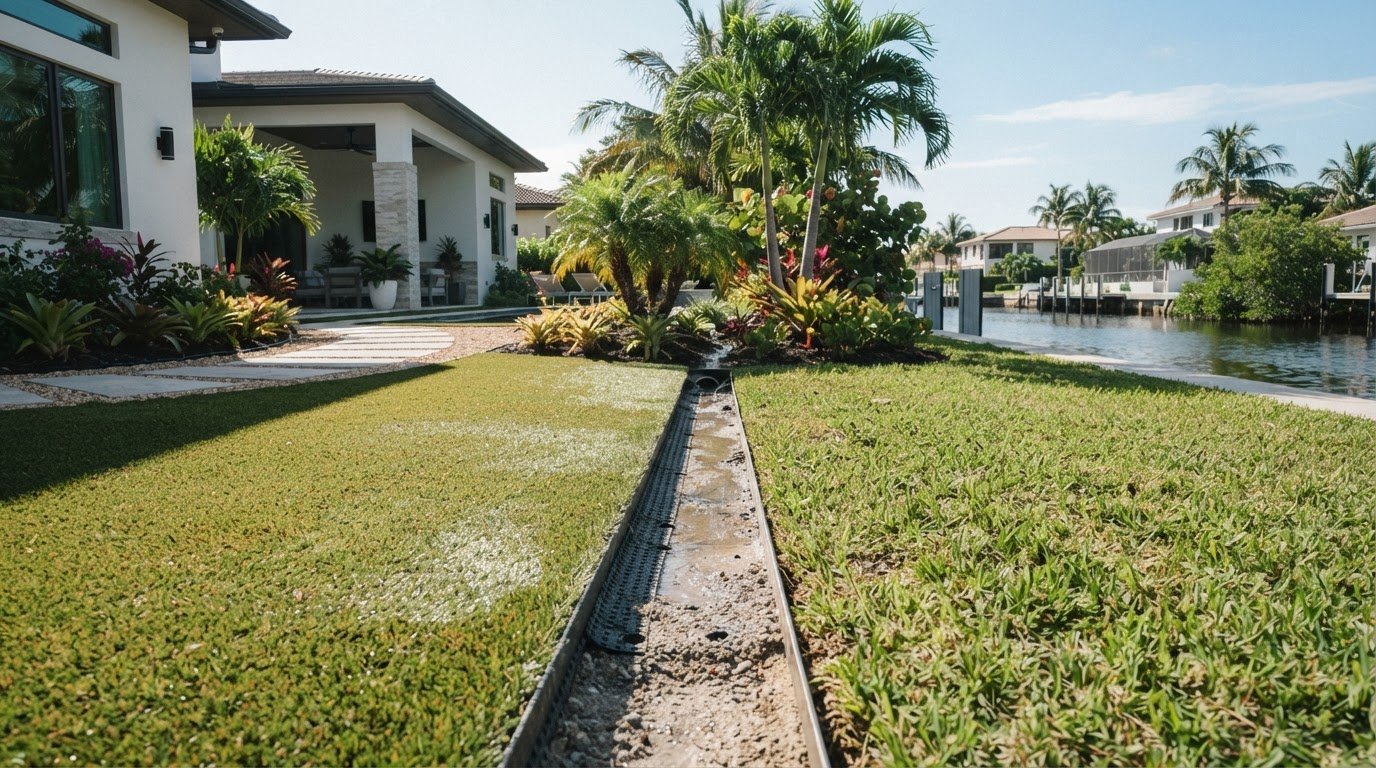
In South Florida, drainage is the most critical component of the design phase. Our torrential rains require specialized sub-base and perimeter solutions that move water away from the playing surface at an accelerated rate. A well-engineered drainage system ensures the field remains playable minutes after a heavy downpour, preventing the standing water issues that frequently plague natural grass alternatives. Beyond the turf itself, perimeter considerations like fencing, paved walkways, and spectator areas create a cohesive environment. These elements ensure that the facility is a welcoming destination for families and local fans alike.
Optimizing for Multi-Sport Use
Layout strategies for modern campuses often involve overlapping fields for soccer, lacrosse, and football. Strategic line marking uses permanent, inlaid lines of different colors to distinguish between sports without the need for messy, temporary paint. The choice of high performance sports turf also involves selecting the correct fiber density and pile height. These technical specifications ensure consistent ball roll and player traction across all disciplines. If you’re ready to transform your campus, consult with our local design experts to start your custom project.
Accessibility and Inclusion
Synthetic surfaces offer a level of accessibility that natural grass simply cannot match. Because the surface remains firm and level year-round, it’s fully ADA compliant and superior for students using wheelchairs or other mobility aids. This creates a truly inclusive environment where every student has the opportunity to participate in PE classes and recreational activities. It’s about more than just sports; it’s about providing a safe space for every child. The psychological impact of a beautiful, professional-looking facility shouldn’t be underestimated. It elevates student morale and encourages a higher level of engagement in physical activities, contributing to a more vibrant and active school culture.
Implementing Your Project: The Pro Turf Greens Partnership
Selecting the right installation partner is just as critical as choosing the high-performance materials themselves. For South Florida administrators, working with a local specialist ensures that your project remains compliant with specific municipal codes while addressing our unique environmental demands. Pro Turf Greens acts as a dedicated guide throughout the entire lifecycle of your facility, from the initial site assessment to the final Gmax safety verification. Our team understands that synthetic turf for school sports fields represents a significant community investment, and we’re committed to delivering a surface that exceeds every standard for safety and durability.
Professional installation is the only way to guarantee that the sophisticated drainage systems we’ve explored actually perform during a tropical downpour. A perfectly graded sub-base and meticulously secured seams are essential for preventing the shifting or bubbling that can occur with less experienced contractors. Once the installation is complete, our partnership continues through comprehensive maintenance training for your facilities team. We provide your staff with the knowledge and tools needed to groom the fibers and manage infill levels, ensuring your field remains in peak condition for its entire eight to twelve year lifespan.
The Consultation and Planning Phase
Your journey toward a transformed athletic program begins with a detailed, free site visit. During this time, we evaluate your existing soil conditions, drainage patterns, and current utility layouts. We collaborate closely with school boards and athletic stakeholders to finalize a design that reflects your school’s identity and multi-sport requirements. Navigating the permitting process in cities like Boca Raton or Miami can be complex; however, our local expertise allows us to streamline these requirements, ensuring your project stays on schedule and meets all regional safety regulations.
Quality Craftsmanship and Local Reliability
Our commitment to craftsmanship is evident in every project we undertake. We don’t believe in one-size-fits-all solutions; instead, we provide custom-tailored installations that reflect the specific needs of your student-athletes. By prioritizing specialized engineering and aesthetic excellence, we ensure that your new facility serves as a source of pride for the entire community. If you’re ready to upgrade your campus with professional-grade synthetic turf for school sports fields, the next step is a simple conversation. Schedule your school’s free synthetic turf consultation today to explore the possibilities for your program.
Elevating Your School’s Athletic Potential
Transitioning to synthetic turf for school sports fields is a decisive step toward creating a safer, more resilient environment for your students. By prioritizing rigorous Gmax safety standards and professional-grade materials, you ensure that every athlete has a consistent surface for daily play. The long-term budget efficiency of these systems allows your school to redirect vital resources while providing a facility that remains playable throughout the most intense Florida rain seasons.
At Pro Turf Greens, we take pride in our role as your local South Florida specialists. Our dedicated team provides custom design, expert installation, and free site assessments for schools and commercial venues to ensure your project meets the highest standards of craftsmanship. We understand the specific municipal codes and climate challenges of our community, making us a reliable partner in your school’s transformation. It’s an investment that moves beyond simple utility to provide an aspirational upgrade for your entire campus.
Ready to take the first step? Request a Free School Turf Consultation today to begin designing a professional-grade athletic surface built specifically for your campus. We look forward to helping you build a legacy of excellence and student engagement that lasts for years to come.
Frequently Asked Questions
Is synthetic turf safe for students with allergies or asthma?
Synthetic turf is an excellent choice for students with seasonal allergies or asthma because it doesn’t produce pollen. By eliminating the need for natural sod, you also remove the fertilizers and pesticides that often trigger respiratory sensitivities. Our high-performance systems provide a cleaner playing environment that significantly reduces the presence of common environmental allergens found on traditional grass fields.
How long does it take to install a full-sized school sports field?
A typical installation for a full-sized facility usually takes between 60 and 90 days from the start of site preparation. This timeline accounts for specialized sub-base engineering and the meticulous placement of the turf carpet. While South Florida’s weather can occasionally impact the schedule, our local expertise allows us to manage these timelines efficiently to minimize disruption to your school’s athletic calendar.
Does synthetic turf get too hot for students in the South Florida sun?
Modern synthetic turf for school sports fields utilizes advanced cooling technologies to manage surface temperatures effectively. We use heat-reflective fibers and specialized infills that utilize evaporative cooling to keep the field comfortable. For optimal safety, we recommend scheduling practices during cooler morning hours or using a quick irrigation rinse to lower temperatures before afternoon events.
What kind of maintenance does an artificial sports field actually require?
While you’ll save on mowing and irrigation, the field still requires consistent professional grooming to ensure longevity. Maintenance involves regular brushing to keep fibers upright, removing surface debris, and monitoring infill levels. We also provide annual Gmax testing to verify that the shock absorption remains within safe parameters for student-athletes. This proactive approach protects your investment for its entire lifespan.
Can we use our school’s existing drainage system for the new turf?
We evaluate your current infrastructure during our initial site assessment to determine if any components are reusable. However, synthetic turf requires a specialized vertical drainage system that differs from the surface runoff patterns of natural grass. Most projects involve installing a new, high-capacity sub-base engineered to handle Florida’s torrential rains, ensuring the field remains playable even after heavy storms.
How does the cost of synthetic turf compare to natural sod over five years?
The upfront cost of synthetic turf is higher than natural sod, but the operational savings begin immediately. By the five-year mark, most schools see a significant narrowing of the cost gap due to the total elimination of mowing, fertilizers, and intensive irrigation. When you factor in the increased playable hours and revenue potential from facility rentals, the financial advantage becomes even clearer.
Is the turf infill safe if students accidentally ingest it or get it in their eyes?
The professional-grade infills we install are non-toxic, lead-free, and specifically designed for scholastic environments. While these materials are not meant for consumption, accidental ingestion or contact is generally considered low risk by health standards. We prioritize materials that meet strict safety certifications to ensure that the playing environment remains healthy for students of all ages.
What happens to the turf field during a Florida hurricane or heavy storm?
Synthetic fields are engineered to withstand the extreme weather conditions common in South Florida. The high-capacity drainage systems prevent standing water and flooding, while the heavy infill and secure perimeter anchoring keep the turf carpet in place during high winds. Unlike natural grass, which can suffer from erosion and root damage during storms, synthetic surfaces remain stable and ready for use almost immediately.