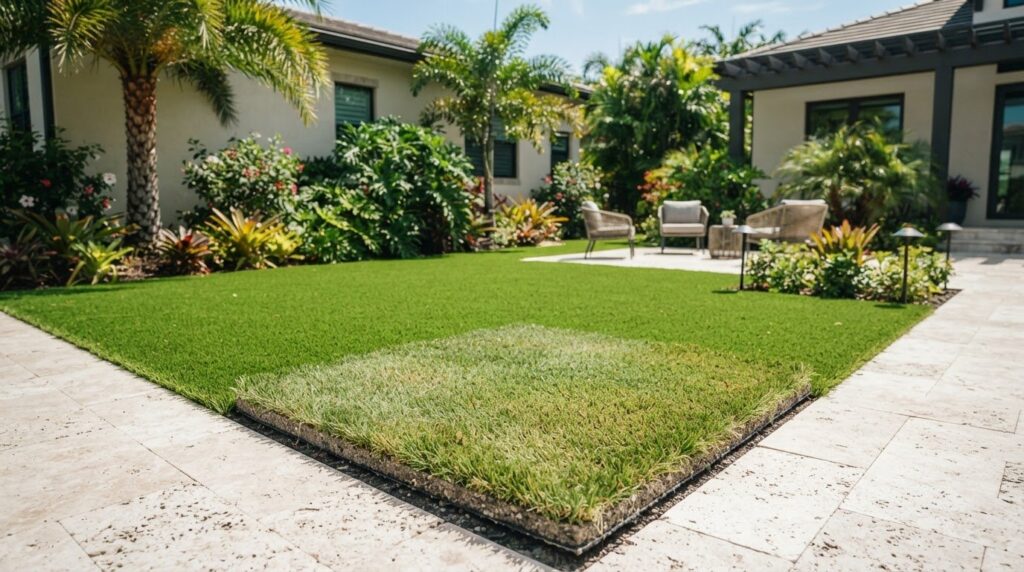
A “UV-resistant” label sounds reassuring, but it doesn’t tell you on its own how well turf will hold its color and fiber strength in Florida’s sun. Choosing uv resistant artificial turf florida homeowners can rely on means looking beyond the label to the evidence behind it and how the turf will perform on the property.
Fading and fiber wear are reasonable concerns after long periods of intense exposure. The right choice depends on more than UV protection: material specifications, surface heat, drainage, and intended use all matter, whether you’re planning a lawn, pet area, playground, putting green, or sports surface.
This guide explains how to assess UV claims, compare material details, and match turf to your site’s exposure and everyday demands. You’ll find practical questions to ask an installer about product testing, site preparation, and drainage. A careful site assessment helps connect product evidence to the conditions your turf will actually face.
Key Takeaways
- UV resistance helps limit sun-related fading and material aging, but it doesn’t mean turf is immune to wear or all forms of aging.
- When comparing uv resistant artificial turf florida options, ask for the exact product specifications and test method behind each UV claim.
- Evaluate fiber material, backing, drainage, and intended use together rather than treating a UV label as the whole picture.
- Map direct sun, shade, and nearby reflective surfaces to identify which areas may need closer attention when selecting turf.
- Discuss site exposure, drainage, and project use with an installer to connect product documentation with a practical installation plan.
What UV-resistant artificial turf means for Florida properties
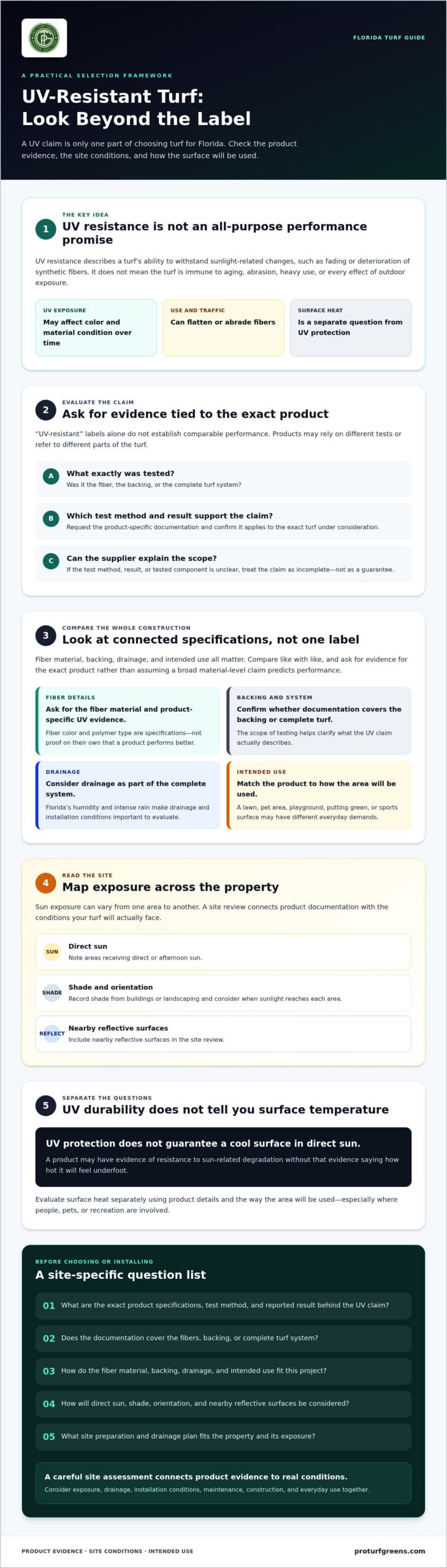
UV resistance describes a turf’s ability to withstand sunlight-related changes, such as fading or deterioration of its synthetic fibers. It doesn’t mean the material is immune to aging, abrasion, heavy use, or every effect of outdoor exposure. For homeowners researching uv resistant artificial turf florida, the useful question isn’t simply whether a product is “UV-resistant,” but what evidence supports that claim and which parts of the turf were evaluated.
Artificial turf is made from synthetic materials and can be designed for different applications, from lawns to sports surfaces. A broad overview of Artificial turf can explain common materials and uses, but it can’t verify the performance of a particular product. For that, request product-specific documentation. Ask for the test method, reported result, and scope of testing: was it the fiber, the backing, or the complete turf system?
Labels alone don’t establish comparable performance between products. Two options may both claim UV protection while relying on different tests or referring to different components. Request the exact specification and supporting documentation, then compare like with like. If a supplier can’t explain what was tested, treat the claim as incomplete rather than as a guarantee of a particular outcome.
What does UV-resistant artificial turf actually mean?
With prolonged ultraviolet exposure, synthetic fibers may lose color or show material changes over time. The degree of change depends on the product’s construction and conditions of use, so a general marketing phrase can’t predict how a particular installation will look years later. Ask for the method and result behind the UV claim, and confirm that the documentation applies to the exact turf under consideration.
Why Florida sun is only one site factor
Sun exposure varies across a property. A section receiving direct afternoon sun may face different conditions from an area shaded by a building or landscaping. Orientation affects when sunlight reaches the turf, and nearby reflective surfaces are also worth noting during a site review. In Florida, humidity and intense rain make drainage and installation conditions important parts of evaluating the complete system, not just the fibers.
UV durability addresses sunlight-related aging; it doesn’t tell you how hot the surface will feel. UV protection doesn’t guarantee a cool surface in direct sun. Evaluate heat separately, using product details and the way the area will be used. Appearance and performance also depend on product construction, exposure, maintenance, and installation conditions. A site-specific assessment can connect those factors to the property’s intended use.
How UV exposure affects turf fibers, color, and surface heat
Sun exposure can affect artificial turf in more than one way. Ultraviolet radiation may contribute to changes in fiber color and material condition over time. Foot traffic creates a different kind of stress: repeated steps, play, or equipment use can flatten or abrade fibers. These effects aren’t interchangeable, so a product’s UV claim shouldn’t be treated as proof that it will resist every type of wear.
UV resistance addresses exposure-related degradation, not every outdoor performance issue. It also doesn’t tell you how warm the surface will feel. Keeping these questions separate makes it easier to compare products and focus on what matters for your property.
UV resistance, fiber materials, and color retention
Ask the manufacturer to identify the fiber material and provide product-specific evidence for its UV performance. Fiber color, polymer type, and backing are distinct specifications that help describe a turf product’s construction. Don’t assume that a particular color or polymer automatically performs better in Florida. If you’re comparing options such as polyethylene and polypropylene, request evidence for the exact products rather than relying on a broad material-level claim.
Documentation is more useful when it explains what was tested and how. Ask whether the evidence applies to the fibers, backing, or complete turf product, and request the test method and result. The Synthetic Turf Council is an industry resource, but general information should not replace specifications for the product being considered.
Does UV-resistant turf stay cool in Florida?
No. UV resistance alone doesn’t establish a surface-temperature result. A turf product may have evidence of resistance to sun-related degradation without that evidence saying how hot it will feel underfoot. Treat comfort as a separate selection question, especially for areas used for play, pets, or recreation.
Site conditions matter. Turf in direct afternoon sun may feel different from turf shaded by a building or landscaping. Orientation, nearby hardscape, and how people use the space can also affect comfort and planning. Note which areas get prolonged sun and when they’re typically used, then ask what product information is available about heat performance. Don’t treat an unverified “cooling” label as a substitute for clear, product-specific details.
A site review can help connect those factors to intended use, drainage, and product documentation. If you’re weighing options for a South Florida project, you can discuss your turf project requirements with Pro Turf Greens during a consultation.
How to compare UV-resistant artificial turf products
Compare products using the same questions, not just similar-looking labels. For uv resistant artificial turf florida properties, connect the UV claim to the specific material tested, then weigh it alongside drainage and the way the space will be used.
| What to compare | What to ask |
|---|---|
| UV evidence | What test method and result support the claim, and which component was tested? |
| Fiber material | What material are the fibers made from, and what product-specific UV evidence is available? |
| Backing | Does the UV claim apply to the backing as well as the fibers? |
| Drainage | What drainage information is available, and how does the installation plan address the site? |
| Intended use | Is the turf specified for the planned activity and expected level of use? |
| Documentation | Can the supplier provide specifications and test information for the exact product being quoted? |
Which UV specifications and test details should you request?
Request product-specific documentation that names the test method, reports the result, and identifies the material tested. Confirm whether the claim covers the fibers, backing, or complete product system. A score is difficult to interpret without its method, scope, and explanation of what it indicates. If a supplier references ASTM International or ASTM G154, ask for the precise standard or procedure cited and how it relates to the claim. Don’t assume the reference proves performance beyond what the documentation states.
How do you weigh UV claims against other priorities?
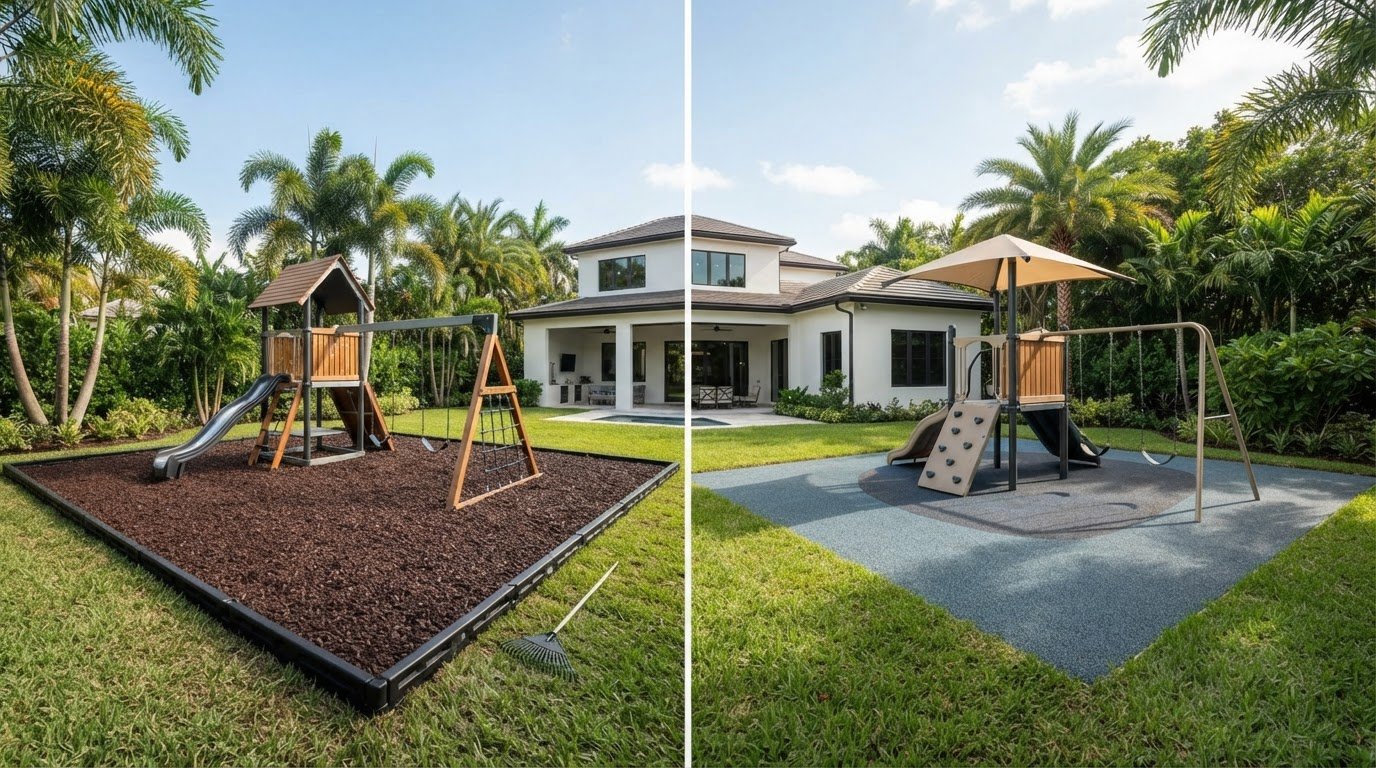
UV evidence is one part of the decision. Compare it with drainage information, the site’s exposure, and the turf’s suitability for its intended use. A product choice for a lawn may not answer the needs of a play area or athletic surface. For more context on those applications, review this Florida playground turf safety guide or high-performance sports turf guide.
Before choosing, compare the documentation side by side and note unanswered questions. If a claim lacks a stated method or doesn’t identify the tested component, ask for clarification rather than treating it as equivalent to a fully documented claim. This keeps product evidence, site conditions, and installation planning in view together.
A Florida buyer’s checklist for sun-exposed turf
A short site record can make product comparisons more useful and help an installer focus on the right questions. Before choosing uv resistant artificial turf florida homeowners should document more than the areas that look sunny at midday. Include exposure patterns, intended use, drainage observations, and the product evidence you want to review.
What should you document about your property?
Walk the space at different times of day and note where direct sunlight falls, where shade appears, and how those patterns change. Mark nearby reflective surfaces, such as windows or light-colored hardscape, and identify areas that receive prolonged direct sun. Then describe how the turf will be used, including expected foot traffic, pets, and play or recreation needs. Finally, note where water tends to collect or flow after rain, along with the property’s proximity to coastal environments, so an installer can consider these conditions in the project plan.
- Map sun and shade. Record the sunniest areas, shade patterns, and nearby reflective surfaces.
- Define the use. Describe activities, pets, and anticipated traffic so product suitability can be assessed against real demands.
- Request UV evidence. Ask for written specifications that identify the test method, result, and material or product component tested.
- Assess drainage. Explain what you observe during Florida rain, including pooling or runoff, and ask how the proposed installation addresses site drainage.
- Review installation. Discuss site preparation, how product specifications match exposure and use, and what maintenance the selected turf requires.
What should you ask an installer before selecting turf?
Ask the installer to explain how the proposed turf specifications fit your exposure conditions and intended use. Request clarification about the UV documentation, backing and fiber details, drainage approach, site preparation, and maintenance expectations. Compare the answers in writing across options. Color or a general UV label alone can’t show whether products were evaluated on the same basis or whether the documentation applies to the part of the turf that matters to your decision.
For a local project, the Miami artificial turf consultation guide offers a starting point for understanding what to discuss. A site-specific conversation can connect sunlight, drainage, product documentation, and project requirements. Discuss your turf project with Pro Turf Greens to review those considerations for a South Florida installation.
Choose and install Florida turf with a site-specific plan
Product documentation is most useful when considered alongside the property itself. A site assessment can connect the turf’s UV evidence and construction to areas receiving direct sun, how the space will be used, and how water moves across the site. That makes selection more practical than choosing by a label alone. For homeowners comparing uv resistant artificial turf florida options, the goal is a complete plan, not a promise that any product will be unaffected by outdoor conditions.
How does professional installation affect the finished surface?
Preparation and drainage planning are part of the installed system. Before work begins, the installer should understand the site’s existing conditions and intended use, then explain how the proposed turf and preparation plan address them. A frequently used recreational area, for example, may have different requirements from a lawn used mainly for visual appeal. Ask what site preparation is proposed and how drainage will be considered. Installation can’t guarantee that turf won’t fade, become warm in the sun, or need maintenance over time.
Pro Turf Greens designs and professionally installs artificial turf for residential and commercial projects in South Florida. Its offerings include lawns and pet turf, playground and recreational turf, athletic surfaces, putting greens, tee lines, driving ranges, and turf driveways. Ask to review the specifications and UV documentation for the specific product proposed for your project.
What to bring to a South Florida turf consultation
A little preparation can make a consultation more focused. Bring property photos, a simple description of where and when the sun reaches the area, and notes about how you plan to use the space. Include observations about drainage after rain and any relevant site conditions. Then ask which product specifications support the UV claim, what component was tested, and how the installation plan will address drainage and preparation.
- Photos showing the project area and nearby buildings, landscaping, or hardscape.
- A sun-and-shade description, including areas exposed to prolonged direct sunlight.
- Details about intended use, expected activity, and any pets or recreation needs.
- Questions about product documentation, drainage planning, preparation, and maintenance expectations.
A consultation is a useful opportunity to discuss project goals and site conditions before settling on a solution. South Florida customers considering a custom turf project can request a free consultation with Pro Turf Greens to talk through exposure, intended use, drainage, and product documentation. The right questions help turn those details into a considered installation plan, without relying on unsupported performance promises.
Make a Confident Turf Choice for Your Florida Property
Choosing uv resistant artificial turf florida properties can rely on starts with evidence, not just a label. Ask what product was tested, which components were evaluated, and what the results mean. Then weigh UV documentation alongside surface comfort, drainage, intended use, and site preparation. UV resistance speaks to sunlight-related degradation, not every aspect of outdoor performance.
A site-specific plan helps connect those details to the conditions your turf will face. Pro Turf Greens designs and installs residential and commercial turf projects in South Florida, with options for lawns, pet areas, playgrounds, and sports surfaces. A free consultation is available by phone or through the website to discuss your goals, sun exposure, drainage, and project requirements.
Request a free artificial turf consultation or call 561-221-1010 to discuss your South Florida project. With clear questions and a considered plan, you can move forward with confidence.
Frequently Asked Questions
What does UV-resistant artificial turf mean?
UV-resistant artificial turf is designed to resist color change or material degradation caused by prolonged ultraviolet exposure. It isn’t immune to aging, abrasion, or every outdoor condition. Ask for documentation tied to the exact product, including the test method, result, and whether testing covered the fibers, backing, or complete system. A broad label alone doesn’t show how the product was evaluated or what the claim covers.
Is UV-resistant artificial turf suitable for Florida sun?
Yes, it can be suitable when its documented performance and construction fit the property’s exposure and intended use. Evaluate UV evidence alongside drainage, surface comfort, and installation conditions rather than treating a label as a guarantee. A sunny yard in Miami or Fort Lauderdale may have different shade patterns and water flow from another property. Site conditions and product-specific specifications should guide the choice.
Does UV-resistant artificial grass stay cool in the sun?
No. UV resistance describes resistance to sunlight-related degradation, not surface temperature. Turf in direct sun can feel hot regardless of a UV claim, and shade, orientation, nearby hardscape, and time of use can affect comfort. Ask whether product-specific temperature information is available, and consider how children, pets, or athletes will use the space. Don’t infer cool-surface performance from a UV label or the turf’s color.
How can I compare UV protection claims for artificial turf?
Compare written, product-specific documentation that names the test method, reported result, and component tested. Confirm whether the evidence applies to the fibers, backing, or complete turf system, and ask how to interpret any score. Then compare material, drainage, intended use, and maintenance guidance. Claims based on different tests or components aren’t directly comparable just because both products are labeled UV-resistant.
Can artificial turf fade in Florida even if it is UV-resistant?
Yes. UV-resistant turf can still fade over time; the claim indicates resistance, not immunity to sunlight-related change. Outdoor aging can also depend on product construction, direct exposure, and maintenance, while foot traffic creates separate wear, such as flattened or abraded fibers. If the appearance changes, compare the product documentation and care instructions with the conditions on your property rather than assuming a UV claim guarantees permanent color.
What should I ask an artificial turf installer about sun exposure?
Ask the installer to identify areas with prolonged sun and shade, then explain how the proposed turf specifications suit that exposure and your planned use. Request the UV test method, result, and tested component, along with fiber and backing details. Discuss drainage planning, site preparation, and maintenance expectations too. Clear answers should connect product documentation to your property, not rely on an unsupported label or general assurance.
Does artificial turf need special installation in South Florida?
It needs site-specific preparation and drainage planning, particularly where heavy rain or existing runoff affects the area. The installer should assess how the turf will be used and explain how the proposed system responds to observed conditions. Installation alone can’t prevent fading or heat. Pro Turf Greens designs and installs turf in South Florida, including Fort Lauderdale, Miami, Palm Beach, Boca Raton, Delray Beach, Jupiter, Palm Beach Gardens, Weston, and Coral Gables. Ask about current availability for your location.