In the sweltering Florida heat, a standard synthetic lawn doesn’t just get warm. It can quickly become a permanent reservoir for trapped ammonia smells that ruin your outdoor sanctuary. Choosing the right odor resistant pet turf is a sophisticated engineering challenge that goes far beyond simple aesthetics. You deserve a lush, green space where your dogs can play freely without the frustration of lingering smells or puddles after a tropical downpour. We understand that your yard is an extension of your home, and maintaining its freshness is a top priority for your family’s comfort.
This guide empowers you to master the science of odor prevention with a comprehensive 2026 checklist for choosing and installing a professional-grade system. We begin with the broad principles of material resilience before examining the specific antimicrobial technologies and high-performance drainage designs that meet Florida’s strict environmental standards. You’ll learn how to evaluate the essential components of a professional installation, from specialized infills to the porous sub-base layers required to handle our unique climate. By the end of this article, you’ll have the expert knowledge needed to transform your backyard into a clean, safe, and perpetually fresh paradise for your high-energy pets.
Key Takeaways
- Understand why Florida’s humidity accelerates the breakdown of pet waste and how you’ll prevent the “Ammonia Trap” from affecting your yard.
- Evaluate the performance of odor resistant pet turf by identifying the difference between temporary topical treatments and permanent infused antimicrobial fibers.
- Learn why South Florida’s tropical downpours demand a specialized flow-through backing system capable of draining more than 30 inches of water per hour.
- Discover why choosing molecular-trapping infills like ZeoFill is superior to using standard silica sand, which can harbor bacteria and moisture.
- Recognize the importance of professional sub-base engineering to ensure your synthetic lawn remains stable, level, and odor-free for years to come.
Why Standard Artificial Grass Smells (and How to Avoid It)
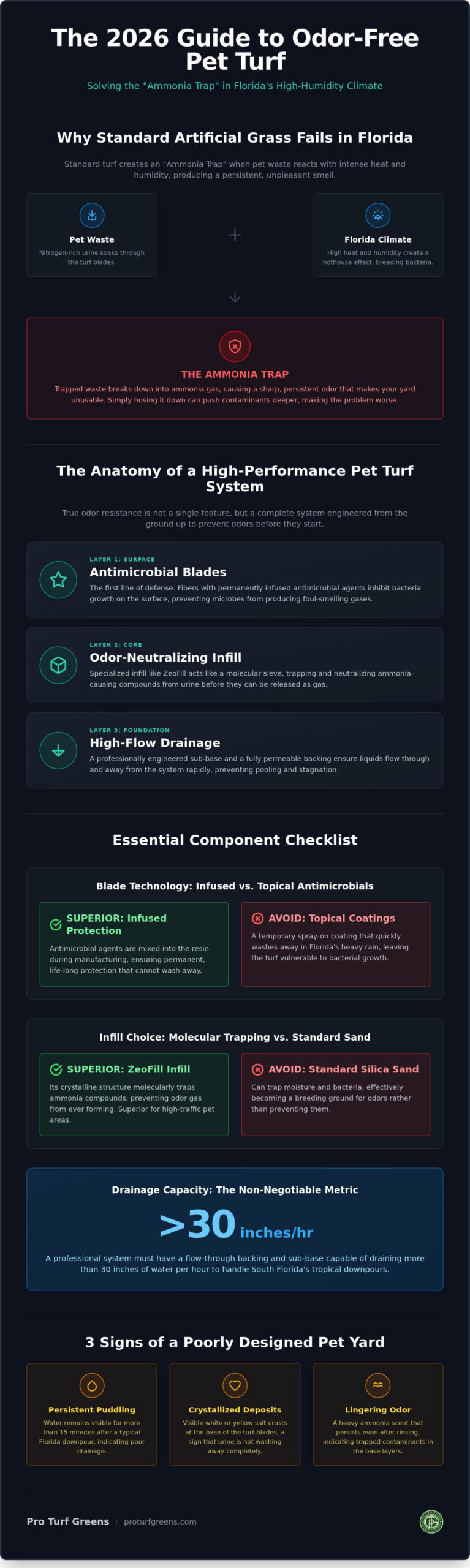
Many homeowners believe that switching from natural sod to Artificial turf solves every maintenance challenge instantly. However, standard synthetic grass often falls victim to what experts call the “Ammonia Trap.” This phenomenon occurs when nitrogen-rich pet urine filters through the blades and becomes trapped within the backing or the sub-layers. In the intense heat of a Florida afternoon, this trapped liquid breaks down into ammonia gas. The result is a sharp, persistent odor that lingers long after your pet has returned indoors, turning a beautiful lawn into an unusable space.
A common misconception is that a quick rinse with a garden hose will solve the problem. Unfortunately, hosing down turf without a comprehensive drainage system often backfires. Water can push urine salts deeper into the base materials, where they sit in a stagnant, humid environment. True odor resistant pet turf is not a single product but a meticulously engineered three-part system. It requires specialized antimicrobial fibers, molecularly active infill, and a high-flow drainage foundation that ensures liquids exit the system entirely rather than pooling beneath the surface.
The Role of Bacteria in Turf Odors
South Florida’s environmental conditions are notoriously difficult for standard landscaping materials. The combination of high humidity and the relentless 90-degree Florida sun creates a hothouse effect on your lawn. Bacteria thrive in these warm, moist gaps between turf fibers and within the infill itself. When we discuss professional pet-friendly solutions, the term must specifically refer to antimicrobial technology. These agents are integrated directly into the material to disrupt the metabolic processes of microbes. This prevents them from multiplying and producing the foul-smelling gases that traditional lawns cannot suppress.
Checklist: Signs of a Poorly Designed Pet Yard
Recognizing the signs of an inadequate installation is the first step toward achieving a permanent solution. If your current yard shows these symptoms, it likely lacks the specialized engineering required for high-frequency pet use in our local climate:
- Persistent Puddling: Presence of standing water that remains visible for more than 15 minutes after a typical Miami afternoon downpour.
- Crystallized Deposits: Visible “yellowing” or white salt crusts that cling to the base of the turf blades even after a rainstorm.
- Heavy Air: A pungent ammonia scent that remains heavy in the air even after you have applied topical cleaners or rinsed the surface.
By understanding these underlying causes, you can better evaluate the components of a high-performance odor resistant pet turf system. Investing in the right technology from the start ensures your yard remains a clean, welcoming environment for both your family and your pets.
The Antimicrobial Blade Checklist: Evaluating Surface Tech
When selecting the ideal surface for your four-legged companions, the technology embedded within the synthetic blades is your first line of defense. Research into the Environmental Effects, Health Risks, Safety, and Cost of synthetic surfaces highlights that material composition directly impacts long-term performance and hygiene. High-quality odor resistant pet turf relies on advanced polymers that do more than just mimic the appearance of natural grass; they actively work to maintain a sanitary environment through every season.
Infused vs. Topical Antimicrobial Protection
The distinction between infused and topical protection is critical for South Florida homeowners. Topical antimicrobial sprays are often applied as a secondary coating after the manufacturing process. While initially effective, these treatments typically wash away during Florida’s intense summer downpours. This leaves the turf vulnerable to bacterial colonization within weeks. In contrast, superior systems feature antimicrobial agents integrated directly into the resin during the extrusion process. This ensures the protection lasts for the entire lifespan of the lawn. When interviewing contractors, always ask for the material safety data sheets (MSDS) to verify that the antimicrobial properties are permanent rather than temporary coatings.
Pile Height and Density Recommendations
Choosing the right blade length is a balancing act between comfort and cleanliness. For most residential pet applications, we recommend a pile height between 1.0 inch and 1.25 inches. Shorter blades are significantly easier to sanitize and allow solid waste to be removed more effectively. Many homeowners fall into the “Density Trap,” assuming that a thicker, lusher lawn is always better. However, overly dense turf can actually hinder the flow of liquids to the backing, creating a moist environment where bacteria thrive. Selecting a medium face weight ensures the grass remains resilient under the paws of high-energy breeds without sacrificing the drainage efficiency required for an odor resistant pet turf system.
Resilience is also found in the shape of the blade itself. Engineered profiles like “U” or “W” shapes are designed to spring back into place after heavy use, preventing the matting that can trap debris. Additionally, verify that the materials are UV-stable. Relentless sun exposure can break down inferior plastics, causing the antimicrobial properties to leach out or fail prematurely. If you’re unsure which blade profile suits your specific breed, exploring professional pet turf options can clarify the best fit for your yard’s unique requirements.
Maximizing Drainage: Backing and Sub-Base Standards
Florida’s tropical climate presents a unique set of challenges for any outdoor surface. When a single afternoon storm can drop several inches of rain, your yard’s ability to process liquid becomes its most important feature. For owners of high-energy dogs, this drainage capacity is doubly critical. If urine cannot pass through the system instantly, it remains trapped in the upper layers of the turf, fueling the bacterial growth mentioned in previous sections. A truly effective odor resistant pet turf system must be capable of handling drainage rates exceeding 30 inches per hour to remain sanitary and dry in South Florida conditions.
Evaluating Turf Backing Technology
The backing serves as the foundation of your turf’s drainage performance. Older, standard designs often use hole-punched backing, which relies on small perforations spaced several inches apart. These holes frequently clog with pet hair, silt, and organic debris, leading to a “sponge effect” where liquids sit stagnant. We recommend a 100% edge-to-edge flow-through backing instead. This design allows liquid to pass through every square inch of the material, ensuring rapid evacuation. Additionally, the material choice is vital; polyurethane is non-absorbent and far superior to latex, which can retain moisture and odors. When evaluating these materials, it’s wise to consider the health and environmental concerns of artificial turf, ensuring your chosen system uses non-toxic, high-performance components. You can easily test a sample by performing a “bucket test” to see how quickly water disappears through the backing.
The Florida Sub-Base: Beyond the Grass
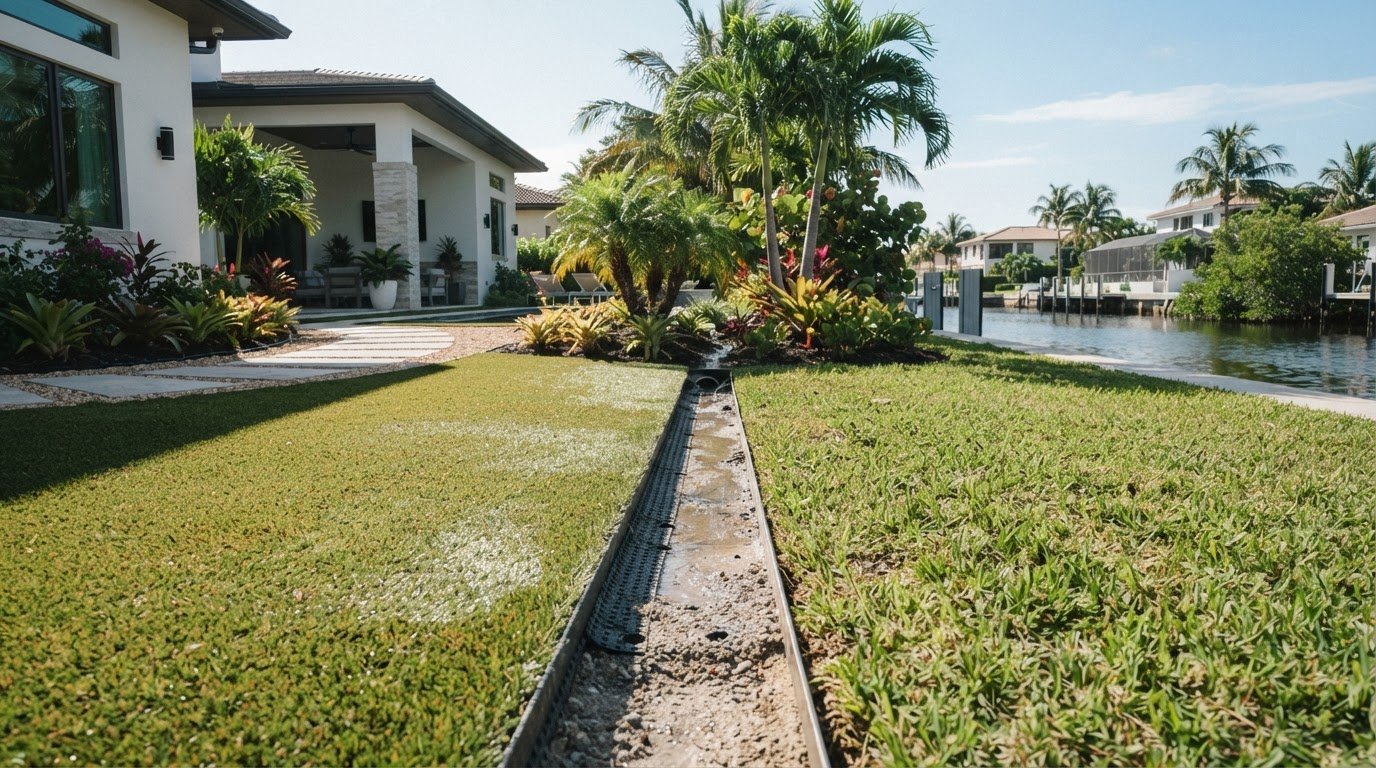
What lies beneath the blades is just as vital as the grass itself. Installing odor resistant pet turf directly over dirt or sand is a recipe for failure, as these materials trap odors and shift over time. A professional installation requires a 2 to 4 inch compacted aggregate base made of crushed limestone or granite. These materials provide a stable, porous foundation that facilitates gravity-assisted drainage. In low-lying areas with high water tables, such as Weston or Coral Gables, we often integrate specialized drainage tiles to elevate the system and prevent groundwater from backing up. The entire perimeter must be meticulously secured to prevent urine from pooling at the edges of the installation. This structured approach ensures that every drop of liquid is channeled away from your living space, maintaining a fresh and resilient environment for your pets.
Choosing the Right Odor-Neutralizing Infill
While the blade technology and sub-base drainage provide the structure for a clean yard, the infill serves as the active engine of an odor resistant pet turf system. Many retailers suggest using standard silica sand because it’s inexpensive and readily available. However, silica sand is naturally porous. It absorbs moisture and provides a fertile breeding ground for the very bacteria you’re trying to eliminate. In the South Florida heat, using basic sand often leads to a yard that looks green but smells like a kennel within a few short months. Miami pet owners in particular face these challenges year-round, which is why selecting the right artificial turf for dogs Miami residents can rely on requires careful attention to every layer of the system.
How Odor-Neutralizing Infills Work
The most effective defense against urine odors is a process called cation exchange. High-performance infills, such as ZeoFill or volcanic ash, possess a unique molecular structure with a negative charge. This charge attracts the positively charged ammonia ions found in pet urine. ZeoFill effectively traps ammonia molecules within its honeycomb-like structure through a negative charge process before they can escape into the air as noticeable odors. This molecular trap prevents the gas from ever reaching your nose. Unlike topical treatments, this is a physical property of the mineral itself, making it a permanent part of your yard’s ecosystem. For those who prefer a different texture, antimicrobial-coated acrylic sands like Envirofill offer a similar level of protection by preventing microbe growth on the surface of each individual grain. To explore a comprehensive comparison of these materials and their performance in tropical conditions, review our guide on the best infill for pet turf in South Florida.
Infill Maintenance and Longevity
To maintain peak performance, the volume of infill must be tailored to the size and activity level of your dogs. For smaller breeds, a standard application of 1.5 to 2 pounds per square foot is often sufficient. Larger, high-energy dogs require a denser layer, often exceeding 3 pounds per square foot, to provide adequate protection and prevent the turf blades from matting under heavy foot traffic. Beyond odor control, these specialized infills help keep the surface temperature lower. They don’t retain solar heat as aggressively as raw sand, ensuring the surface stays safe for sensitive paws during the peak of summer.
Over time, heavy rainfall and vigorous play can cause infill to settle or wash away slightly. We recommend a quick inspection every six months to determine if you need to “top off” high-use areas. For those looking for a comprehensive strategy to maintain their investment, you can learn how to clean synthetic grass to ensure your system remains effective for a decade or more. If you’re designing a new pet run and want to ensure the right volume for your specific breed, you should consult with our installation experts to get a custom material recommendation.
Professional Installation: The Pro Turf Greens Advantage
While many homeowners are tempted to treat synthetic grass as a weekend DIY project, pet-specific installations require a level of precision that manual labor simply cannot match. DIY efforts often fail because they lack the industrial-grade compaction required for long-term stability in our sandy South Florida soil. Without heavy-duty vibratory plate compactors and professional grading tools, the sub-base can eventually shift, creating low spots where urine pools and odors fester. We utilize specialized mechanical infill brushes to ensure that odor resistant pet turf fibers are properly supported and that antimicrobial infill is distributed at the exact density required for your dog’s specific weight and activity level.
Custom Design for South Florida Pets
A successful installation must complement your home’s existing architecture while standing up to the rigors of pet ownership. We take a custom approach to every project, ensuring seamless transitions between your new lawn and delicate features like travertine pool decks or intricate landscaping. Our design process accounts for high-traffic zones, such as the frequent “zoomies” tracks where dogs accelerate and pivot. In these areas, we reinforce the sub-base and use high-durability odor resistant pet turf to prevent premature wear. For a deeper look at how we configure these specialized spaces, explore our artificial turf for dog runs south florida guide. This level of planning ensures your yard remains a beautiful, functional asset rather than just a utility space.
The Consultation and Installation Process
Your journey toward a fresher yard begins with a free on-site consultation. During this visit, we assess your property’s unique drainage challenges and measure the frequency of pet use to recommend a tailored material system. We don’t believe in one-size-fits-all solutions. Instead, we match the turf’s face weight and infill volume to your specific breed. Most professional installations in Palm Beach or Broward are completed within a structured timeline of two to four days, depending on the complexity of the site preparation.
We conclude every project with a meticulous post-installation walkthrough. This is where we educate you on the simple maintenance habits that will maximize your system’s longevity and keep it smelling fresh for years. Our team provides clear guidance on how to manage solid waste and how to perform occasional rinses to keep the antimicrobial properties active. By partnering with a local authority that understands the Fort Lauderdale and Miami climate, you’re investing in a permanent transformation of your outdoor lifestyle. To start your project, we invite you to book your professional consultation and see the difference that expert craftsmanship makes.
Transform Your Yard Into a Fresh Pet-Friendly Sanctuary
Achieving a pristine outdoor space in South Florida requires more than just choosing a green surface; it’s about engineering a system that withstands intense humidity and high-frequency use. You’ve learned that true odor resistant pet turf depends on the synergy between antimicrobial fibers, molecularly active infills, and high-performance drainage foundations. These components work together to neutralize ammonia instantly and ensure your lawn remains a safe, welcoming environment for your family. By focusing on quality materials and professional sub-base construction, you’re investing in a lifestyle upgrade that lasts.
We take pride in delivering results that balance aesthetic excellence with specialized engineering. Our team provides high-flow drainage systems designed for Florida rain and integrates specialized pet-safe antimicrobial infill to maintain a sanitary surface. With expert local installers serving communities across South Florida, we’re ready to guide you through every step of your yard’s transformation. Schedule Your Free Odor-Free Turf Consultation Today and discover how simple it is to maintain a beautiful, scent-free lawn for your high-energy pets.
Frequently Asked Questions
Is odor resistant pet turf truly 100% smell-proof?
While high-quality odor resistant pet turf significantly reduces the presence of ammonia gases, no synthetic surface is entirely self-cleaning. The system works by trapping and neutralizing odors at a molecular level, yet you must still remove solid waste promptly. Think of it as a highly efficient filtration system that requires occasional rinsing to flush out trapped particles and maintain its long-term effectiveness and hygiene.
How often do I need to clean my pet turf in Florida?
We recommend a thorough water rinse once a week for average pet use. In the intense heat of a Fort Lauderdale summer, a quick mid-week spray helps to keep the surface cool and ensures that any residual urine salts are flushed through the high-flow drainage system. This simple routine prevents the buildup of organic matter and maintains the sanitary performance of your specialized turf system.
Will antimicrobial turf protect my dog from fleas and ticks?
Synthetic turf provides a significant defense against pests because it lacks the organic environment, such as soil and moisture-retaining natural blades, that fleas and ticks need to thrive. While the turf itself doesn’t kill insects, it acts as a powerful deterrent by removing their natural habitat. This results in a much cleaner and safer play area for your pets compared to traditional sod.
Does odor resistant turf get hot in the South Florida sun?
Artificial surfaces do absorb solar heat, but modern engineering has introduced heat-reflective pigments and specialized infills that lower surface temperatures. To ensure the comfort of sensitive paws during the peak of a Miami afternoon, we recommend using a cooling infill and providing shaded areas. A quick rinse with water can also instantly drop the temperature for your dogs before they go out to play.
What is the best infill to use for dogs in Miami?
ZeoFill is widely considered the gold standard for South Florida pet owners due to its ability to trap ammonia on contact. Another excellent option is antimicrobial-coated acrylic sand, which prevents the growth of bacteria and mold within the infill layer itself. Both choices are designed to withstand our high humidity and frequent rainfall, ensuring your odor resistant pet turf remains fresh and functional. For a detailed breakdown of how these materials compare across performance metrics, see our complete guide on the best infill for pet turf in South Florida’s 2026 climate conditions.
Can I install odor resistant turf over an existing concrete patio?
You can certainly install synthetic grass over concrete, provided you include a specialized drainage layer between the hard surface and the turf backing. Without this layer, urine would pool on the concrete and create the very odors you’re trying to avoid. We use professional-grade drainage tiles to elevate the turf, allowing liquids to flow freely toward existing drains or permeable perimeter areas.
How long does odor resistant pet turf last with multiple large dogs?
A professional-grade installation typically lasts between 10 and 15 years, even with the high traffic of multiple large dogs. The longevity of your lawn depends on the face weight of the blades and the quality of the sub-base construction. By choosing a shorter, denser pile and maintaining proper infill levels, you ensure the turf resists matting and stays resilient against energetic play for over a decade.
Is the antimicrobial technology safe for my children and pets?
The antimicrobial agents used in our professional turf systems are completely non-toxic and safe for both children and pets. This technology is similar to what’s found in medical devices and kitchen appliances to inhibit bacterial growth. It’s integrated into the material during manufacturing, which means it won’t leach out or wash away into the environment, providing a consistently sanitary surface for your family.