
What if your backyard could provide the same precise feedback as a PGA-caliber facility while withstanding the relentless South Florida sun? Most local golfers dream of a private practice space, yet they often settle for standard artificial grass that tears under the force of a wedge shot or turns into a heat-soaked sponge after a tropical storm. You deserve a surface that responds like natural turf without the maintenance headaches or the puddles that follow a heavy downpour. Partnering with a specialized driving range turf installer Fort Lauderdale is the essential first step in moving beyond simple utility to create an aspirational lifestyle upgrade that stands the test of time.
In this 2026 resource guide, you’ll discover how to design a professional-grade tee line using high-impact synthetic technology engineered for resilience and aesthetic excellence. We’ll explore the latest Florida DEP standards, such as Rule 62-308.100, which ensure your installation is free of PFAS and meets modern drainage requirements for residential properties. This guide provides a logical progression from site preparation to material selection; it ensures you have the knowledge to build a facility that improves your game while increasing your property value with a sophisticated, luxury amenity.
Key Takeaways
- Learn why high-density synthetic materials are essential for absorbing club-to-ground impact while preventing the premature wear common in standard landscape turf.
- Discover the specialized UV-stabilized fiber technology that maintains surface integrity and prevents brittleness under the intense Fort Lauderdale sun.
- Understand how a professional driving range turf installer Fort Lauderdale implements rapid-drainage sub-base systems to keep your facility playable after tropical downpours.
- Explore strategic layout designs that maximize your backyard footprint by integrating custom tee lines with professional-grade putting green installations.
- Gain a clear understanding of the meticulous site preparation needed to transform a utility space into a durable, high-end amenity that increases your home’s value.
Selecting the Right Driving Range Turf for Fort Lauderdale Properties
Selecting the right material is the foundation of any elite practice space. Backyard driving range turf is a specialized, high-density synthetic grass specifically engineered to absorb the violent club-to-ground impact of a full swing. While standard landscape turf focuses on soft aesthetics for barefoot walking, tee line systems prioritize resistance, energy displacement, and fiber resilience. It’s about performance. Standard landscape turf lacks the structural integrity to withstand the repeated, high-velocity impact of a golf club, which often leads to unsightly tearing and surface degradation within months.
The primary goal of a high-end installation is to replicate the exact resistance and feel of a natural, tightly mown fairway. The history of artificial turf shows a massive evolution from basic plastic carpets to the sophisticated nylon and polyethylene blends used in 2026. In Fort Lauderdale, the combination of intense UV rays and high humidity means your choice of material must be as durable as it is realistic. Choosing an experienced driving range turf installer Fort Lauderdale ensures your investment survives this local environment. A dedicated specialist will select fibers that maintain their “memory” and upright position even after thousands of iron shots.
Tee Line Turf vs. Standard Artificial Grass
The differences between professional hitting surfaces and standard lawns are found in the technical specifications. Tee line turf requires a significantly higher face weight, often double or triple that of residential grass, to ensure the club head doesn’t “bottom out” on the sub-base. This density is what provides the realistic “give” of a real divot.
- Density: High-stitch counts prevent the fibers from flattening after just a few practice sessions.
- Pile Height: A specific height is required to allow the club to slide through the “grass” rather than bouncing off it.
- Durability: Reinforced backing systems prevent the turf from tearing when you’re working through an entire bag of clubs in the same spot.
The Value of a Professional Installer in Fort Lauderdale
A professional driving range turf installer Fort Lauderdale understands how to navigate local Broward County landscaping codes while managing the complex site grading needed for proper runoff. Fort Lauderdale features unique sandy soil that requires precise stabilization to prevent shifting under the weight of a golfer. Expert installation ensures long-term ROI by creating a foundation that won’t dip or settle over time. Working with a specialist also gives you access to commercial-grade materials that are designed to be integrated with a backyard putting green installation. This meticulous approach to craftsmanship transforms a simple utility space into a luxury amenity that provides a genuine lifestyle upgrade.
The Technology Behind High-Impact Tee Line Turf
The engineering behind professional-grade tee lines has advanced significantly by 2026, moving far beyond simple plastic mats. High-impact turf relies on advanced fiber memory, a technical characteristic that allows individual blades to spring back to their original upright position immediately after a club head passes through. This resilience is critical for maintaining a consistent lie. Without it, the surface would quickly develop permanent troughs or matted areas that negatively affect your swing mechanics and ball contact. A dedicated driving range turf installer Fort Lauderdale ensures the chosen system utilizes these “intelligent” polymers to maintain a professional appearance for years.
In the intense climate of South Florida, material science is your best defense against the elements. UV-stabilized polymers are integrated directly into the fiber during the extrusion process, which prevents the turf from becoming brittle or fading under the tropical sun. Research from the University of Florida’s Turfgrass Science Program highlights how local environmental stressors require specific material tolerances to ensure longevity. Additionally, modern strike-through backing technology ensures that water moves vertically through the turf at high speeds. This prevents the surface saturation and puddling that often plagues DIY projects after a typical afternoon thunderstorm.
In the context of golf hitting mats, denier refers to the weight and thickness of the individual synthetic strands, where a higher denier rating directly correlates with increased fiber strength and a longer lifespan under heavy usage.
Nylon vs. Polyethylene for Golf Hitting Areas
Nylon remains the industry gold standard for high-friction environments. It possesses a higher melting point than other polymers, which is vital when a club head generates heat during a high-velocity iron shot. This prevents the plastic transfer or “glazing” often seen on cheaper mats. Polyethylene blends are frequently used in the surrounding fairway areas of a backyard range to provide a softer, more natural feel. For most residential projects, a seasoned driving range turf installer Fort Lauderdale will recommend a hybrid solution that utilizes nylon for the hitting strip and polyethylene for the aesthetic borders to balance performance with cost.
Infill Systems for Driving Ranges
The infill is the hidden engine of a durable range. It supports the fibers and provides the necessary shock absorption to protect your joints during practice. Choosing the right infill is just as important as selecting the grass itself, a concept explored in our guide on durable turf for high traffic. In Fort Lauderdale, we often utilize specialized cooling infill technologies that can reduce surface temperatures by up to 30 degrees, making mid-day practice far more comfortable. If you’re ready to upgrade your home practice experience, consulting with a professional driving range turf installer Fort Lauderdale can help you select the perfect technical specifications for your specific property.
Designing Your Backyard Practice Facility: Layouts and Space Requirements
Creating a professional-grade practice environment requires more than just clearing a patch of land; it demands a strategic approach to spatial planning and safety. A seasoned driving range turf installer Fort Lauderdale will evaluate your property to determine the minimum footprint needed for a functional range, which typically begins with a dedicated hitting zone of at least 10 feet by 10 feet. This space allows for a full range of motion without the golfer feeling restricted. Sun orientation is another vital consideration in our region. Positioning your tee line to avoid the blinding glare of the afternoon sun ensures your practice remains comfortable and effective during peak hours. By integrating your hitting area with a backyard putting green installation, you create a cohesive training facility that blends seamlessly into your overall landscape design.
The goal is to transition your backyard from a simple utility space into an aspirational lifestyle upgrade. Multi-purpose designs allow the hitting area to serve as a beautiful ornamental lawn when not in use. This versatility is achieved through meticulous craftsmanship and the use of materials that mimic the lush appearance of natural South Florida flora while providing the structural integrity required for high-velocity sports.
Tee Line Dimensions and Safety Clearances
Safety remains the most important aspect of any residential design. We generally recommend the 15-foot rule, which ensures at least 15 feet of lateral clearance from any structures, windows, or property lines to account for the occasional mishit. The depth of the hitting zone must also accommodate your full follow-through without any risk of the club head striking nearby objects. For properties with a tighter footprint, incorporating custom ball-containment solutions like high-tensile netting or discreet baffles allows for a safe, full-swing experience without compromising the safety of your home or neighbors.
Integrating Hitting Mats into Synthetic Lawns
Modern aesthetics favor seamless transitions between different turf types. A professional driving range turf installer Fort Lauderdale can inset a heavy-duty hitting strip directly into a larger area of ornamental synthetic grass, creating a clean look that doesn’t disrupt your backyard’s visual flow. You can choose between permanent hitting stations for a dedicated look or modular designs that allow for easy replacement of the high-wear hitting zone over time. Additionally, we can customize every layout to accommodate both left-handed and right-handed golfers, ensuring the facility is functional for all players in your household.

Site Preparation: Managing South Florida’s Drainage and Heat Challenges
The integrity of your backyard range depends entirely on what lies beneath the surface. For a driving range turf installer Fort Lauderdale, the primary challenge isn’t just laying the grass; it’s engineering a sub-base capable of withstanding heavy-impact sports while managing the region’s often swampy or sandy soil conditions. We don’t cut corners. We utilize a sophisticated multi-layer system that begins with a stabilized sub-grade and progresses through various grades of crushed, rapid-drainage aggregates. This meticulous foundation prevents base settling, a common issue where the repeated force of iron shots creates uneven depressions in the hitting area. Understanding these technical requirements is essential when reviewing the driving range turf cost South Florida, as the quality of the foundation directly dictates the longevity of your investment.
The Drainage Solution for Tropical Rain
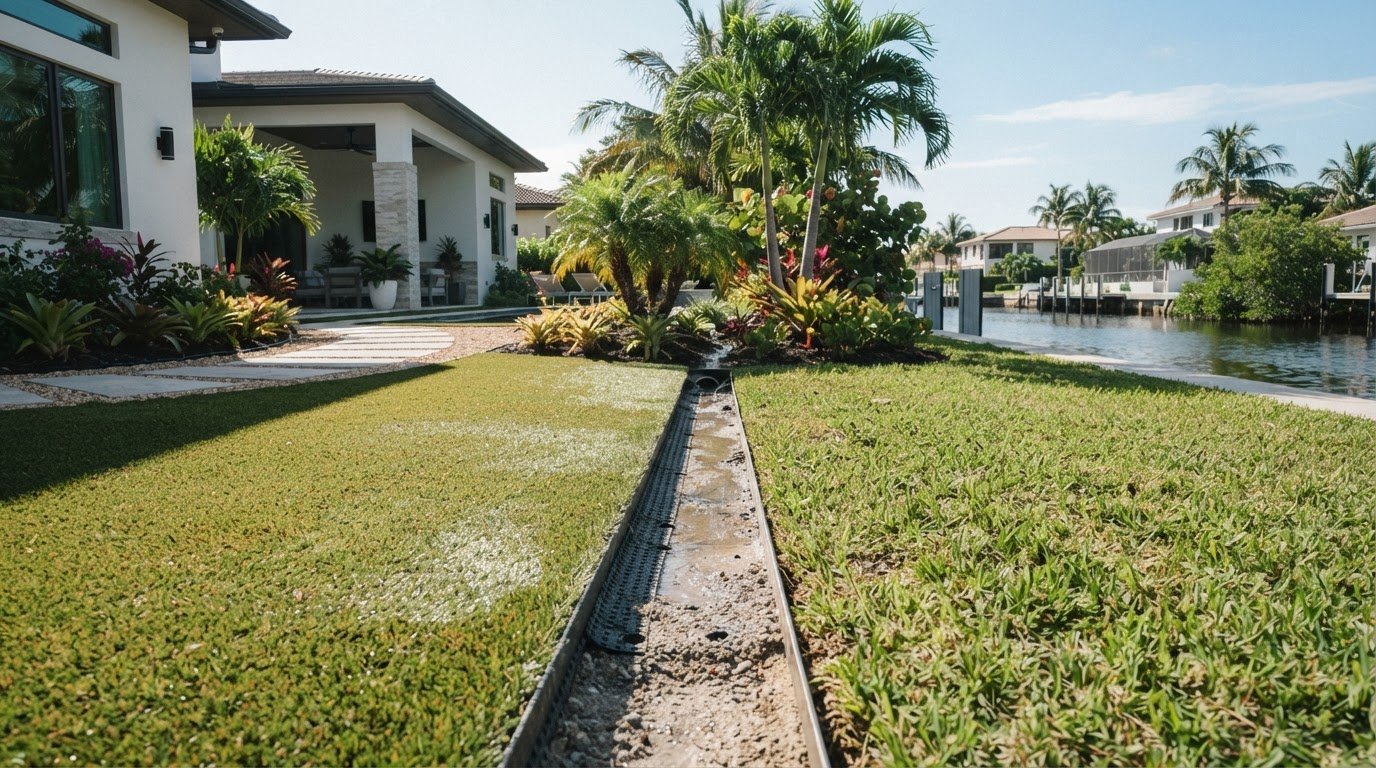
South Florida’s weather is famous for intense, concentrated downpours that can drop 2-3 inches of rain in a single hour. Standard lawn installations often fail under these conditions, leading to puddling and subsurface erosion. Our professional installations feature high-flow perforated backing and vertical drainage systems that move water away from the surface instantly. This rapid movement is vital for preventing the growth of mold and mildew, which thrive in our humid environment. By ensuring the base remains stable and dry, we protect the structural integrity of the nylon fibers and ensure your facility is playable minutes after a storm passes.
Heat Mitigation Strategies
The July and August sun can push synthetic surface temperatures to uncomfortable levels if not properly managed. We prioritize the use of “cool-fiber” technology, which utilizes specialized infrared-reflective pigments to dissipate heat rather than absorbing it. The choice of sub-base material also plays a significant role; certain aggregates retain less heat than traditional concrete or asphalt bases. To maintain peak performance during the hottest months, we recommend a light rinsing of the turf before your practice session to utilize evaporative cooling. This simple maintenance step keeps the surface comfortable for both your feet and your equipment. If you’re ready to build a facility that survives the Florida elements, you can consult with a specialist at Pro Turf Greens to begin your custom site evaluation.
Why Pro Turf Greens is Fort Lauderdale’s Premier Driving Range Installer
Choosing the right partner for your project is the difference between a simple backyard addition and a professional-grade training facility. Pro Turf Greens has spent years establishing itself as the leading driving range turf installer Fort Lauderdale, focusing exclusively on the unique environmental and performance demands of the South Florida market. While generalist contractors or DIY enthusiasts might overlook the complexities of high-velocity impact, we approach every project as a meticulous craftsman. We understand that a tee line must remain perfectly level and resilient after thousands of swings. Our installations prioritize longevity and aesthetic excellence, ensuring your practice space remains a beautiful, functional asset for years to come. Before you begin your project, we encourage you to review our guide on the cost to install backyard tee line to help you plan your investment with precision.
The durability of our systems stems from a commitment to using commercial-grade materials that simply aren’t available in big-box stores. We’ve seen how standard artificial grass fails when subjected to the friction of a golf club. By contrast, our specialized nylon fibers are engineered to withstand the heat and mechanical stress of a full swing without glazing or tearing. This dedication to quality transforms your backyard into an aspirational lifestyle upgrade, providing a steady and reliable environment where you can focus entirely on your game. We take pride in being a local authority that understands the specific needs of Broward County residents, from salt air resistance to tropical drainage requirements.
Our Custom Design and Installation Process
Every transformation begins with a comprehensive, free on-site consultation where we evaluate your property’s unique characteristics. We don’t believe in a one-size-fits-all approach; instead, we tailor the turf density and sub-base specifications to your specific swing speed and practice frequency. Our installation teams are trained to maintain clean, professional, and efficient job sites. We understand the high standards of residents in neighborhoods like Weston and Coral Gables, and we ensure our work reflects that level of sophistication. From the initial grading to the final fiber grooming, every step is executed with technical precision and a focus on long-term satisfaction.
Start Your Practice Transformation Today
You don’t have to wait for your next trip to the club to work on your swing. You can call 561-221-1010 today to speak with an expert and schedule your personalized design estimate. We invite you to explore our extensive portfolio of South Florida golf installations to see how we’ve helped other local golfers achieve their practice goals. Let us be your dedicated partner in creating a professional-grade facility that brings the quality of the tour to your own backyard. Contact us now to begin your journey toward a better game and a more beautiful home.
Elevate Your Game with a Professional Home Practice Facility
Transforming your backyard into a professional-grade practice space is more than a simple renovation; it’s a commitment to your golf game and a significant lifestyle upgrade. You’ve learned that the right facility requires high-density nylon technology to handle repeated impact and sophisticated drainage systems to manage South Florida’s tropical climate. By choosing an experienced driving range turf installer Fort Lauderdale, you ensure that every detail, from UV-stabilized fibers to meticulous sub-base grading, is handled with the precision of a seasoned craftsman.
Pro Turf Greens combines years of local expertise with professional-grade materials specifically built for the intense South Florida sun. We specialize in custom designs tailored to your specific practice needs, ensuring your installation is both beautiful and functional. If you’re ready to start your practice transformation, schedule your free Fort Lauderdale turf consultation with Pro Turf Greens today! We look forward to partnering with you to build a facility that helps you reach your full potential on the course.
Frequently Asked Questions
What is the best synthetic turf for a high-impact driving range?
High-density nylon is the premier choice for surfaces subject to the repeated mechanical stress of a full golf swing. Unlike standard polyethylene landscape grass, nylon has a much higher melting point and superior fiber memory, which prevents the surface from glazing or matting after a practice session. A professional driving range turf installer Fort Lauderdale will typically recommend a tee-line grade product with a high face weight to ensure the surface absorbs the energy of a full iron shot without bottoming out on the base.
How long does a backyard driving range installation take in Fort Lauderdale?
Most residential projects are completed within three to five business days, though the exact timeline depends on the complexity of the site preparation. The process involves significant excavation and the installation of a multi-layered, compacted aggregate base to ensure proper drainage. We dedicate the majority of our time to the meticulous craftsmanship of the foundation to prevent any future settling or uneven hitting surfaces, ensuring your facility remains a long-term lifestyle upgrade.
Can I hit real golf balls into synthetic turf without damaging it?
You can hit real golf balls with full-force swings because professional-grade tee-line turf is specifically engineered for this exact purpose. These systems feature a proprietary cushioned backing that mimics the give of a natural fairway, protecting both the turf fibers and your joints from the shock of impact. This durability is why many local enthusiasts choose a specialized driving range turf installer Fort Lauderdale to ensure their facility handles thousands of high-velocity shots without tearing or degrading.
How do I maintain my backyard tee line in the Florida heat?
Maintenance is remarkably simple and focuses primarily on cooling the surface and keeping the fibers upright. A quick rinse with a garden hose before a mid-day practice session uses evaporative cooling to lower the temperature significantly. Occasionally using a stiff-bristled broom to brush the fibers against the grain will help maintain the memory of the turf, ensuring a consistent lie for every shot. You should also remove organic debris like leaves to keep the drainage pores clear.
Do I need a permit for artificial turf installation in Broward County?
Regulations can vary by specific municipality, but the Florida Department of Environmental Protection’s Rule 62-308.100, effective May 19, 2026, established statewide standards for synthetic turf on residential properties. While these rules often streamline the process, you should still check with your local Broward County building department regarding setbacks and specific drainage requirements. Many Homeowners Associations also have their own guidelines, although Florida law now limits their ability to prohibit synthetic turf in non-visible areas.
What happens to the turf during a hurricane or heavy tropical storm?
Professional turf systems are designed to remain secure and functional during the extreme weather events common in South Florida. The vertical drainage technology allows even the heaviest tropical downpours to pass through the surface at a rate of several inches per hour, preventing the puddling that causes base erosion. Because the turf is anchored to a heavy aggregate sub-base and secured with professional-grade perimeter spikes, it is highly resistant to the wind uplift associated with tropical storms.
Is synthetic driving range turf safe for my pets and children?
Modern synthetic turf is completely non-toxic and safe for the entire family. The materials used in 2026 are required by state standards to be free of intentionally added PFAS and heavy metals. This makes the surface a safe environment for children to play on or for pets to roam between your practice sessions. The high-density fibers are also resistant to digging, and the rapid-drainage backing ensures that the area stays clean and dry even with frequent use.
How much space do I really need for a safe backyard driving range?
A safe and functional hitting station typically requires a minimum footprint of 10 feet by 10 feet for the golfer’s full range of motion. However, safety clearances are the most critical factor in a residential setting. We recommend at least 15 feet of lateral clearance from any windows or structures to account for the occasional mishit. If your space is limited, we can integrate custom netting or baffles to ensure the ball is safely contained within your property boundaries.