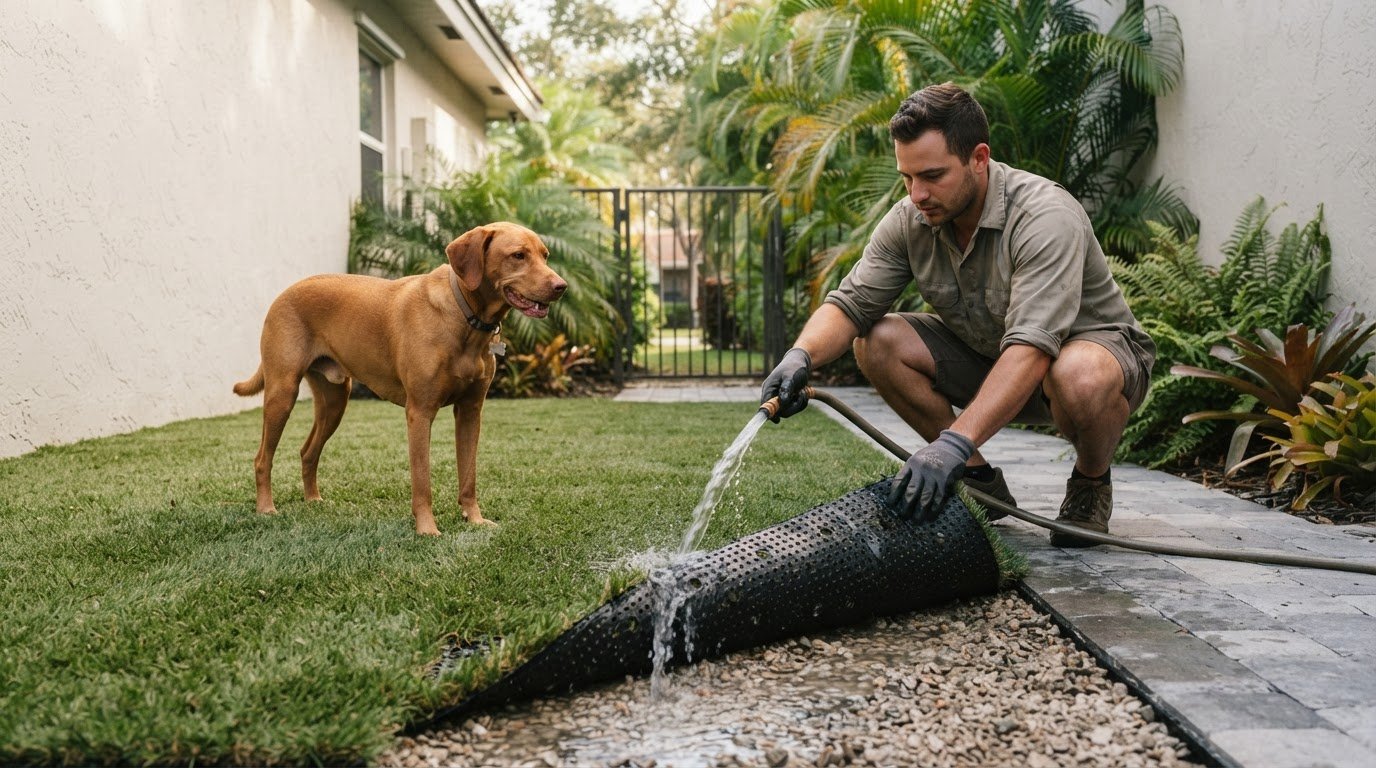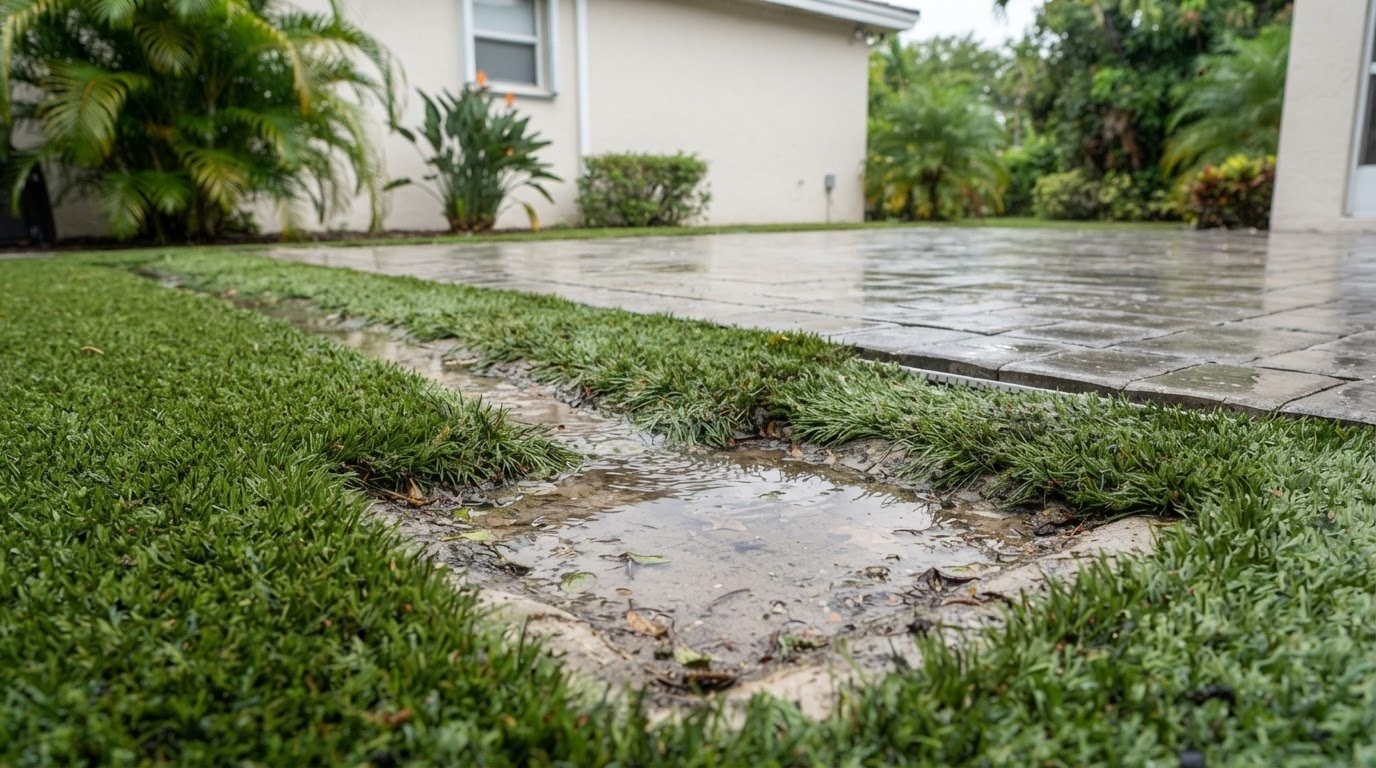
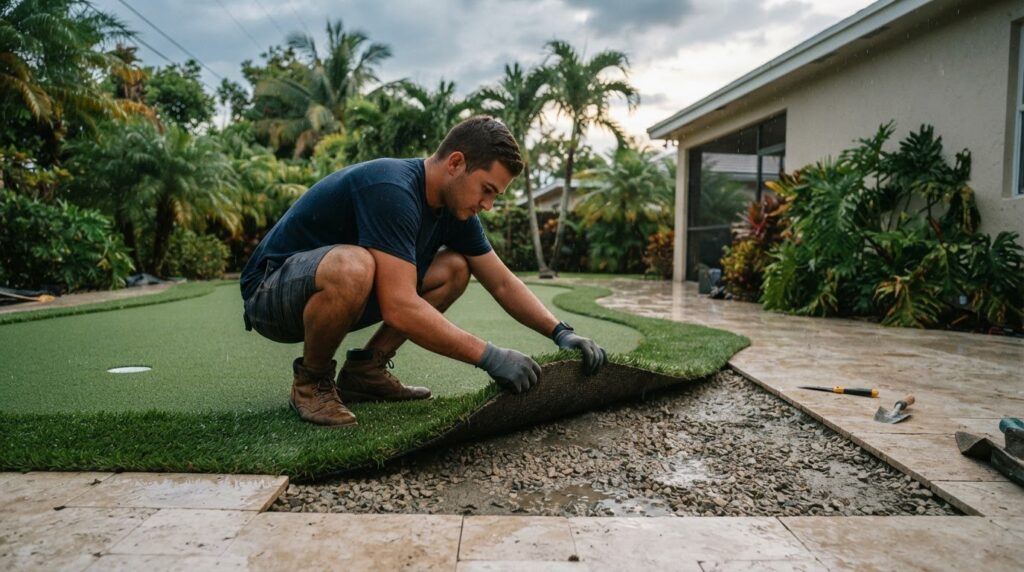
Artificial turf can be installed year-round in South Florida, so you do not have to wait for a particular season. The best time of year to install turf in Florida depends on the weather and whether the site is ready. The generally drier period from November through May may mean fewer rain-related interruptions.
Before choosing a date, consider summer heat and heavy rain. Both can affect working conditions and scheduling, while a stable, well-prepared base is essential for a durable installation in any season.
This guide explains how Florida’s seasons affect installation timing, what to consider during summer heat and rainy weather, and why site preparation and drainage matter. It also explains how South Florida’s year-round installation window lets you plan around your property and project instead of waiting for one ideal month.
Key Takeaways
- Plan around Florida’s seasonal weather: drier months can mean fewer rain-related scheduling interruptions, but installation isn’t limited to one season.
- In summer, heat and heavy rain can affect working conditions and timing, so weather plays an important role in scheduling.
- Give site preparation and drainage equal weight with your installation date; a stable, compacted base supports turf performance.
- Use South Florida’s year-round installation window to plan around your site’s readiness and the conditions that matter most to your project.
Seasonal timing for artificial turf installation
Artificial turf can be installed any time of year in Florida, but seasonal weather can affect scheduling. In South Florida, rainfall varies, making site conditions and dry workdays important considerations.
Seasonal Installation Conditions
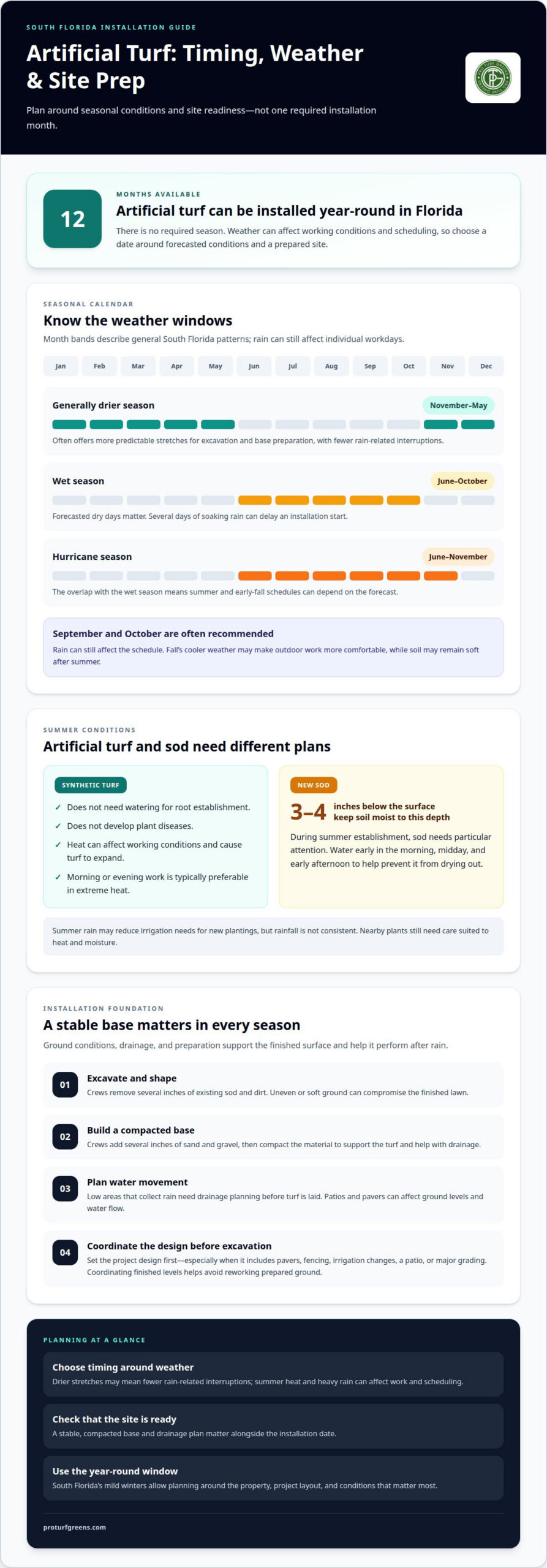
Choosing an installation season means matching the work to temperatures, rainfall, and ground conditions, not waiting for one required season. South Florida’s dry season generally runs from November through May, often offering more predictable stretches for excavation and base preparation. Fall’s cooler weather can make outdoor work more comfortable, though soil may still be soft after summer. September and October are often recommended months, but rain can still affect the schedule.
Hurricane and Rainy-Season Scheduling
South Florida’s wet season generally runs from June through October, while hurricane season spans June through November. This overlap means summer and early fall schedules can depend on forecasted dry days. Several days of soaking rain can delay an installation start. Hurricane-season planning also extends into November, when the wet season typically ends. The U.S. Environmental Protection Agency notes that South Florida has mild winters, but rainfall can be erratic throughout the year.
Sod has different seasonal considerations from artificial turf. Spring and fall are generally Florida’s best seasons for sod installation, while summer is often less ideal. Sod can be installed year-round, but local conditions affect how it establishes. Permit requirements depend on local rules and project scope, so there is no single answer for every Florida property.
There is no single per-square-foot cost for sod installation across Florida. The total depends on the area, sod type, site preparation, access, and delivery and labor needs.
Winter can also be a practical time to install artificial turf in South Florida’s mild climate. Spring brings more landscaping demand, so scheduling may take advance planning. Fall may have shorter waits as fewer landscaping projects are underway.
Summer heat, watering, and disease pressure
Summer heat affects working conditions, while rainfall influences the care living plants need. Artificial turf and sod respond differently, so the right plan depends on the surface and surrounding landscape.
Summer Heat and Installation Timing
Summer installation requires planning around intense heat and the forecast. Extreme heat can make work uncomfortable and cause turf to expand, so morning or evening work is typically preferable. Warmth can also help artificial grass fibers relax and lie flat sooner. Unlike newly laid sod, a synthetic surface does not need watering for root establishment. Keep this difference in mind when planning a summer yard upgrade.
Florida’s summer rain can reduce irrigation needs for new plantings, but rainfall is not consistent. Newly laid sod needs particular attention: keep the soil moist three to four inches below the surface during summer establishment. Water early in the morning, midday, and early afternoon to help prevent it from drying out. These watering needs apply to sod, not artificial grass.
Disease Pressure in Summer
Disease pressure describes challenges living plants can face in warm, damp conditions. Artificial grass is synthetic, so it does not develop plant diseases or need the same watering schedule as sod. Nearby plants, however, remain affected by summer heat and moisture, and rainfall alone may not provide consistent irrigation. Distinguishing the surface from the surrounding landscaping helps set realistic care expectations.
Summer planting can still suit Florida-adapted native plants. Warm temperatures and moisture can support rapid root establishment, while unpredictable rain means planting plans should account for irrigation needs. For yards planned around a putting area or other outdoor use, the installation schedule should also account for the intended layout and adjacent planting. A driveway project can include artificial turf driveways as a surface option.
Preparing turf before installation
Professional site preparation accounts for the ground, drainage, and base conditions. For sod, soil preparation generally includes clearing the area and grading the ground to create a suitable planting surface.
Ground Conditions and Preparation
Ground preparation involves shaping and stabilizing the surface before artificial turf is installed. It matters because uneven or soft ground can compromise the finished lawn. In spring, winter moisture often softens soil, which can make digging and leveling easier. Mild ground conditions can also help with site preparation. South Florida’s mild winters do not eliminate the need to assess the site before work begins.
Professional crews excavate several inches of existing sod and dirt before building the base. Settle the project design before excavation, especially if it also includes pavers, fencing, irrigation changes, a patio, or major grading. Coordinating these elements helps establish finished levels and avoids reworking newly prepared ground. The planned surface and adjoining features also guide how the site is shaped.
Drainage and Base Preparation
Base preparation creates a stable, compacted layer beneath the turf, while drainage planning manages water movement across the site. Both matter for durability and surface performance after rain. Crews add several inches of sand and gravel, then compact the material to create a supporting base designed to help with drainage as well as support the finished turf.
Site conditions guide how professionals approach the work. A low area that collects rain needs drainage planning before turf is laid. Patios and pavers can affect ground levels and water flow, so include them in the overall design. Careful coordination helps create a stable surface suited to Florida’s climate and the property’s outdoor features.
Year-round installation availability in South Florida
South Florida’s mild winter temperatures make artificial turf installation possible beyond spring and fall. The practical takeaway for homeowners is that no single season is the only workable window. A project can move forward when the site is ready and weather allows crews to prepare the ground. That flexibility helps fit outdoor improvements around household plans rather than a narrow seasonal deadline.
Florida’s climate varies by region, so local conditions matter more than a statewide calendar. Heat, rainfall, and ground moisture affect preparation differently across the state. In South Florida, mild winter weather supports year-round planning, although rainfall remains somewhat erratic throughout the year, according to the U.S. Environmental Protection Agency. Choose an installation date based on conditions at the specific property, not just a broad climate-zone label.
For an artificial turf project, proper timing means coordinating the work with the site’s condition and intended use. A yard that needs substantial grading or drainage work may need more preparation than a level, ready site. Cooler winter temperatures can make outdoor work more comfortable than summer heat. Rain, however, can interrupt excavation or base work, so the forecast shapes scheduling in every season.
Year-round availability doesn’t mean every date offers identical conditions. It means homeowners can consider projects throughout the calendar and weigh weather, preparation, and household timing together. For example, a driveway project may be planned during a mild winter period, while a summer project may need a schedule built around cooler parts of the day. Artificial turf is a permanent surface, so aligning the layout and groundwork with the property matters as much as choosing a season. To discuss planning an artificial turf project, contact Pro Turf Greens.
Pro Turf Greens
Pro Turf Greens helps South Florida homeowners plan artificial turf projects around seasonal weather, site conditions, and how they want to use their outdoor space. If you’re weighing installation timing, the team can shape the project around the property’s preparation needs instead of treating one month as the only option. Its work includes Backyard Putting Greens, Playgrounds & Recreational Turf, Tee Lines & Driving Ranges, and Lawns & Pet Turf. This is a natural next step when you’re ready to turn seasonal considerations into a defined project plan, whether your priority is recreation, pets, or a new landscape surface. Contact Pro Turf Greens to discuss your artificial turf project.
Shape Your Outdoor Space Around Its Purpose
Start by deciding how you want the finished space to function. A putting area, recreational space, or practice setup each calls for a different project plan. Defining the purpose gives you a useful starting point for discussing layout and site preparation, rather than choosing an installation date in isolation.
The best time of year to install turf in Florida is when your property is ready and the timing suits your priorities. Backyard Putting Greens, Playgrounds & Recreational Turf, and Tee Lines & Driving Ranges serve distinct purposes, so consider how you will use the space when discussing the design. A clear goal also makes it easier to plan how the new surface will fit the surrounding landscape.
When you’re ready to turn that idea into a project plan, connect with Pro Turf Greens about your installation. A thoughtful start can help you move forward with confidence and create an outdoor space designed for the way you want to use it.
Frequently Asked Questions
What Time Of The Year Should I Install Artificial Grass?
Artificial grass can be installed year-round in Florida, with timing guided by weather and site readiness. When deciding on the best time of year to install turf in Florida, focus on the forecast, project scope, and ground preparation. A level yard with a settled design, for example, may be scheduled differently from a property that needs grading or drainage work.
Does South Florida even have an off-season for turf installation?
South Florida has no strict off-season for artificial turf installation. Mild winter temperatures allow projects beyond spring and fall, though rain can interrupt outdoor work at any time. For homeowners in Miami, Fort Lauderdale, Palm Beach, Boca Raton, Delray Beach, Jupiter, Palm Beach Gardens, Weston, or Coral Gables, seasonal timing is a flexible scheduling choice, not a fixed annual shutdown.
Final Thoughts: Is Spring 2026 the Right Time to Install Turf?
Spring 2026 was a suitable time to install turf, but it wasn’t the only workable window. Mild spring weather can support comfortable outdoor work, and spring demand may call for advance scheduling. Since spring 2026 has passed, homeowners planning now can use the same criteria for another season: site conditions, the forecast, and whether preparation work is complete.
How much does rainy season actually slow things down?
Several days of soaking rain during South Florida’s rainy season can delay an installation start. The timing depends on whether the ground is workable for excavation and base preparation. A brief shower may affect the schedule differently from consecutive wet days, so crews plan around forecasted dry periods and actual site conditions instead of assuming every rainy-season date will be lost.
Is dry season really the best window?
The dry season, generally November through May, can offer a more predictable scheduling window, but it is not automatically best for every project. South Florida’s rainfall remains somewhat erratic throughout the year, according to the U.S. Environmental Protection Agency. If you want to reduce the chance of rain interruptions, you may prefer a dry-season date. A prepared site in another season can also be suitable.
Should hurricane season change your plans?
Hurricane season should factor into scheduling, but it does not automatically rule out installation. In South Florida, it runs from June through November, overlapping the wet season from June through October. For a summer or fall project, plan around forecasted dry conditions and the property’s readiness. Several days of soaking rain can shift the start, so keeping the schedule flexible is practical.