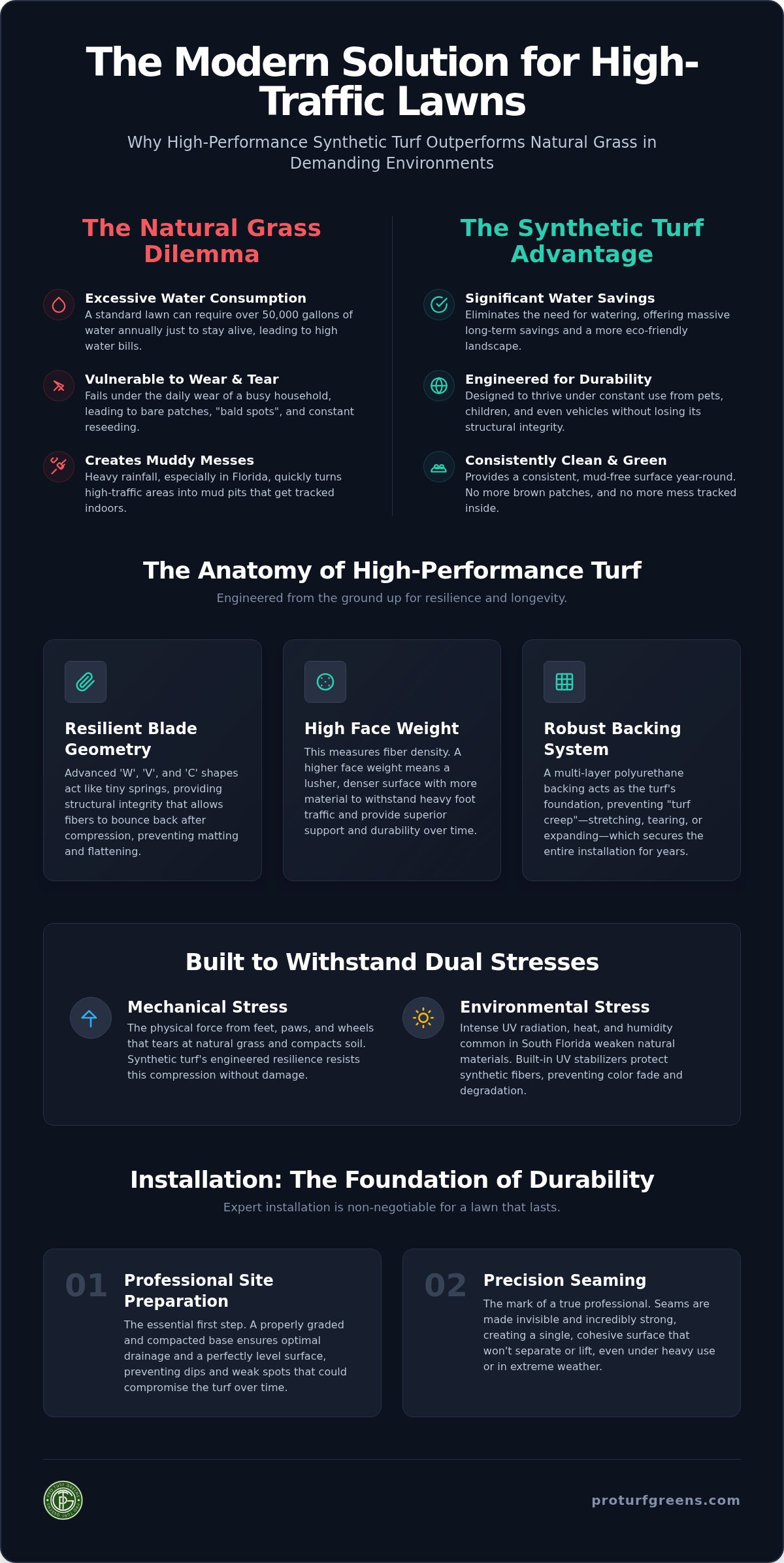
A standard natural lawn can require over 50,000 gallons of water annually, yet it often fails to survive the daily wear of a busy household. You’re likely tired of the endless cycle of reseeding bare patches and watching your water bills climb while your backyard turns into a muddy mess after every Florida rainstorm. It’s frustrating to invest so much energy into a landscape that simply cannot keep up with your lifestyle. Finding the right durable turf for high traffic shouldn’t be a constant struggle; we understand that you want a beautiful space that serves as an extension of your home rather than a constant chore.
In this guide, you’ll discover why synthetic solutions are the definitive answer for modern homeowners in 2026. We will show you how material innovations, such as resilient nylon-polyethylene blends, outperform natural grass in even the most demanding South Florida environments. You will learn how to select a surface that delivers a lush aesthetic, reduces your maintenance time, and provides a significant return on your property investment for years to come.
Key Takeaways
- Understand the technical components of resilience, including how specific blade geometries like ‘W’ and ‘V’ shapes provide the structural integrity needed to prevent matting.
- Discover why selecting a durable turf for high traffic requires matching face weight and pile height to your specific needs, whether for active pets or heavy vehicle use.
- Learn how professional-grade site preparation and precision seaming act as the foundation for a lawn that remains level and secure despite South Florida’s heavy rainfall.
- Compare the long-term value of synthetic solutions against natural grass, focusing on significant savings in water usage and the elimination of seasonal brown patches.
- Identify how modern material innovations allow for a high-end aesthetic that maintains its lush appearance without the need for constant reseeding or chemical fertilizers.
What Defines Durable Turf for High Traffic?
True durability isn’t just about surviving foot traffic; it’s about thriving under constant use without losing its structural integrity. When we discuss durable turf for high traffic, we are looking at a specific combination of wear resistance and resilience. While many homeowners focus on how quickly a plant might grow back, professionals look at how well a surface prevents damage from occurring in the first place. In high-use environments, the goal is to provide a surface that remains functional and aesthetically pleasing regardless of the activity level.
In South Florida, the definition of durability must also account for our unique climate. The combination of extreme heat and high humidity creates a punishing environment for any ground cover. This leads many to explore the benefits of Artificial turf, as synthetic materials don’t suffer from the biological fatigue that plagues natural grass. To truly understand what makes a surface resilient, we have to look at the specific stresses it must endure daily.
In addition to upgrading your lawn, many property owners address the same solar challenges by protecting their interiors; for specialized window film installation, Coral Tint provides expert solutions to mitigate heat and UV damage for residential and commercial buildings.
Mechanical Stress vs. Environmental Stress
Mechanical stress is the physical force exerted by feet, paws, or wheels. This pressure tears at grass blades and compacts the underlying soil, making it nearly impossible for roots to breathe. Environmental stress in our region is driven primarily by intense UV radiation. These rays act as a slow-motion solvent, weakening the molecular bonds of standard materials over time. Turf resilience is the ability to return to an upright position after compression. High-performance systems use advanced blade shapes and robust backing materials to ensure the lawn doesn’t stay flat after use. We prioritize three key metrics when evaluating these surfaces:
- Blade Geometry: Engineered shapes that provide internal structural support.
- Backing Strength: High-denier materials that prevent the turf from stretching or tearing.
- UV Stabilization: Chemical inhibitors that protect the color and strength of the fibers.
The Limits of Natural Sod in South Florida
Even the most popular local varieties like St. Augustine or Bermuda grass have their breaking points. These species often fall into the “recovery trap,” a cycle where the grass is damaged faster than it can naturally regrow. This is particularly evident in shaded areas or high-traffic pathways where “bald spots” become permanent fixtures. Once the grass is gone, the exposed soil is vulnerable to Florida’s heavy downpours.
Heavy rain turns high-use natural areas into mud pits almost instantly. This mud is then tracked into your home, creating a secondary maintenance headache. Beyond the mess, the financial cost of trying to keep high-traffic natural grass alive is significant. Between the price of specialized fertilizers, constant sod replacement, and high water bills, the investment rarely yields a long-term result. Choosing a durable turf for high traffic allows you to bypass these biological limitations entirely, providing a consistent, mud-free surface that maintains its beauty year-round.
The Anatomy of High-Performance Synthetic Turf
High-performance landscapes don’t happen by accident; they’re the result of meticulous engineering designed to solve specific environmental challenges. When selecting durable turf for high traffic, the face weight is your first indicator of quality. This measurement represents the weight of the synthetic fibers per square yard, excluding the backing. A higher face weight means a denser surface. This density is vital because it provides the necessary fiber volume to support heavy foot traffic without the blades laying flat or matting over time.
Modern material science has moved far beyond the flat, plastic ribbons of the past. Today’s fibers utilize advanced blade geometry, including ‘W’, ‘V’, or ‘C’ shapes, which act like tiny springs. These shapes provide internal structural integrity, allowing the turf to bounce back after compression. This focus on mechanical resilience is a hallmark of the Turfgrass Science and Management program research, which emphasizes that a surface’s ability to remain upright is key to its longevity and playability. If you’re designing a space that requires this level of engineering, exploring professional-grade synthetic turf options is the first step toward a permanent solution.
The foundation of this durability lies in the backing and infill systems. We utilize multi-layer polyurethane backing to prevent “turf creep,” a common issue where inferior products stretch or shift under the weight of movement. This is paired with specialized infill systems that act as a shock absorber. The infill doesn’t just provide comfort; it protects the base of the turf fibers from UV exposure and mechanical shearing, ensuring the system remains stable for decades.
Material Composition: Polyethylene vs. Polypropylene
Polyethylene is the gold standard for residential and recreational applications because it balances a soft, natural feel with incredible resilience. Unlike older polypropylene options, polyethylene won’t become brittle or abrasive. For Fort Lauderdale summers, modern polyethylene blends often incorporate heat-shielding technologies to keep surface temperatures comfortable. We prioritize non-toxic, lead-free materials to ensure that family play areas remain safe and inviting even during the hottest Florida afternoons.
Drainage Systems for Heavy Rainfall
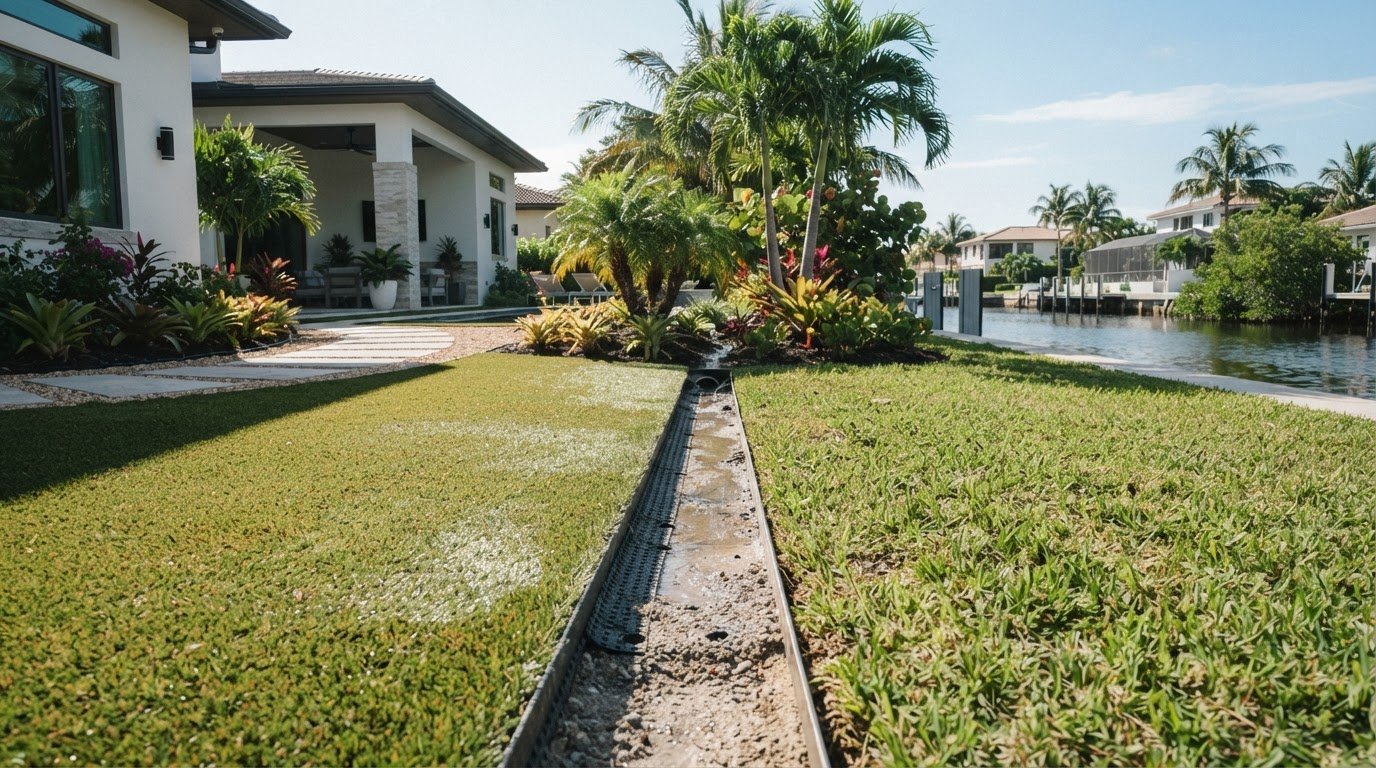
In South Florida, a lawn is only as good as its ability to handle a tropical downpour. High-quality synthetic systems feature perforated backing that allows thousands of gallons of water to move through the turf and into the sub-base every hour. This drainage is supported by a custom-engineered base of crushed stone. Without this precision preparation, even the best turf will feel spongy or develop standing water. Proper drainage ensures that your durable turf for high traffic stays dry, secure, and ready for use minutes after the rain stops.
Synthetic vs. Natural Grass for High-Traffic Areas
Natural grass has long been the traditional choice for homeowners, but it often fails to meet the practical demands of modern South Florida lifestyles. Maintaining a natural lawn in a high-wear zone requires a relentless schedule of mowing, fertilizing, and chemical treatments. In contrast, choosing a durable turf for high traffic transforms your yard into a low-maintenance sanctuary. Instead of spending your weekends managing complex irrigation systems, you simply need an occasional rinsing or light brushing to keep the surface looking pristine. This shift moves your outdoor space from a source of constant labor to a reliable area for relaxation.
The visual difference between these two options is striking. Natural grass is constantly subject to seasonal dormancy, pest infestations, and the inevitable brown patches that follow heavy activity. Synthetic solutions maintain a vibrant, deep green hue 365 days a year. While some homeowners consult research-based turfgrass recommendations to find hardy natural species like Bermuda or Tall Fescue, these biological options still require massive amounts of water to survive Florida’s heat. A standard natural lawn can consume over 50,000 gallons of water annually. Transitioning to synthetic turf provides immediate water conservation benefits, supporting environmental sustainability while significantly lowering your monthly utility bills.
Performance Under Active Use
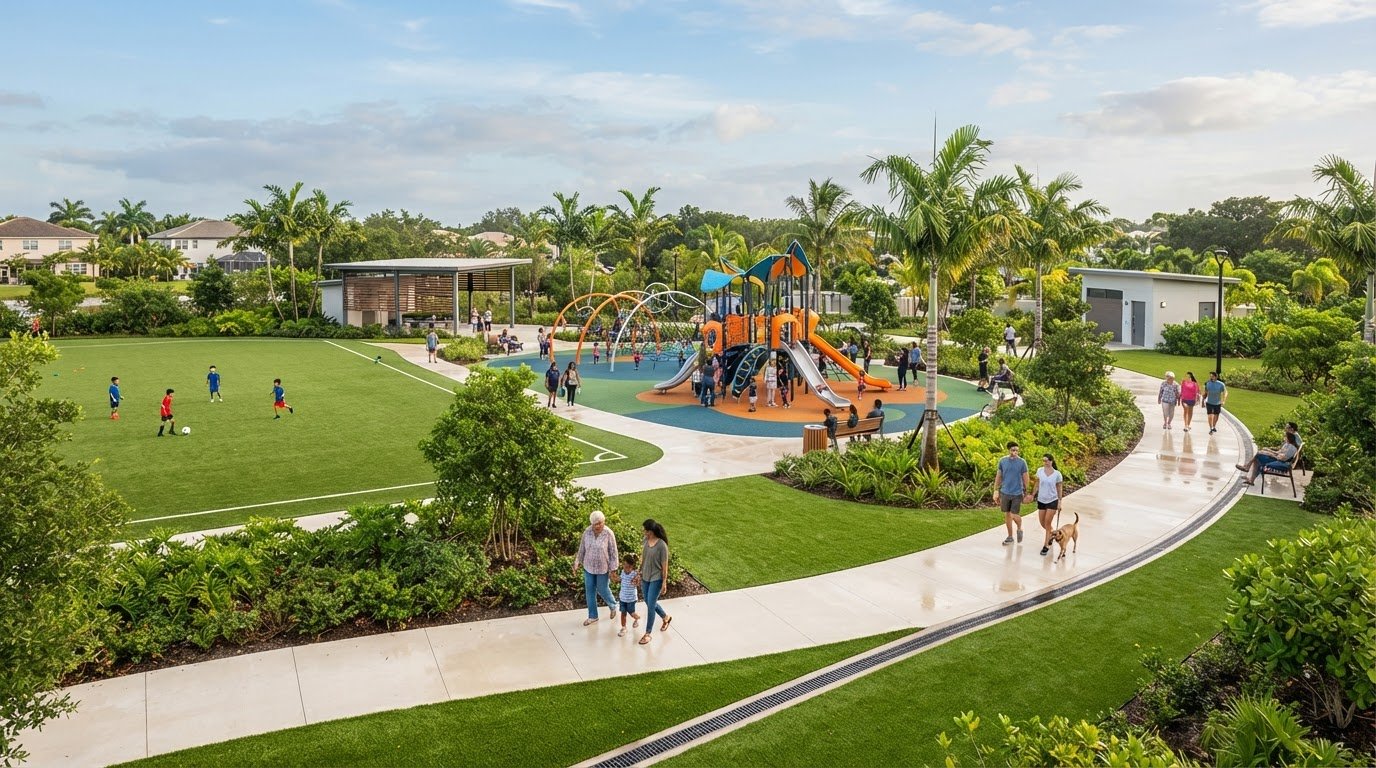
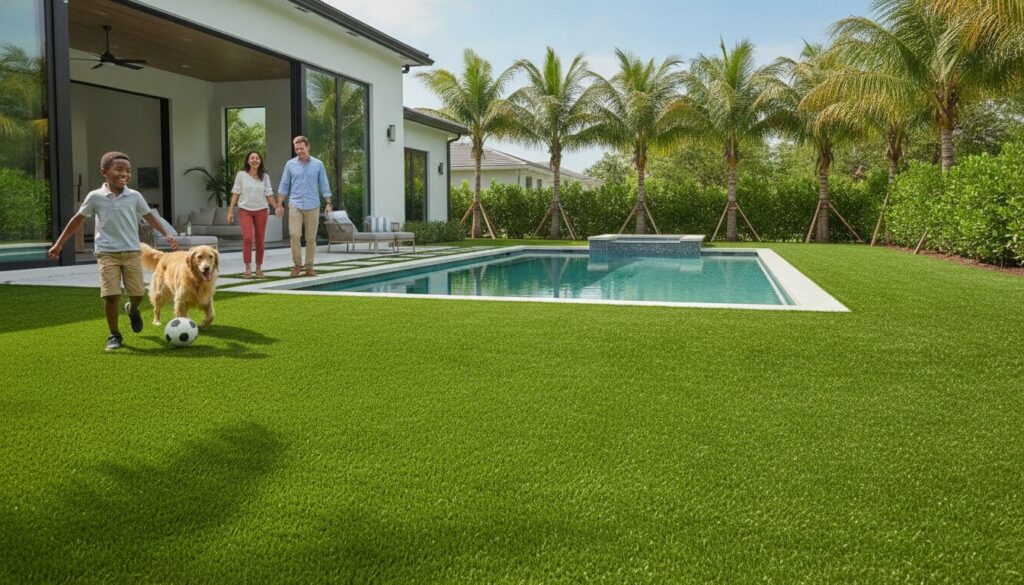
Synthetic surfaces provide a level of reliability that natural grass cannot match. South Florida schools and daycares increasingly opt for these systems because they offer mud-free play areas regardless of the weather. For pet owners, the benefits are even more pronounced. Natural grass is highly susceptible to “yellow spots” from nitrogen and destructive digging, but synthetic fibers are engineered to resist these common issues. While natural grass requires significant downtime for recovery and reseeding after heavy use, synthetic turf remains available 24/7 for your family and pets.
Cost and Value Analysis
Investing in high-performance turf is a strategic financial decision. While the initial installation cost is higher than sod, the monthly savings on landscaping services, fertilizers, and water quickly offset the difference. Over a 10-year period, the total cost of ownership for synthetic turf is often much lower than the cumulative expense of maintaining a struggling natural lawn.
In high-end markets like Boca Raton and Weston, a pristine, durable turf for high traffic significantly enhances property value and curb appeal. Beyond the financial return, there is the “value of time.” Homeowners gain hours of freedom every month when they stop managing lawn repairs and coordinating with landscapers. This transformation allows you to enjoy your outdoor space as an aspirational lifestyle upgrade rather than a recurring list of chores, and you can explore Residential Outdoor Lighting Installation to perfectly highlight your new landscape at night.
Choosing the Right Turf for Your Specific Needs
Selecting the ideal synthetic surface starts with a clear assessment of your daily activity. A lawn designed for a pair of energetic Labradors requires a different engineering profile than a decorative driveway or a professional-grade practice area. To achieve a truly durable turf for high traffic, you’ve got to balance your aesthetic goals with the mechanical realities of your lifestyle. It’s about matching the material’s structural limits to the specific stresses it will face every day.
One of the most frequent misconceptions in the industry is that longer pile heights are always superior. While a two-inch blade may look lush in a low-use garden, it’s often prone to matting in high-use zones. Shorter pile heights, typically ranging from 1 to 1.25 inches, often provide better performance in extreme traffic. These shorter fibers have less leverage to bend under pressure, which creates a tighter, more resilient weave. When evaluating options, look for high-denier fibers that blend field green and olive tones. This ensures your landscape retains a sophisticated, natural appearance without sacrificing the strength of modern polymers.
Florida’s unique geography also demands a specialized approach to the installation process. Our sandy soil and high water table mean that the sub-base is just as critical as the turf itself. A local expert understands that a multi-layered aggregate base is essential to prevent sinking or shifting. This precision engineering ensures that your investment remains level and functional for decades, regardless of how much use it sees.
Pet-Friendly and Play-Ready Surfaces
For families with pets, durability must be paired with hygiene. We recommend systems that incorporate antimicrobial protection and odor-resistant infill to manage biological waste effectively. If you’re designing a recreational area, fall-height ratings are a vital safety consideration. These systems use specialized padding under the turf to protect children during active play. You can learn more about these specialized installations by exploring our options for Pet Friendly Artificial Turf in Fort Lauderdale.
Extreme Durability: Turf Driveways and Sports
Some environments require a level of resilience that goes beyond standard foot traffic. Turf driveways, for example, are engineered with a reinforced grid system that allows the surface to support the weight of an SUV without compressing the fibers or damaging the base. Similarly, tee lines and driving ranges require “PGA caliber” materials that can withstand high-frequency practice sessions without showing wear. Golfers planning a dedicated practice space should also review the cost to install backyard tee line systems to understand the full scope of sub-base engineering and specialized turf density required for a tour-level setup. Facility operators who want to understand the full financial picture should review the driving range turf cost South Florida professionals encounter before committing to a surface upgrade. If you’re looking to upgrade your home’s entrance, consider a Custom Turf Driveway Design in Fort Lauderdale to combine curb appeal with industrial strength.
Ready to transform your high-traffic areas into a resilient, evergreen landscape? Contact our team of South Florida experts today for a personalized design consultation.
Why Professional Installation is the Key to Durability
High-performance materials represent only half of a successful landscape project. To truly secure durable turf for high traffic, you’ve got to look beneath the surface. Site preparation accounts for approximately 90% of a turf system’s total lifespan. While previous sections detailed the engineering of the fibers, those fibers rely entirely on a stable, permeable foundation to remain resilient. Without a professionally engineered base, even the most advanced synthetic grass will eventually shift, dip, or fail to drain during a typical South Florida storm.
Precision seaming is another critical factor that separates professional craftsmanship from standard installations. In high-use zones, the seams are the most vulnerable points of the entire system. We use industrial-grade adhesives and meticulous cutting techniques to ensure these joints are both invisible to the eye and immovable under pressure. This prevents the lifting or tripping hazards that often plague inferior setups. Whether we’re tailoring an installation to the specific coastal conditions of a Palm Beach estate or a compact Miami backyard, our focus remains on long-term structural integrity.
The Installation Process in South Florida
The unique geography of our region presents challenges that standard DIY kits simply aren’t designed to handle. Our sandy soil and high water table require a deep, multi-layered aggregate base to prevent the surface from becoming uneven over time. We utilize professional-grade equipment, including power brooms and industrial plate compactors, to achieve a perfectly level and resilient finish. DIY turf kits often fail within the first two years of heavy use because they lack this foundational depth. Our local expertise allows us to design a custom drainage plan that manages Florida’s torrential rains, keeping your lawn dry and usable year-round.
Your Path to a Maintenance-Free Lawn
The Pro Turf Greens advantage is built on a foundation of dedicated partnership and meticulous local craftsmanship. Our process begins with a comprehensive site assessment where we evaluate your property’s specific traffic patterns and drainage needs. This leads to a custom design that balances aesthetic excellence with the practical requirements of your lifestyle. We don’t just install a product; we provide an aspirational upgrade to your home that is backed by professional warranties and ongoing support. This commitment ensures you enjoy total peace of mind and a lawn that stays perfect regardless of the activity it endures.
Ready to reclaim your time and enjoy a pristine backyard? Request your free high-traffic turf consultation today and discover how our specialized engineering can transform your property.
Invest in a Landscape That Endures
Transitioning to a high-performance synthetic surface is about more than just aesthetics; it’s a strategic commitment to long-term property value and personal freedom. By prioritizing advanced blade geometry and professional-grade site preparation, you ensure your lawn remains resilient against the mechanical stress of daily life. We have explored how selecting a durable turf for high traffic allows you to bypass the constant cycle of reseeding and mud, replacing it with a lush, evergreen environment that thrives in our unique coastal climate.
As local experts serving Fort Lauderdale, Miami, and the Palm Beaches, we specialize in navigating South Florida’s specific drainage and heat challenges since our inception. Whether you require custom-designed solutions for active pets, residential sports areas, or heavy-use turf driveways, our team acts as a dedicated partner in your property’s transformation. We take quiet pride in delivering results that are both beautiful and functional for years to come.
Transform your high-traffic yard with a free Pro Turf Greens consultation and experience the lasting satisfaction of a perfectly crafted landscape. Your ideal outdoor lifestyle is within reach, and we’re ready to help you achieve it.
Frequently Asked Questions
Is synthetic turf durable enough for large dogs that dig?
Yes, high-quality synthetic turf is specifically engineered to withstand the digging behaviors of large dogs. The double-layered backing and high-denier fibers make it nearly impossible for pets to tear through the surface. Unlike natural grass, which develops muddy holes and dead spots, this material maintains its integrity under constant paw traffic. It’s a permanent solution for pet owners who want a clean, green yard without the destruction.
How long does high-traffic artificial grass typically last in Florida?
A professionally installed system typically lasts between 15 and 25 years, even in South Florida’s intense environment. The longevity of your durable turf for high traffic depends on the quality of UV stabilization and the precision of the initial site preparation. Because these materials don’t suffer from biological decay, they provide a consistent aesthetic for decades. Regular light maintenance, such as rinsing and brushing, ensures the fibers remain upright and vibrant.
Does durable turf get too hot for kids to play on in the summer?
While synthetic materials absorb heat more than natural grass, modern cooling technologies significantly reduce surface temperatures. We utilize specialized infills and heat-reflective fibers to keep play areas comfortable for children. On the hottest summer days, a brief two-minute rinse with a garden hose can drop the temperature by 20 degrees almost instantly. This allows kids to enjoy a soft, safe surface even during the peak of a Florida July.
Can I install durable turf over my existing driveway or pavers?
Yes, we can integrate synthetic turf with driveways and pavers to create a sophisticated, high-end look. For artificial turf driveways, we use a specialized reinforcement system that supports the weight of heavy vehicles while allowing the grass to remain lush. Proper drainage and a stable base are essential for these installations to prevent shifting or sinking. This approach transforms functional areas into beautiful extensions of your home’s architecture.
What kind of maintenance does high-traffic synthetic grass require?
Maintenance is remarkably simple and involves only occasional brushing and rinsing to remove debris. Unlike natural lawns, there is no need for mowing, fertilizing, or pesticide applications. Periodically brushing the fibers with a power broom helps maintain their upright position in high-use areas. This minimal effort keeps your durable turf for high traffic looking like a professional-grade landscape with only a tiny fraction of the traditional labor and cost.
Is artificial turf really better for the environment than natural grass?
Synthetic turf offers significant environmental benefits, primarily through massive water conservation and the elimination of chemical runoff. A standard natural lawn in Florida can require over 50,000 gallons of water annually to stay green. By removing the need for fertilizers and herbicides, you prevent harmful chemicals from entering our local waterways. Modern industry standards, such as ASTM F3782-26, also ensure that materials are tested for environmental safety.
How does the drainage work during a Florida tropical storm?
Our systems are designed to handle Florida’s heavy tropical downpours through a combination of perforated backing and a custom aggregate base. This allows water to drain through the surface at a rate of several inches per hour, preventing standing water and mud. Because the drainage is vertical, the water moves directly into the sub-base rather than pooling on top. This ensures your yard remains functional and dry almost immediately after a storm passes.
Will heavy patio furniture or play sets damage the turf?
Heavy patio furniture and play sets won’t damage high-performance turf, though they may temporarily compress the fibers. We recommend using furniture with wider feet to distribute weight more evenly across the surface. If you move your items and notice a flat spot, a quick brushing with a stiff-bristled broom will return the blades to their upright position. The resilient blade geometry is specifically designed to bounce back from this pressure.