
What if your luxury lawn could be completely melted down and reborn as a new product in fifteen years instead of sitting in a Miami-Dade landfill? Many homeowners feel a tug of guilt when choosing synthetic grass, worrying that their pursuit of a pristine yard comes at a high environmental cost. You likely want the aesthetic of a manicured estate without the heavy water usage or chemical runoff, yet the fear of contributing to plastic waste remains a significant hurdle. Fortunately, the emergence of recyclable artificial turf in South Florida is changing the narrative by aligning high-end design with true environmental stewardship.
You’ll discover how modern material science has evolved to meet strict 2026 Florida DEP standards, ensuring your lawn is free from PFAS and heavy metals. It’s time to understand the critical distinction between products made from recycled content and those that are 100% recyclable at the end of their functional lifespan. This guide explains the circular lifecycle of modern synthetic grass and how you can achieve a beautiful, low-maintenance landscape that respects the delicate South Florida ecosystem while adding lasting value to your home.
Key Takeaways
- Discover how mono-material polyolefin technology has replaced traditional “forever plastics” with a fully circular solution that can be repurposed at the end of its life.
- Learn why the recyclable artificial turf South Florida homeowners choose today can actually lower their carbon footprint compared to the high-maintenance requirements of natural sod.
- Address common concerns regarding heat retention and UV durability to ensure your eco-friendly lawn remains cool and resilient in the intense Miami sun.
- Understand the importance of using recycled aggregates in your sub-base to improve drainage and maintain compliance with 2026 Florida environmental regulations.
- Gain insight into how a professional installation maximizes the longevity of your synthetic grass, which is the most effective way to reduce your long-term environmental impact.
Myth: All Artificial Turf is an Environmental Dead End
The idea that synthetic grass is inherently harmful to our planet is a lingering sentiment from a previous era of manufacturing. In the past, synthetic surfaces were often composite materials that couldn’t be easily separated, leading straight to the landfill. However, as we move through 2026, the introduction of recyclable artificial turf South Florida has fundamentally shifted the conversation. True sustainability isn’t just about what a product is made of, but whether it can be reintegrated into a circular economy at the end of its functional life.
The Hidden Cost of Natural Lawns in South Florida
Maintaining a traditional sod lawn in cities like Fort Lauderdale or Miami is an intensive process that often goes overlooked. Because our region sits on porous, sandy soil, water and nutrients leach through the ground almost instantly. This creates a cycle of environmental strain that is unique to our subtropic climate:
- Nitrogen Runoff: Excessive fertilizers flow directly into canals and reefs, fueling harmful algae blooms.
- Water Scarcity: A typical residential lawn can consume over 20,000 gallons of water annually to stay green.
- Carbon Emissions: Year-round growing seasons require constant use of gas-powered mowers and blowers.
The heavy reliance on chemicals and constant irrigation makes natural grass a high-impact choice for homeowners who value conservation. By contrast, a high-quality synthetic installation eliminates these ongoing environmental taxes immediately upon completion.
Breaking the ‘Forever Waste’ Stigma
The transition from the “plastic rugs” of the 1970s to modern circular polymers represents a massive leap in material science. While early products were “forever plastics,” today’s innovations focus on zero-waste lifecycles. When discussing the Environmental and health concerns of artificial turf, it’s essential to recognize that modern “circular turf” is a product specifically engineered to be melted down and pelletized for reuse after its 15-20 year lifespan.
This mono-material approach ensures that the blades and the backing are compatible for recycling together without the need for complex separation. By choosing recyclable artificial turf South Florida residents are investing in a system where the material never actually becomes waste. It’s a sophisticated intersection of luxury aesthetics and environmental responsibility that traditional landscaping simply can’t match. As manufacturing aims for a zero-waste future, your lawn becomes a temporary use of resources rather than a permanent addition to a landfill.
The Science of Circularity: What Makes Turf Truly Recyclable?
Understanding the chemistry behind your lawn is the first step toward true sustainability. For decades, the industry relied on a “sandwich” of incompatible materials. This typically involved polyethylene blades stitched into a polypropylene fabric, then locked in place with a thick layer of latex or polyurethane glue. Because these materials have different melting points and chemical properties, they can’t be processed together. This technical hurdle is why most older installations end up in landfills despite being made of plastic. The shift toward recyclable artificial turf South Florida homeowners now demand relies on mono-material engineering.
Backing Technology: The Key to the Landfill Crisis
The primary innovation in 2026 is the elimination of secondary coating adhesives. Instead of using heavy glues to secure the grass blades, modern systems use thermal fusion to bond the entire structure into a single, cohesive unit. This approach creates a “circular” product where the blades and backing are made from the same polymer family. These advanced systems ensure your yard maintains the long term value of artificial grass by offering superior tuft bind and durability without the environmental baggage of toxic resins. It’s a cleaner way to build a lawn that lasts for decades.
Polyolefin vs. Polyurethane: A Sustainability Comparison
Polyolefin, which includes both polyethylene and polypropylene, is the gold standard for 2026 recyclability. Unlike polyurethane, which is a thermoset plastic that cannot be remelted once cured, polyolefins are thermoplastic. They can be ground down, melted, and pelletized into raw material for new products like park benches or even new turf backing. High-quality recyclable artificial turf South Florida also utilizes sophisticated UV stabilizers to prevent the material from becoming brittle. Without these stabilizers, the intense Miami sun can cause polymers to fracture, potentially leading to negative effects on soil health through microplastic shedding.
It’s vital to distinguish between “recyclable” turf and “repurposed” turf. Repurposed turf is simply used material from a sports stadium that is sold to homeowners. While this delays the landfill, it doesn’t solve the end-of-life problem. A truly circular system is designed from day one to be fully processed as a single plastic stream. If you’re ready to upgrade your property with a system built for the future, you can explore our professional-grade turf options that balance luxury with environmental integrity. By choosing a mono-material system, you ensure that your investment eventually returns to the production cycle rather than the waste stream.
Performance vs. Sustainability: Does Eco-Friendly Turf Survive South Florida?
A common concern for luxury homeowners is whether environmentally conscious materials can actually withstand the brutal realities of our local climate. In the past, choosing an “eco-friendly” option often meant a compromise in durability or aesthetic appeal. Today, however, recyclable artificial turf South Florida is engineered specifically to thrive in high-heat, high-salt environments. These modern polymers are built with non-corrosive properties that make them ideal for coastal properties where salt air typically ravages organic landscapes. Beyond mere survival, these surfaces maintain structural integrity under significant pressure, making them a premier choice for high-traffic areas like a custom turf driveway design where vehicle weight is a constant factor.
Cooling Technologies for the Florida Sun
The “heat island” effect is a valid worry, but material science has provided effective solutions that align with sustainable goals. Modern sustainable turf utilizes heat-reflective pigments embedded directly into the blades. These pigments reflect infrared light rather than absorbing it, which significantly lowers surface temperatures compared to older synthetic models. When paired with eco-friendly infills like specialized cooling sands, the system stays comfortable even during a July afternoon in Miami. For those planning front yard artificial grass designs, these advancements ensure the lawn remains a functional space for pets and children rather than just a visual ornament.
Drainage and the Florida Rain Season
True sustainability also means managing our intense tropical downpours without creating runoff issues or taxing local infrastructure. Traditional latex backings can sometimes restrict water flow, but mono-material recyclable backings are designed with high-permeability architectures. This allows water to pass through the system at rapid rates, effectively replenishing the local water table instead of flooding the street. This superior drainage is particularly vital when installing synthetic grass for pool decks. It ensures a slip-resistant, dry surface immediately after a storm without the risk of chemical leaching into your pool water. By choosing recyclable artificial turf South Florida, you’re investing in a system that manages the elements as effectively as it protects the environment.

Eco-Friendly Landscaping: Beyond Just the Turf Material
A truly sustainable yard is a holistic system where the foundation is as vital as the surface material. While the choice of recyclable artificial turf South Florida homeowners select is a major factor, the components beneath the blades determine the long-term environmental impact. In high-end communities across Boca Raton and Palm Beach, professional site preparation now prioritizes crushed recycled aggregates over virgin materials. This approach reduces the demand for newly quarried stone and ensures that the entire project footprint remains as light as possible. When every layer of your landscape is chosen with a circular mindset, the result is a property that supports local green building standards and can even contribute toward LEED points for residential certifications. Homeowners in the area can learn more about the full scope of these requirements in our definitive guide to artificial turf installation in Boca Raton, which covers the latest 2026 ordinances and HOA compliance standards.
Sustainable Infill Options
The material used to weigh down the turf and keep the blades upright is a critical part of the sustainability equation. The industry has moved decisively away from traditional crumb rubber, which can leach chemicals and retain excessive heat. Modern alternatives include organic options like crushed walnut shells, cork, and high-purity coated sands that are non-toxic and biodegradable. These choices are especially important when designing artificial turf for dog runs in south florida, as they provide a safe environment for pets without compromising the recyclability of the system. Selecting a clean, mono-material infill ensures that when the turf reaches the end of its life, the recycling process remains efficient and free from contaminants.
Permeable Design for Water Management
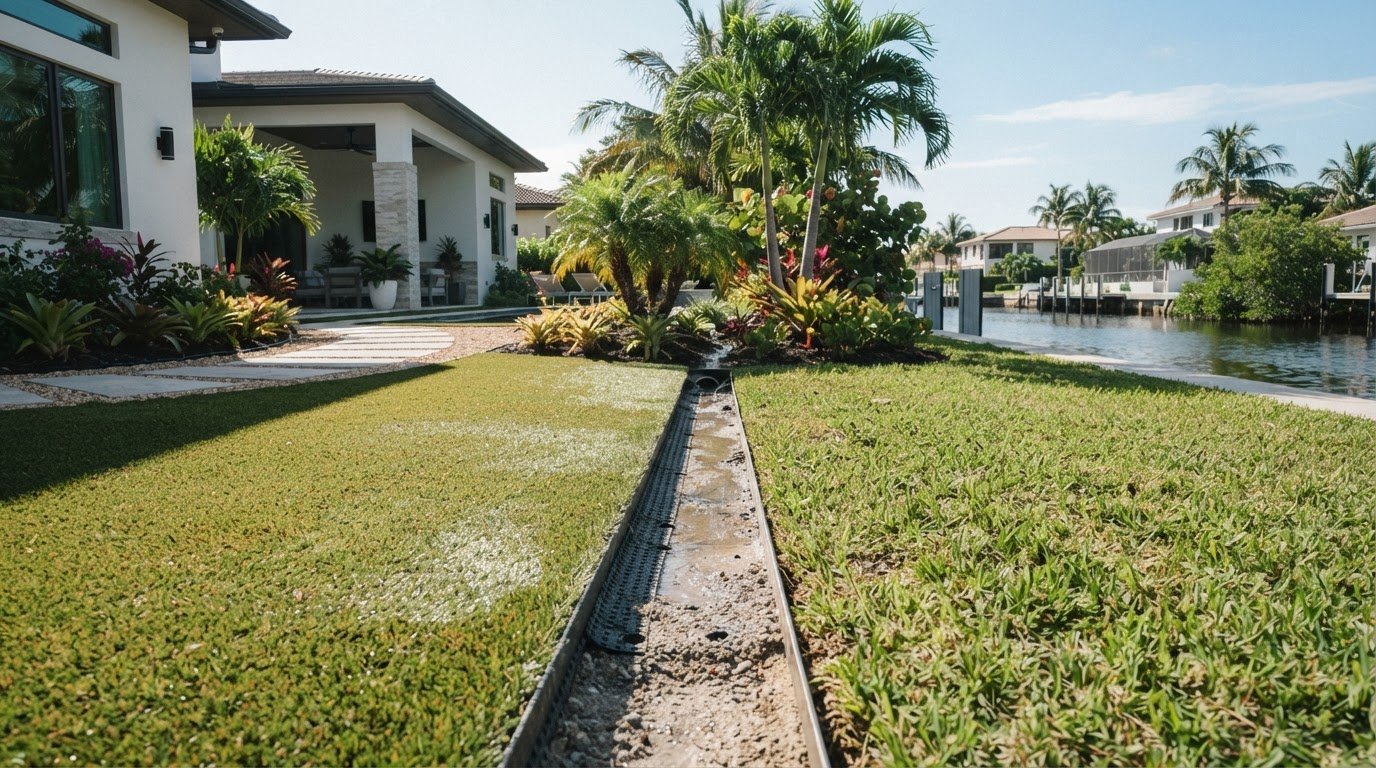
South Florida’s unique geography requires a landscape that acts as a sponge rather than a shield. By reducing stormwater runoff, a permeable turf system helps replenish local aquifers and protects our coastal infrastructure from flooding. A properly installed turf system can filter up to 30 inches of rain per hour. This massive drainage capacity allows homeowners to combine recyclable artificial turf South Florida with native plants like Sea grapes or Saw Palmettos to create a “hybrid” eco-yard. This design strategy supports local biodiversity while offering the clean, structured look of a luxury estate. It’s a sophisticated way to manage the intense tropical rain cycles of our region while maintaining a pristine aesthetic. If you’re ready to transform your property with an environmentally responsible drainage solution, contact our specialists today to discuss a custom-engineered installation for your home.
Choosing a Sustainable Future with Pro Turf Greens
Selecting the right partner for your landscaping project is a decision that impacts your property’s value and the environment for decades. At Pro Turf Greens, we believe that luxury and responsibility are not mutually exclusive. We meticulously source recyclable artificial turf South Florida homeowners can trust, prioritizing materials that deliver a lush, natural aesthetic while remaining fully compatible with circular manufacturing processes. By focusing on high-grade polymers and specialized engineering, we ensure that your lawn remains a stunning asset that adheres to your environmental values.
The first rule of sustainability is longevity. A product that lasts twenty years is inherently more eco-friendly than one that requires replacement after ten. Our professional installation teams serve Miami, Fort Lauderdale, and the Palm Beaches with a focus on meticulous craftsmanship. We build durable foundations and utilize precision seaming techniques to extend the functional life of every project. This dedication to quality minimizes the need for premature repairs and ensures that the resources used in production provide the maximum possible return over time. For those specifically in the northern Palm Beach corridor, our comprehensive artificial turf installation Boca Raton guide outlines the precise steps, regulations, and material selections we use to deliver lasting results in that market.
Our Commitment to the South Florida Environment
We prioritize US-made materials that meet rigorous environmental standards, ensuring that every square foot of turf is free from harmful heavy metals and PFAS. During the planning phase, we focus on waste minimization to keep our job sites clean and efficient. This is particularly important when executing complex artificial grass backyard ideas fort lauderdale residents use to transform their outdoor living spaces. During your consultation, we will show you exactly how to identify recyclable artificial turf South Florida by examining the backing structure and material certifications, giving you peace of mind before the first roll is laid.
The Future of Your Lawn: A 20-Year Vision
A responsible landscape plan must account for what happens when a product eventually reaches the end of its life. While traditional synthetic grass often creates a disposal problem, our circular systems are designed for a clean exit. As the network of specialized recycling facilities continues to expand across the Southeast US, the ability to process polyolefin-based turf into new raw materials is becoming a standard reality. When your lawn eventually needs replacement, it won’t be a burden on local landfills; it will be a resource for the next generation of sustainable products.
Transforming your yard with a conscience is possible when you have a knowledgeable guide. We invite you to explore how our expertise in high-end, eco-friendly installations can elevate your property while protecting the South Florida ecosystem we all share. Reach out to Pro Turf Greens today to begin planning a landscape that is as sustainable as it is beautiful.
Building a Sustainable Legacy for Your South Florida Estate
Transitioning to a sustainable landscape is a significant step toward preserving the unique beauty of our region. You’ve seen how modern synthetic grass has evolved from a “forever waste” product into a sophisticated, circular material engineered for longevity and reuse. From high-drainage foundations in Boca Raton to heat-reflective polymers in Miami, the technology exists to create a yard that’s both stunning and responsible. By choosing recyclable artificial turf South Florida homeowners don’t have to compromise their environmental values for a pristine, year-round aesthetic.
Pro Turf Greens serves as your dedicated partner in this transformation. As specialists in high-performance, long-lasting installations, we provide custom designs for luxury homes from Miami to Jupiter. Our expertise in sustainable, high-drainage materials ensures your property remains resilient against tropical storms while adding significant long-term value. It’s time to elevate your outdoor living space with a solution that’s as durable as it is eco-conscious.
Request your free eco-friendly turf consultation with Pro Turf Greens today! We look forward to helping you design a beautiful, functional landscape that reflects your commitment to a greener future.
Frequently Asked Questions
Is all artificial grass in Florida recyclable?
No, most synthetic grass products currently installed across the state are not recyclable because they use mixed materials like latex or polyurethane backings. True recyclable artificial turf South Florida homeowners should look for is made from mono-material polyolefin. This specific engineering allows the entire system to be processed as a single plastic stream at the end of its life. Choosing these advanced circular systems is the only way to ensure your lawn doesn’t end up in a landfill.
Does recyclable artificial turf get hotter than traditional fake grass?
Recyclable options are actually engineered to be cooler than many traditional alternatives. Manufacturers now integrate heat-reflective pigments into the blades that reflect infrared light rather than absorbing it. When you pair these polymers with an organic infill, the surface temperature remains significantly lower than older synthetic models. This makes the yard more comfortable for families and pets during the peak of the Miami summer while maintaining its eco-friendly profile.
Will eco-friendly turf drain properly during a Florida hurricane?
High-quality eco-friendly turf is designed to handle extreme tropical downpours with ease. These systems feature high-permeability backings that can filter up to 30 inches of rain per hour, which far exceeds the intensity of most hurricanes. This rapid drainage prevents standing water and reduces the risk of stormwater runoff. It ensures your property remains dry and functional even after the heaviest South Florida rain events by allowing water to return directly to the aquifer.
How long does recyclable artificial grass last in the Miami sun?
You can expect a functional lifespan of 15 to 20 years for a professionally installed system. Modern recyclable polymers are treated with sophisticated UV stabilizers specifically formulated for high-UV environments like Miami and Fort Lauderdale. These stabilizers prevent the grass blades from becoming brittle or fading over time. Investing in a durable, long-lasting product is the most effective way to reduce your environmental footprint while enjoying a pristine landscape for decades.
Can I use eco-friendly turf for a backyard putting green?
Yes, you can enjoy a professional-grade backyard putting green that is also fully recyclable. Modern material science allows for the creation of high-performance athletic surfaces using the same circular polyolefin technology found in residential lawns. These greens provide the consistent ball roll and resilience required by serious golfers while maintaining their environmental integrity. It is a sophisticated way to combine an aspirational lifestyle upgrade with a commitment to sustainable landscaping practices.
What is the most sustainable infill for South Florida homes?
Organic infills like crushed walnut shells, cork, or high-purity coated sand are the most sustainable choices for our local ecosystem. Unlike crumb rubber, these materials are non-toxic and don’t leach chemicals into the soil or local waterways. They also play a vital role in cooling the turf surface through natural moisture retention. Selecting the right infill is a key component of a high-performance recyclable artificial turf South Florida installation that protects your family and the environment.
Does installing artificial turf help with Florida’s water conservation efforts?
Installing synthetic grass is one of the most effective ways to reduce your household water consumption. A typical residential lawn in our region can consume over 20,000 gallons of water every year just to remain green. By switching to a synthetic solution, you eliminate this massive demand on local aquifers. You also stop the flow of nitrogen-rich fertilizer runoff, which is a primary contributor to harmful algae blooms in Florida’s delicate canals and reefs.
Are there local regulations in Fort Lauderdale regarding artificial grass?
Yes, new statewide regulations enacted in May 2026 under DEP Rule 62-308.100 establish minimum standards for all residential installations. These rules mandate that turf must be permeable and installed at least 10 feet away from any natural or man-made waterbody. While these state standards preempt many local city ordinances, you must still comply with your specific Homeowners Association (HOA) rules. Always verify your community’s private covenants before beginning your project to ensure full compliance.